


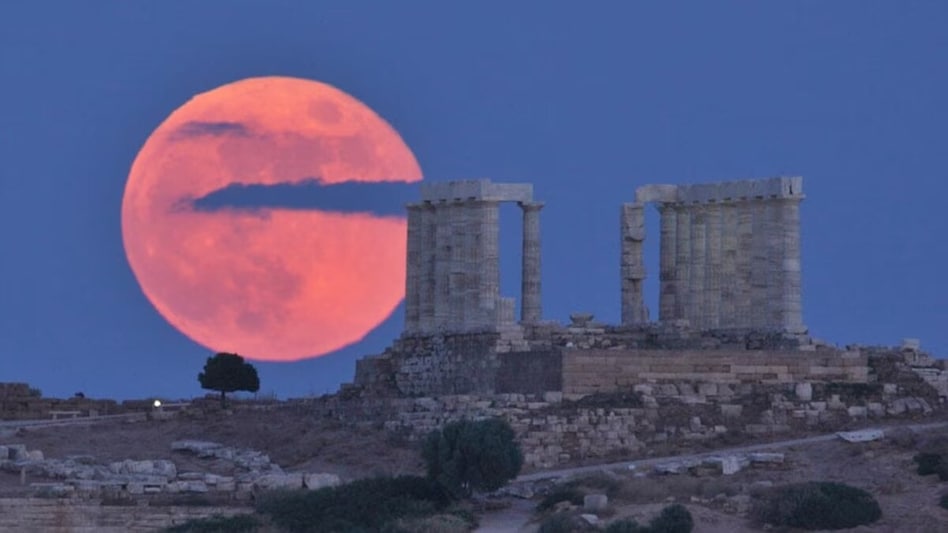
 Where to watch Strawberry Moon 2026 in India
 Skywatchers across India are set to witness one of the most anticipated celestial events of the year as June’s Full Moon, popularly known as the Strawberry Moon, lights up the night sky. Despite its colourful name, the Moon will not appear pink or strawberry-coloured.
Origin of name
The name originates from Native American tribes, particularly the Algonquin people, who associated the June Full Moon with the short harvesting season for wild strawberries. The publication notes that the Strawberry Moon has long served as a seasonal marker rather than a description of the Moon’s appearance, according to The Old Farmer’s Almanac.
READ THIS: Who will win FIFA World Cup 2026? Statisticians run 100,000 simulations to forecast champions
When to watch
The Strawberry Moon will reach its peak illumination on June 29, 2026, at 7:56 PM Eastern Time, which translates to approximately 5:26 AM IST on June 30 for viewers in India. Although the exact full phase will occur shortly before sunrise in India, the Moon will appear fully illuminated throughout the night of June 29 and into the early hours of June 30, offering ample opportunity for observation, according to The Old Farmer’s Almanac.
Where to watch in India
Astronomy enthusiasts can enjoy the spectacle from virtually anywhere in the country, but the best viewing experience will come from locations with minimal light pollution and clear skies. Regions such as Ladakh, Spiti Valley, the Rann of Kutch, Jaisalmer and other rural or elevated areas are expected to provide particularly stunning views of the lunar event.
ALSO READ: How much does a Pandit ji earn in America? Check the reality behind the viral video
The Strawberry Moon is also expected to appear, especially crossing near the horizon shortly after moonrise, when atmospheric conditions can give it a warm golden or orange hue. This optical illusion often makes the Moon appear larger than usual, creating a dramatic visual effect for observers.
Alternative names
Across cultures, June’s Full Moon has been associated with seasonal change and new life rather than colour. Names such as Blooming Moon, Green Corn Moon and Hoer Moon reflect flowering plants and growing crops, while Birth Moon, Egg Laying Moon and Hatching Moon highlight the period when many animals give birth, and new life emerges.

 'US will bomb Iranian bridges, power plants if ships attacked in Hormuz': Trump warns Tehran again
 'Will respond to Wangchuk's letter': JP Nadda reads out list of paper leaks in Opposition-ruled states
 China's global economic rise is 'remarkable'; India overtakes US in world savings: EAC-PM report
 Don't fear the market fall. Buy the volatility, says this fund manager — and here's why
 IndusInd Bank: Q1 a clear inflection point; bank well positioned to improve growth in coming quarters, says MD & CEO Rajiv Anand
 After Vikram-1's Orbital Launch, What's Next For Skyroot?
 Can Andy Burnham Redefine India-UK Relations? New UK PM's Big India Vision Explained
 Delhi Protests Surge: PM Modi Breaks Silence In NEET Paper Leak As Opposition Rallies!
 Trump's 100% Pharma Tariff Plan: How Will Indian Drugmakers Respond To The U.S. Move?
 Sagility Q1 Results: CFO Srinivas Mattapalli On 27.6% Revenue Growth, Margins & Outlook
 Sensex, Nifty extend losses for third day; investors lose Rs 4.24 lakh crore as market sentiment weakens
 IndusInd Bank Q1 FY27 profit jumps 72% YoY to Rs 1,037 crore; NII at Rs 4,685 crore
 Adani Green Energy Q1 earnings: Net profit rises 19%, revenue at Rs 4,280 crore
  Tata Elxsi shares hit five-year low; time to buy, sell or hold?
  Autoline Industries shares: Is it time to buy this stock? What technical chart signals









