












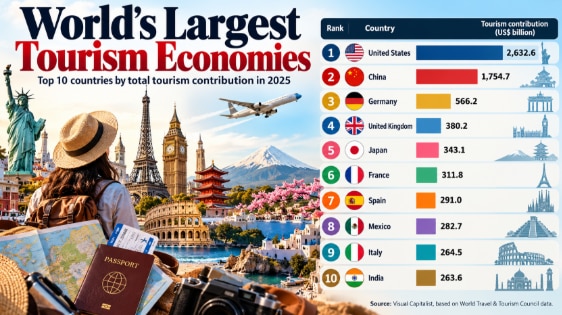



 The ranking highlights the economic contribution of travel and tourism across major economies
The United States remained the world's largest tourism economy in 2025, with travel and tourism contributing $2.63 trillion to its economy, followed by China at $1.75 trillion.
India secured the 10th position globally, with a contribution of $263.6 billion, according to a ranking published by Visual Capitalist based on data from the World Travel & Tourism Council (WTTC).

 US-Iran breakthrough this week? $6 billion frozen funds, secret nuclear inspection in new peace proposal
 'We are very, very close': Rubio says India-US trade deal nearly done, leaders may sign soon
 Qualcomm to cut jobs globally from November: 'Performance-focused reduction'
 Can Reliance help bring Venezuelan oil back to market? Rubio says talks scheduled for Wednesday
 Sapiens author warns: 'AI's biggest danger isn't killer robots but collective dementia'
 Starlink Vs India: Is Elon Musk Being Blocked? | Tech Today
 RBI Measures Boost Rupee | Is Further Depreciation Unlikely?
 More RBI Rate Hikes Ahead? PPFAS Mutual Fund CIO Shares His Outlook
 Retirement Planning: How a ₹10,000 Monthly SIP Can Grow to ₹1 Crore in 20 Years
 Volkswagen On CNG Cars, JSW Partnership And India's Auto Market Outlook

 Sona BLW, Solar Industries, Oracle, Aurobindo Pharma, CG Power: Midcap performers of 2026, price targets and more
 Jio Platforms IPO: From 14th spot to telecom leader, how Jio transformed India’s digital landscape
 Tonbo vs Bonfiglioli vs Zetwerk vs Sahajanand IPO: Which issue offers best allotment odds; fresh GMP
 ‘It’s crazy that even in 2026…’: Nithin Kamath in disbelief over WhatsApp-driven stock manipulation
 Jio IPO: Overseas expansion to unlock new revenue streams through telecom technology
 India ranks 10th among world's largest tourism economies; US leads with $2.63 trillion
 'We may disagree, but our alignment on core issues is extraordinary': Rubio on India-US ties'We are very, very close': Rubio says India-US trade deal nearly done, leaders may sign soonUS-Iran breakthrough this week? $6 billion frozen funds, secret nuclear inspection in new peace proposal
 Deepika Padukone, Ranveer Singh name second daughter 'Devi'; shares first family photo


