Colonel Choudhary: What Kiran Andicot, Senior Vice President – South Asia, Marriott International, mentioned was very important. He educated us on the fact that this particular brand is not available off the shelf.
This is something Marriott International has the prerogative of giving or not giving. Nobody can really demand it by saying that they are making a new hotel in Kolkata, Bombay or elsewhere.
This is a brand that is supposed to be curated. Artwork and many other things are involved in this. So, it is very important for Marriott to identify the owners. Ownership plays a very major role in it. They would like owners who are very passionate and totally involved in their business for such ventures.
What does this launch mean to you personally?
Colonel Choudhary: Honestly speaking, this launch ceremony for me was like a very holy and sentimental end of a journey from where I started off about 32 years back after leaving the Indian Army.
I got into hospitality with a very humble beginning with Hotel Jewels. From there, we graduated and ventured into the London hospitality business, then Noormahal, and from Noormahal on to Marriott.
It has been a very long journey for a person who is not from this background, who has never had any formal education in hotel management, and who changed tracks midway in life. For me, it is my second innings, and this was a dream come true in my second innings.
How did you ensure that Noormahal retained its individuality while becoming part of the Autograph Collection?
Colonel Choudhary: It is a beautiful match between Noormahal and Marriott. Firstly, I did not take a contemporary brand like JW Marriott, St. Regis or W. I picked up a brand that suits my product.
Secondly, I was assured by the Marriott team that the individuality, heritage and architecture of the property, which are its strengths, would not be compromised.
Modernisation had to take place where required. There was the IT work. Safety and security of guests was an important part, so fire safety programmes had to be addressed. The engineering part was also checked thoroughly, including our complete equipment, plant and machinery, so that once we launched as a Marriott hotel, none of these things would give us trouble for the next 10 to 15 years.
After the signing ceremony, we were given a property improvement plan by the Marriott team. They identified approximately 200 points that needed to be looked at and improved upon. These were broadly related to four areas. One was interior design, though it was more about sprucing up and brushing up. Then there were the fire systems, the engineering part, and the information technology.
It was a fun exercise, I must say. When we were carrying this out, I told my team that it was for us and for our future guests. For their safety, security and convenience, we were getting all these things done. So, put your heart and soul into it and make sure we do it in record time.
In just four months, all the PIP points were addressed and attended to. I think it is a record for Marriott also. Their inspection team came, stayed with us for two or three days, and saw the complete planning after the standards had been incorporated.
After both these exercises, I realised there was no damage or disturbance to the existing heritage product of the hotel. Its old individuality remains.
With this collaboration, what kind of business uplift do you expect in occupancy, ADR, and overall revenue over the next 12 to 24 months?
Colonel Choudhary: We are projecting a significant business uplift over the next 12 to 24 months, with expectations of around 20% growth in occupancy, average daily rate (ADR), and overall revenue. This optimistic outlook is fueled by renewed demand across our key segments and ongoing enhancements to our guest experience. It will mainly be driven on two fronts.
One is that we are already a very popular hotel in Delhi NCR where weddings are concerned. Marriott has a very unique programme called Shaadi by Marriott. Many NRIs and foreigners who want to have a typical Indian wedding in an Indian palace hotel are very keen to look around for a palace property in Delhi NCR. We are the only palace property in the actual vicinity of Delhi NCR catering to the booming population here.
Secondly, the Marriott Bonvoy programme has about 290 million members across the world. We will surely attract a number of them as transit guests because we are located on NH44. This is a highway that joins nearly five states. After Srinagar, or if you go anywhere north of Delhi, you have to pass it. One opportunity is the transit traveller. The second is staycations for weekends or long weekends. This is an ideal place because the travelling time from Delhi is barely two hours. A family can reach here very conveniently.
Jaipur, Neemrana and Delhi Agra have become old now, and people do scout for new locations. People are also careful about getting experiences from new hotels. This is where Noormahal excels in giving weekend guests their money’s worth of experiences.
What share of revenues do you expect from weddings and events versus rooms, F&B, and leisure stays?
Colonel Choudhary: Weddings and events remain the cornerstone of our business, contributing approximately 60% of our total revenue. The remaining 40% is generated from rooms, food & beverage, and leisure stays, highlighting a healthy balance between celebratory events and traditional hospitality offerings.
Luxury travellers today are looking not just for opulence, but also for authenticity, design, storytelling and experiences. How is Noormahal responding to this shift?
Colonel Choudhary: First of all, it is my staff. We have a staff of nearly 500 people. They are very excited and certainly ready to learn and adapt to Marriott requirements. The basic things of the hospitality industry remain the same all over the world. It is about adapting to certain SOPs or new drills that Marriott has introduced, and also to the Marriott culture.
The staff has taken it very well. I am happy to see smiling faces wearing a Marriott badge on their chest. That proud feeling will surely enhance the guest experience in return.
Secondly, we had the services of a company called Interbrand, based in Bombay. They advised us on a few rituals by which the staycation guest will be welcomed, the style and fashion in which they will be ushered in, taken to the rooms, and then the evening ritual of lighting the lamps.
Then there is storytelling. We have fields behind us, and they have come very handy. For weekend guests, we are arranging morning tea and discussions in the fields, giving them a little introduction to this part of the world.
So, it is a kind of cultural experience, along with some very interesting things available locally.
Noormahal is located in Karnal rather than in a traditional metro luxury hub. Do you think the next wave of luxury hospitality growth in India will come from destination led and drive to markets?
Colonel Choudhary: Yes, this has a very bright future. For example, if you stay in Delhi, there may be five star hotels in the city, but nobody goes and stays in Taj Palace, Oberoi or even Le Meridien for an experience. People are looking for experiences at a shorter distance, within two or three hours of drive. A good place where they can get a good experience and an open space, especially for families who want their children to play around, becomes very attractive.
Also, the city of Kurukshetra is barely about 20 minutes from Noormahal. This adds to our location. Panipat is also around 20 kilometres away. For example, we arrange for visits to Kurukshetra with one of our staff members as a guide. Guests go there with snacks and light refreshments. They spend half a day in Kurukshetra and come back for late lunch. If they want to see the evening aarti, that is also possible, along with the light and sound show. The hotel is doing all this because religious travel is also being welcomed by many guests.
Where do you think the next big competitive edge in Indian hospitality will come from, especially in the premium and luxury segment?
Colonel Choudhary: Builders, politicians or factory owners are getting into hotels these days, putting up domes or what are typically considered palatial elements, and calling it is a palace hotel. But this is not going to last long. Unless a palace hotel really provides the type of luxury that is synonymous with the era of the royals, and unless the culture and lifestyle they had is imbibed in it, these artificial palace hotels are going to lose their shine.
You may have visited Rambagh Palace, Umaid Bhawan or Taj Lake Palace in Jaipur, Jodhpur and Udaipur. Those are real palaces. They have maintained their originality, a certain grade of royalty, culture and Indianness. By creating a dome and getting a few Rajasthani paintings here and there in the corridors, you do not convert your hotel into a palace. The soul of the hotel should be the culture.
Guests who come to us say they have been to properties in Jaipur and have not been happy. Similar experiences are echoed by many people who have visited us after taking their family members for a destination wedding and staying in a palace hotel elsewhere, but hardly finding anything palace like.
The architecture of Noormahal is very distinct, which the Marriott team also mentioned. It is not typically Rajasthani or Hyderabadi. We have picked up the Rajputana, Mughal and British architecture, which is reminiscent of the charm of Delhi's architectural style. The blend of this makes it a very interesting Indian palace hotel.
We are not being very literal about it. Guests like the mix of modern facilities along with this architecture. It was designed by renowned architect Nimish Patel, who is credited for designing luxury hotels such as The Oberoi Udaivilas. We had requested him at that time to give us a distinctive Indian palace.
Did your personal travels inspire some of the design elements, artefacts or corners of the hotel?
Colonel Choudhary: During my Army days, we used to stay in a number of cantonments and travel quite a lot, right from Sri Lanka to Kashmir. The canvas was very large.
My wife Binny Choudhary has been a very keen collector of artefacts and artworks. Her habit of picking up culturally true things, recipes and popular things from different areas, and later incorporating them into Noormahal, was a big help.
I really appreciate my wife’s contribution. Without that, this palace would not have been complete. All the interior designing and all the interior work has been selected and picked up by her. She has been travelling, picking up things, recreating them, polishing them up to a certain standard, and then displaying them. She has been a tremendous support, help and strength throughout my journey. I am very grateful for her invaluable contribution.
Sustainability is also a major focus in hospitality today. What are some of the measures in place at Noormahal?
Colonel Choudhary: We are duly following SOPs as part of Marriott's rules relating to saving power, water and energy a standard hotel has to adopt. This is a standard thing that we have adopted, and we are doing everything possible.
My general manager has gone a step ahead. He has kept a maintenance duty staff member every day. Wherever guests are not there, or the place is idle, whether it is a banquet hall, restaurant or anywhere else, he keeps switching off machines and switching them on when required. This is also a small but effective way of sustainability adopted by Noormahal, and it does help. Whatever we can do, we are doing.
Looking ahead, what kind of opportunity do you believe lies ahead for luxury hotels in India?
Colonel Choudhary: The opportunities are very good and the future is very bright. The only thing is, I would give a little cautionary note.
History cannot be changed. You can recreate history, but you cannot just have paintings or artefacts that have no relevance to the property and keep them there for the sake of it.
I once went to a hotel in Jaipur, and in the lobby, they had put ladies’ statues in different poses. I was really surprised. As you entered the hotel, the first thing you found in the lobby was these statues in marble, kept in different corners. I asked the front office what these were. I said they might be trying to please the owner with what they considered was beautification of the lobby area, but these statues had no relevance there. So no experience can be sought from certain properties by simply giving them the name of palace or 'niwas'.
The future is good otherwise, because the current generation and the younger generation are turning to our art and culture in a big way. That is why people are now changing their route towards palace hotels, forts and havelis for an authentic luxury experience.













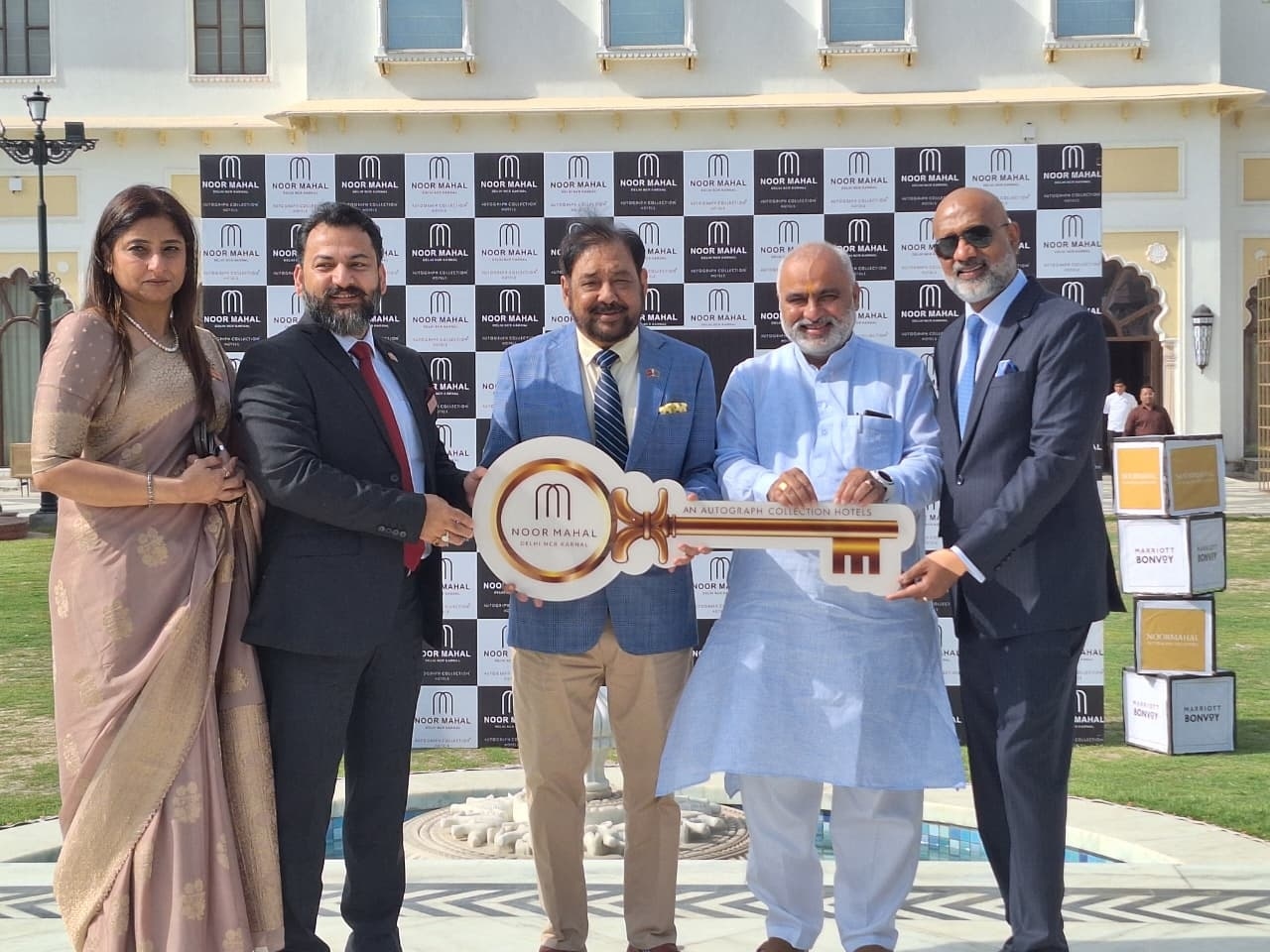



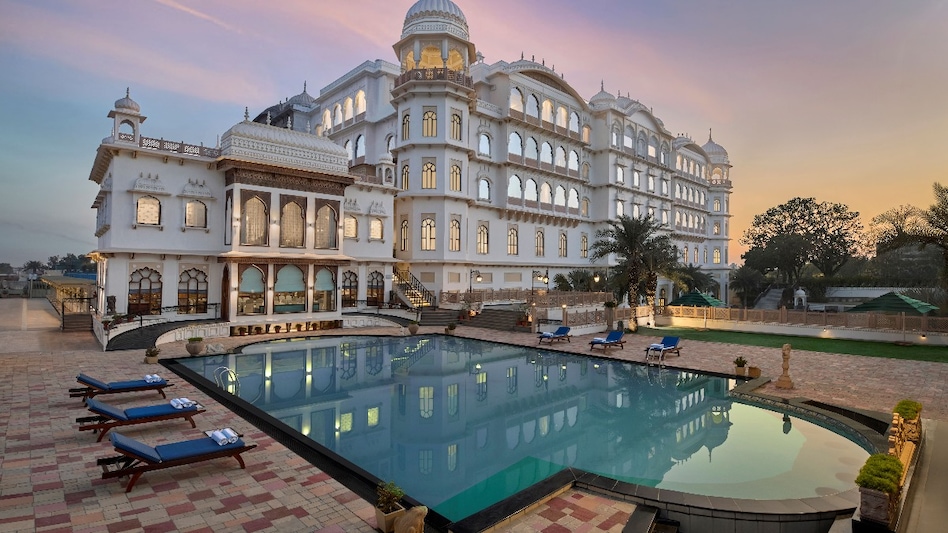 Marriott International's Autograph Collection Hotels has made its debut in India with NoorMahal, Delhi NCR Karnal.
 Brent climbs past $100 as US-Iran clashes in Strait of Hormuz reignite global energy fears
 GOP midterms bid: Trump offers $5,000 payout to American adults if party wins
  SFIO recommends investigation into Xiaomi’s India business over alleged irregularities: Report
 The iPhone folds! Apple unveils its first-ever foldable ‘iPhone Duo’ at Rs 2,99,900
 Apple launches iPhone 18 Pro, iPhone 18 Pro Max: Brings upgraded performance, camera, and more
 Gold Or Silver? Expert Reveals Best Investment Route Ahead Of Festive Season
 ETF Explained: How Exchange-Traded Funds Work, Costs, SIPs, Trading & Tax
 Tata Curvv EV: First Look At The Tech-Packed Electric SUV
 IDBI Bank Stake Sale: Fairfax Bid, ₹53,000 Cr Valuation & Deal Delay Explained
 Adani Group Plans $2.5 Billion Offshore Loan To Refinance Cement Acquisition Deb
 CPCL, MRPL, HPCL, BPCL, IOC shares: Brent nears $102; impact on oil stocks
 Dilip Buildcon shares jump 12% on Rs 1,800 crore LPG pipeline project win
 Coforge, Persistent, Tech Mahindra: Choice shares top IT picks; check targets
 HDFC AMC shares set for a 31% upside, MOFSL lists key catalysts
  Ather Energy shares climb 4% as Nomura raises target price; what foreign brokerage says
 Apple announces iOS 27 release date: Check when your iPhone gets the latest update and new features
 Apple enters the foldable game. Now everyone has to follow.


