


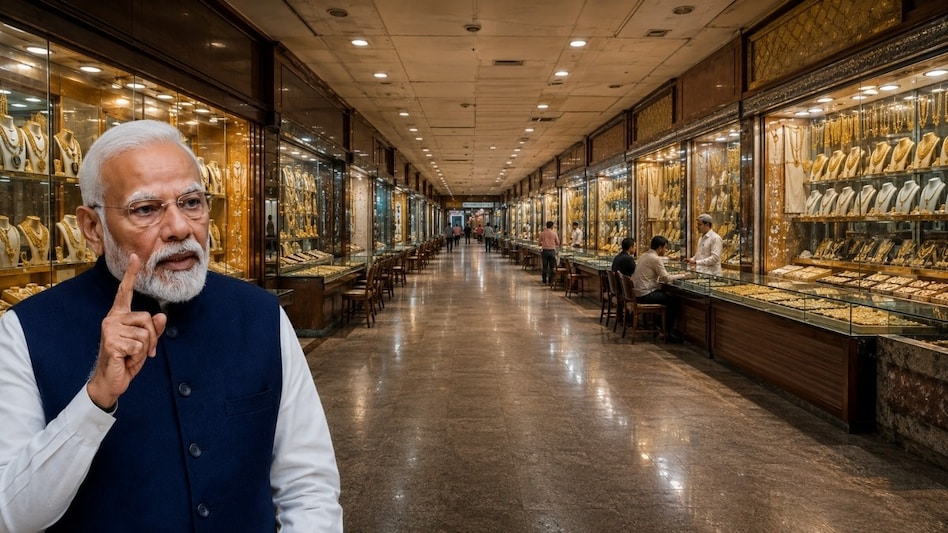
 Jefferies had noted that the PM Modi's appeal resembled the messaging seen during FY12-13, when the government introduced a series of restrictions to curb gold imports. (Photo: ITG/ChatGPT)
 Gold, silver prices: Jewellery stocks such Titan Company Ltd, Kalyan Jewellers India Ltd, Senco Gold Ltd, PN Gadgil Jewellers Ltd, Thangamayil Jewellery Ltd, PC Jeweller Ltd and Tribhovandas Bhimji Zaveri Ltd, among others, are likely to open in the red on Wednesday morning after the government reportedly raised import tariffs on gold and silver to 15 per cent from 6 per cent, as part of efforts to tame overseas purchases and ease pressure on the country's foreign exchange reserves. The move comes after the Prime Minister Narendra Modi’s earlier this week urged households to avoid buying gold jewellery for one year. PM Modi's appeals were seen as reduced policy appetite for further worsening of twin deficits, which triggered sharp market fall in the past two sessions.
The government imposed a 10 per cent basic customs duty and a 5 per cent Agriculture Infrastructure and Development Cess (AIDC) on gold and silver imports, taking the effective import tax to 15 per cent from 6 per cent at present. Nomura had earlier suggested that the government may disincentivise non-essential imports like gold, and may include a potential hike to the customs duty on gold imports. It had, however, noted that gold shipments have been stuck at customs since March, owing to administrative delays.

 NCLT sends Subhash Chandra insolvency plan back to chairperson as benches fail to reach majority
 Donald Trump threatens further strikes on Iran; oil prices up by more than 2.5%
 BSE, MCX, NSDL: Top capital market stocks to trade — Check key levels, target prices & stop loss
 Top stocks in news: Symbiotech, EPL, Milky Mist, TBZ, Skyways, PVR Inox, Hy-Tech, Cipla, Kotak Bank
 Anthropic warns Claude users as malware steals login sessions and drains account usage
 Indian Markets Outlook: Is Bear Phase Ending? Maneesh Dangi Sees Better Next 6-12 Months
 This ₹5 Lakh AI Gym Wants To Replace Your Gym
 Nepal Flood Horror: Sadhguru, Manisha Koirala Stand In Solidarity As Rescue Efforts Continue
 Nepal Flood Horror: Children Found Alive After Days Under Debris, Hope Emerges From Devastation
 India’s 6% Growth Trap: Why Manufacturing Still Struggles To Beat China
 PVR Inox stock in focus today as board clears share buyback
  Dividend stocks: Jindal Drilling, Procter & Gamble, Suprajit Engg, Maharashtra Seamless to turn ex-date today
 RIL, Jio Financial, Airtel, Adani Energy Solutions see rise in promoter holding in Q1 FY27; full list
 TBZ share price in focus as GRT Jewellers’ open offer at 18% discount to prevailing level
 ITC, Happiest Minds shares in focus after ITC Infotech merger announcement. Key details
 ‘I will miss this work in ways I can only begin to imagine’: Tim Cook’s emotional farewell note as Apple CEO
 Petrol, diesel prices today, September 1: Check latest rates in Delhi, Mumbai, Chennai, Kolkata & morePVR Inox stock in focus today as board clears share buyback Dividend stocks: Jindal Drilling, Procter & Gamble, Suprajit Engg, Maharashtra Seamless to turn ex-date todayRIL, Jio Financial, Airtel, Adani Energy Solutions see rise in promoter holding in Q1 FY27; full list












