


 India is the third-largest oil importer globally, and energy imports constitute a large part of its trade bill.
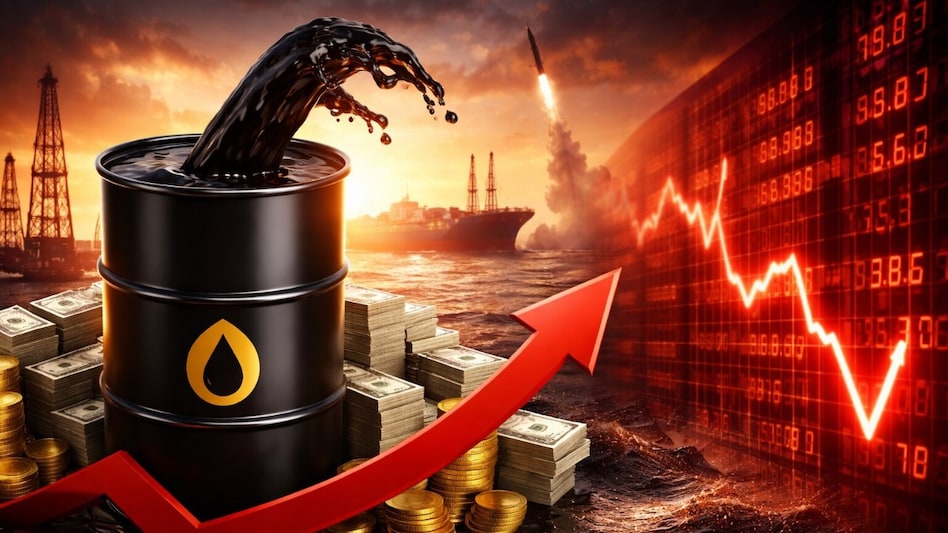
 Indian crude oil basket, a derived mix of sour grades (Oman and Dubai average) and sweet grade (Brent dated) processed in Indian refineries, rose to $146.09 per barrel, according to the latest data from the Petroleum Planning and Analysis Cell.
With this, Indian crude oil basket averaged at $111.39 per barrel in March, 61.4 per cent higher than February’s average of $69.01 per barrel, raising inflationary concerns in India. The sharp rise followed an escalation in the West Asia crisis, with missile attacks on oil infrastructure in Iran, Qatar and Saudi Arabia. Brent crude futures for May delivery hit a high of $112.85 per barrel, with some analysts flagging the possibility of prices touching $130 per barrel in the coming days. The 2026 Iran war began on February 28, 2026.

 ‘No one owes Air India a living’: Backlash in Singapore parliament as airline seeks $1.5 billion from Tata, SIA
 SIP inflows hit ₹1.26 lakh crore in April-July: Is too much money chasing too few stocks?
 ‘If there were a market contagion’: Why Zerodha’s Nithin Kamath finds margin funding business scary
 Why HDFC Bank is facing a lawsuit in the US
 Sugar shortage in India: Festive season gets less sweeter! Blinkit, Swiggy Zepto cap order sizes
 Indian Pharma Stocks: Why R&D-Led Companies Could Become Multibaggers
 “I Am Chief Minister For All”: D.K. Shivakumar On Governance, Congress Unity And Centre-State Ties
 Tejasvi Surya: BJP’s Karnataka Roadmap, Political Strategy And Vision For 2026
 Tejasvi Surya Slams Bengaluru Tunnel Road, Calls It A ‘Real Estate Project’ Not A Traffic Fix
 Auto, Hospitals, Pharma & Agrochemicals: Expert Reveals Top Sectors For H2 FY27
 Aragen Life Sciences filed DRHP with SEBI to launch its IPO; check all key details
 A91 Emerging, Sixth Sense-backed Pushp Brand receives Sebi nod for IPO
 HDFC Bank share price: Fifth-worst Nifty performer of 2026 offers maximum upside
 NSE IPO to headline September IPO rush; nearly 20 issues to hit D-St to raise upto Rs 45,000 crore
 IREDA, Ashok Leyland, SBI, Mazagon Dock, Narayana Hrudayalaya shares: Expert weighs inAragen Life Sciences filed DRHP with SEBI to launch its IPO; check all key details
 Did Apple just reveal the iPhone 18 Pro Max camera upgrade in its event invite? What we knowA91 Emerging, Sixth Sense-backed Pushp Brand receives Sebi nod for IPOHDFC Bank share price: Fifth-worst Nifty performer of 2026 offers maximum upside
 Nepal flood: Rescuers locate around 100 Indian visitors, 25 Chinese workers












