


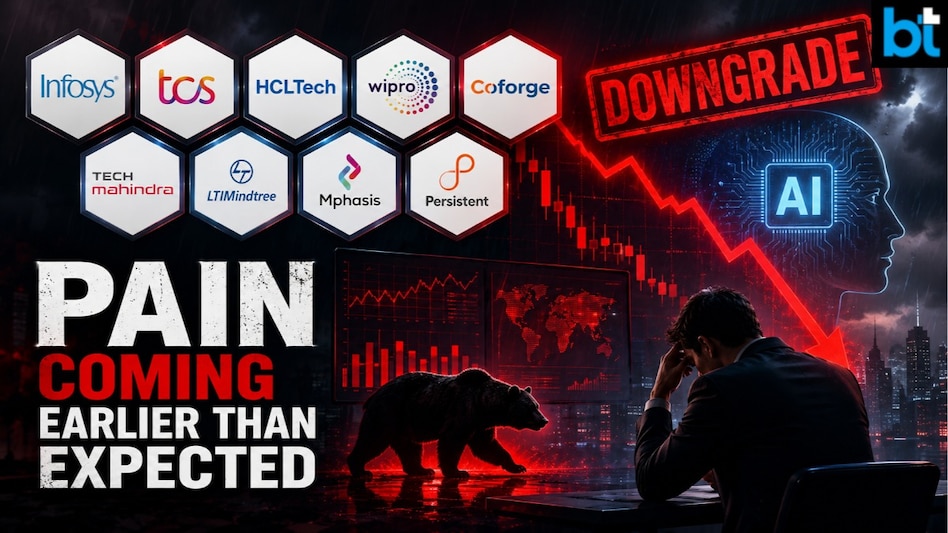
 AI-generated image for representational purpose only
Nirmal Bang Institutional Equities has cut its view on the Indian IT sector, saying generative AI is starting to weaken the labour-arbitrage model that built the industry and bring revenue and margin pressure forward. The brokerage has retained an 'underweight' rating on the sector for FY27, saying the business model transition is arriving sooner than it had expected.
Nirmal Bang said the productivity gains from GenAI are largely bypassing IT services firms and moving to model makers instead. It said developer throughput is rising 5.8-8 times, while clients are already building about 20 per cent compression into budgets. That, it said, is turning billable engineer-hour margins into compute spend and could reduce IT services' share of global IT spend to 27.2 per cent in CY28 from 30.9 per cent in CY25.

 Parth Jindal takes charge as Chairman at JSW MG Motor India to drive green mobility
 HDFC Bank leadership: Ex-SBI chairman Dinesh Khara being considered for MD, CEO role, says report
 John Ternus’ biggest challenge as Apple CEO: Reshaping a decades-old leadership team
 RIL, Adani Energy, SBI Cards, Laurus Labs: MSCI rebalancing to drive market volatility today
  ISRO’s ‘Bahubali’ gathers industry bigwigs: L&T, Adani, JSW eye rocket technology
  Debt Funds Explained: Who Should Invest & How Much Debt Should Be In Your Portfolio?
 FD Or Debt Fund: Which Can Offer Better Returns, Tax Benefits & Liquidity?
 Why Meta Could Be Fined $1.4 Trillion! Instagram-Facebook Could Change Forever
 Gold Price Outlook: Can Festive & Wedding Demand Push Prices Higher In India?
 Gold Price Rally: Why Gold Surged 16% In August; Key Triggers Behind The Comeback
 HAL share price: Buy, hold or sell this defence stock? Here's fresh target
 Aadhar Housing, Aavas Financiers, Home First, India Shelter shares: Check target prices
 Manipal, VBL, Urban Co, AEL, Lenskart among stocks with fresh brokerage interest for upto 62% rise
 Ather Energy shares: Can this stock double after 423% return over IPO price? Targets
 ZEE Entertainment shares tumble 14%, take losing run to 4th session; key details
 Bitcoin Crosses $80,000: What’s Driving The Crypto Rally?
 Will Tukaram Mundhe Complete His 3-Year Tenure? “If Government Wishes,” He Says
 Railway Linen Mystery: 1.27 Crore Items Go Missing From AC Coaches
 Laptop cleaning hack: This simple household item can remove dust from hidden corners
 A Big Auto Investment Pitch From Uttarakhand.












