












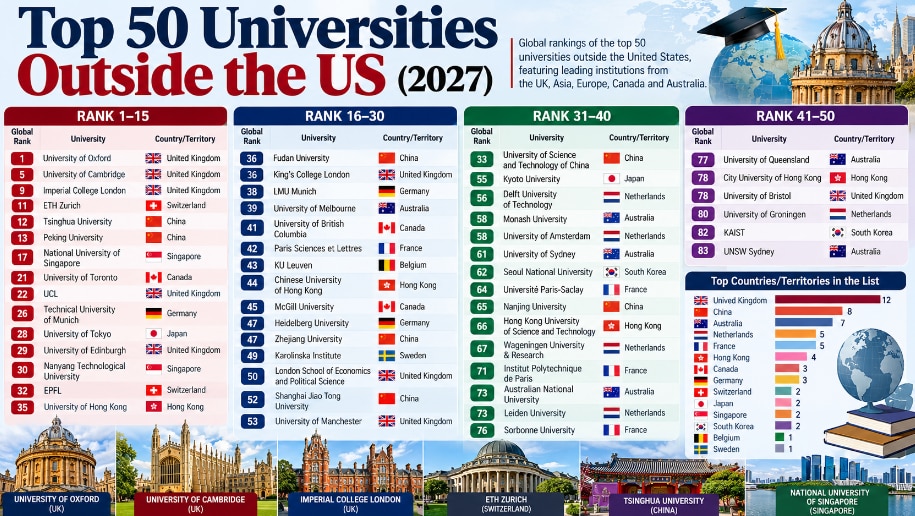



 One of the key developments in the 2027 rankings is the improved position of Asian universities
The United Kingdom, Switzerland, China, Singapore, Canada and Australia continue to feature prominently among the world's leading higher education destinations, offering students alternatives to studying in the United States. The latest global university rankings highlight the strength of established European institutions alongside the growing influence of Asian universities.
According to the Times Higher Education (THE) World University Rankings 2027, the University of Oxford retained the top position for the 11th consecutive year, while China's Tsinghua University climbed to 11th place globally. The National University of Singapore (NUS) also entered the global top 15, marking a significant milestone for Asian higher education.

 US-Iran breakthrough this week? $6 billion frozen funds, secret nuclear inspection in new peace proposal
 'We are very, very close': Rubio says India-US trade deal nearly done, leaders may sign soon
 Qualcomm to cut jobs globally from November: 'Performance-focused reduction'
 Can Reliance help bring Venezuelan oil back to market? Rubio says talks scheduled for Wednesday
 Sapiens author warns: 'AI's biggest danger isn't killer robots but collective dementia'
 Starlink Vs India: Is Elon Musk Being Blocked? | Tech Today
 RBI Measures Boost Rupee | Is Further Depreciation Unlikely?
 More RBI Rate Hikes Ahead? PPFAS Mutual Fund CIO Shares His Outlook
 Retirement Planning: How a ₹10,000 Monthly SIP Can Grow to ₹1 Crore in 20 Years
 Volkswagen On CNG Cars, JSW Partnership And India's Auto Market Outlook

 Sona BLW, Solar Industries, Oracle, Aurobindo Pharma, CG Power: Midcap performers of 2026, price targets and more
 Jio Platforms IPO: From 14th spot to telecom leader, how Jio transformed India’s digital landscape
 Tonbo vs Bonfiglioli vs Zetwerk vs Sahajanand IPO: Which issue offers best allotment odds; fresh GMP
 ‘It’s crazy that even in 2026…’: Nithin Kamath in disbelief over WhatsApp-driven stock manipulation
 Jio IPO: Overseas expansion to unlock new revenue streams through telecom technology
 Financial Horoscope Today, October 21, 2026: New Income Opportunities Open for Gemini Signs, Know the Status of All 12 Signs
 EBLR vs RLLR: How SBI's lending rate revision affects home loan borrowers
 World’s 10 biggest banks ranked: China takes top four spots, US banks follow
 Planning to study or work in Canada? Ottawa plans to cut student and foreign worker arrivals
 India ranks 10th among world's largest tourism economies; US leads with $2.63 trillion


