


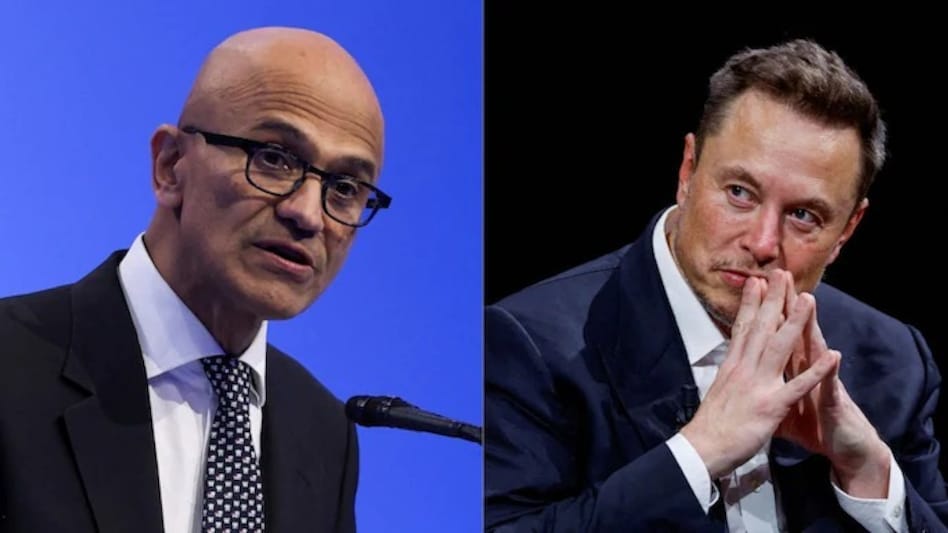
 Nadella, Musk are among top H-1B visa holders who shaped US tech industry
The United States introduced the H-1B visa in 1990 to hire foreign workers in specialty occupations, helping kickstart the "American Dream" for many immigrants. Effective September 21, the US has imposed a steep one-time fee of $ 100,000 on new H-1B applicants, raising concerns among skilled professionals worldwide.
Historically, the visa has enabled many prominent figures in technology and business to establish themselves in the US. Some notable H-1B visa holders include Satya Nadella, Elon Musk, Rajiv Jain, and others.

 'AI ending humanity is nonsense': Ex-Infosys CEO Vishal Sikka rejects growing doom warnings
 'Majority among two is two': Tata Trusts says Chandrasekaran reappointment failed AoA condition, has no legal effect
 ICAI plans further reforms to scale up homegrown accounting firms
 'Modi admin has done a phenomenal job': Blackstone's Jon Gray on what changed in India
 'SC/ST Act is being weaponised': Tech CEO backs IIT Bombay Professor, calls for case withdrawal
 Gold Price Target 2026: Expert Sees MCX Gold At ₹1.8 Lakh By Year-End Amid Strong Demand
 Health Insurance: Why Pre-Existing Diseases And Waiting Periods Matter For Buyers
 Crude Oil Above $100: How High Energy Prices And Rupee Weakness Impact Gold Prices In India
 CEA On India’s Manufacturing Rise, Atmanirbhar Bharat And Modi’s Economic Policy
 Health Insurance Buying Guide: 7 Things First-Time Buyers Must Check Before Choosing A Policy
 SpaceX weight in Nasdaq 100 to jump to 2.82% following quarterly index rebalance: Report
 Tata Motors or Ashok Leyland? Analyst reveals his preferred auto stock for near-term gains
 Maharashtra Scooters, Dixon Tech, Bharat Dynamics, Jai Corp among stocks to turn ex-dividend on Monday
 Jindal Supreme, SS Retail, Hero Motors IPOs subscribed up to 181 times on final day; details here
 Sensex, Nifty post sixth weekly loss; TCS, Titan among top laggards, slip up to 4%
 LPG refill without Aadhaar authentication: What changes from October 1 and how to get subsidy
 From terrace Wi-Fi to IIT Delhi: How this Mumbai student secured AIR 2,456 in JEE Advanced
 Hormuz crisis exposed the world's energy weak spots: Why the next shock could hurt more
 ‘Just have to know what floats your boat': Former Uber CMO on quitting Rs 1 crore job for farm life
 Could AI really kill us all? Here’s what MIT researchers fear and what they don’t












