


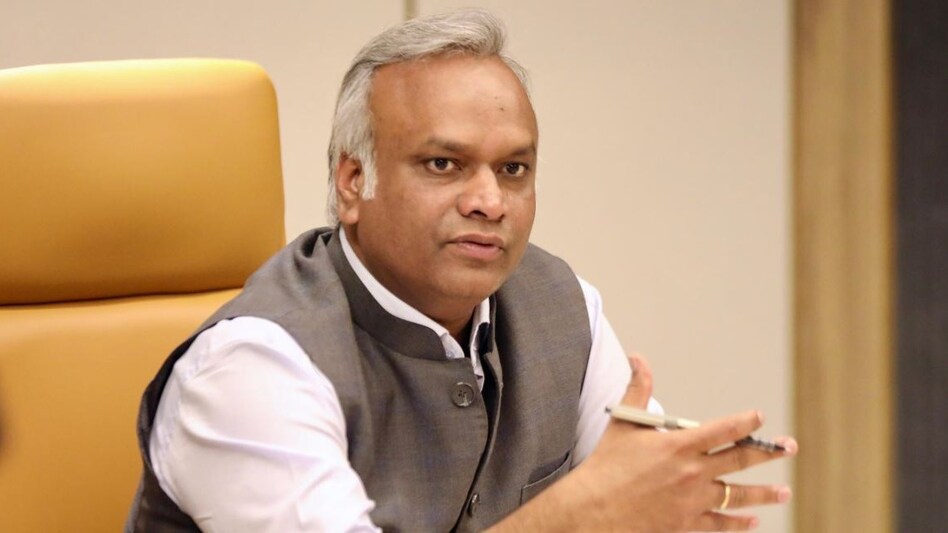
 'Modi ji’s best friend signs an executive order...': Priyank Kharge slams Trump’s visa fee hike
In a sharp critique of the growing US-India ties, Congress leader Priyank Kharge has slammed the latest U.S. move imposing a $100,000 annual fee on H-1B visas, a policy expected to disproportionately affect Indian tech workers.
Kharge’s remarks are a response to multiple tensions between the two nations, where he said, "This comes after the 50% tariff, the HIRE Act, the lifting of the Chabahar port sanction exemption and even his call asking the EU to put a 100% tariff on Indian goods."

 NDA may win 326 seats, BJP 261 if Lok Sabha polls held today: India Today-CVoter MOTN
 India eyes ₹13,000 crore battery component push to reduce reliance on China: Report
 BT Explainer: Why E10 could make a comeback via premium fuel dispensers
 Subhash Chandra says NCLT insolvency claim is ₹3,992 crore, not ₹22,000 crore as reported
 HDFC Bank share price: Fifth-worst Nifty performer of 2026 offers maximum upside
 75% Small Caps: How Growth Investing Could Create Multibagger Returns Over The Next Decade
 India Commits Over $150 Million Via UN Funds For Digital, Health And Climate Projects
 Commodity Outlook: Gold & Silver Prices Set To Rebound — Should You Invest? | Money Today
 U.S. Spy Chief In Moscow? Secret C-17 Flight Sparks Mystery Over Ukraine Peace Talks
 Mohan Bhagwat In New York: Mamdani’s RSS Attack Sparks Political Showdown
 HDFC Bank shares hit 52-week low, down 28% YTD; experts see further downside
 Fintech firm Paramotor Digital gets Sebi nod for IPO
 Wipro ADRs jump 7% on Google Cloud partnership; key details
 Internet stocks look expensive, but Nykaa and Lenskart remain long-term bets: Mayuresh Joshi
 Gujarat Pipavav shares: JM Financial retains target, sees 27% upside75% Small Caps: How Growth Investing Could Create Multibagger Returns Over The Next Decade
 Skywatchers, get ready: 96% of the Moon will disappear as Earth casts its shadow on August 28India Commits Over $150 Million Via UN Funds For Digital, Health And Climate Projects
 BT Explainer: Why JSW Group is putting its plans to make battery cells in India on holdNDA may win 326 seats, BJP 261 if Lok Sabha polls held today: India Today-CVoter MOTN












