












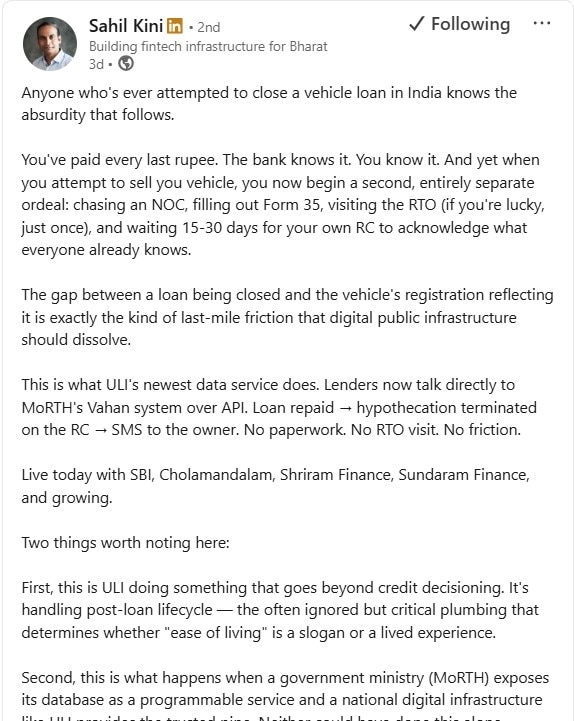



 MoRTH rolled out the system from March 1, initially integrating it with one public sector bank and five NBFCs, with more lenders to be added in phases.
Anyone who has tried to close a vehicle loan in India knows the frustration that often begins after the final payment is made. According to Sahil Kini, co-founder of fintech infrastructure firm Setu, the real ordeal usually starts when borrowers try to remove the bank’s hypothecation from their vehicle’s registration certificate (RC), even though the loan has already been fully repaid.
Kini pointed out that despite clearing every rupee of the loan, the RC continues to show the lender’s name, forcing the vehicle owner to go through a separate and time-consuming process. Borrowers typically have to obtain a No Objection Certificate (NOC) from the bank, submit Form 35, visit the Regional Transport Office (RTO), and then wait for days or even weeks for the records to be updated. In many cases, this becomes a problem when the owner wants to sell the vehicle or transfer ownership, as the RC still reflects an active loan.

 ‘An Indian consumes 1/10th of an average American’: Amb Kwatra says energy security comes first
 Tata stock to buy: Nuvama bets on unique tech-telecom play, sees 28% upside
  NSE IPO, Hero Motors IPO, SS Retail IPO, Jindal Supreme IPO: GMP of four ongoing issues rises up to 32%
 UPI MDR: BharatPe distances itself from Ashneer Grover's remarks, says UPI to remain free for consumers
 IndiGo shares in focus as baggage, infant fee, priority boarding charges likely raised
 Corporate Health Insurance Vs Retail Policy: Why You Need Personal Health Cover Too
 How India Changed In 12 Years: PM Modi’s Journey From Economic Reforms To Viksit Bharat
 Modi @76: From Twitter To Instagram, How His Digital Outreach Has Evolved
 Stock Picks To Watch: Shibani Kurian Reveals Kotak AMC’s Market Bets
 Gold ETF vs Physical Gold: Know the Tax Rules, Charges and Key Differences
 Block deal effect: Bombay Burmah shares zoom 9%, Mcap crosses Rs 10,000 crore
  Yatharth Hospital shares jump 20% in two days; what's behind the surge?
 Veegaland Developers IPO shares make decent debut; stock lists at 10% premium on NSENSE IPO, Hero Motors IPO, SS Retail IPO, Jindal Supreme IPO: GMP of four ongoing issues rises up to 32%
 Tata Chemicals, Tata Investment shares drop up to 8%: Why Tata stocks are falling today
 iPhone 18 Pro, Pro Max now on Zepto, Blinkit and Instamart: Skip the Apple Store queue
 iPhone prices may rise again in 2027; Samsung’s latest memory deal could be the reasonBlock deal effect: Bombay Burmah shares zoom 9%, Mcap crosses Rs 10,000 crore Yatharth Hospital shares jump 20% in two days; what's behind the surge?Veegaland Developers IPO shares make decent debut; stock lists at 10% premium on NSE


