












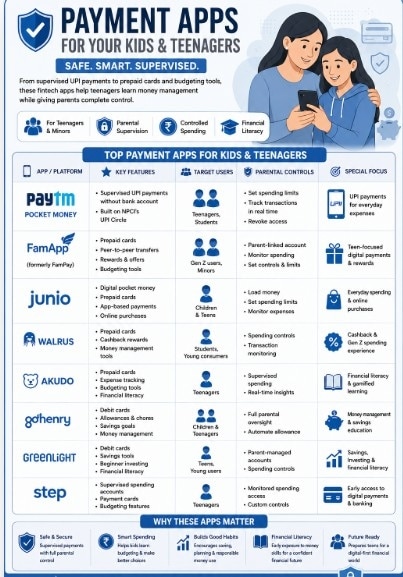



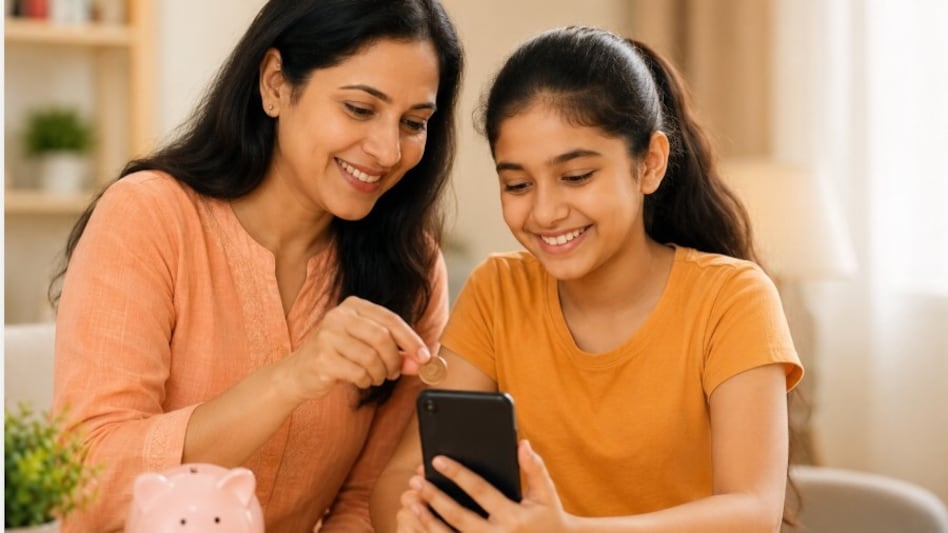
 Experts say teen fintech apps help companies build long-term customer relationships early.
India’s fintech ecosystem is rapidly expanding beyond adults, with payment platforms increasingly targeting teenagers and minors who are growing up in a digital-first economy. The latest entrant is Paytm’s “Pocket Money” feature, which allows teenagers to make UPI payments without opening their own bank account.
The feature, launched using NPCI’s UPI Circle framework, reflects a broader trend where fintech companies are building supervised payment solutions for younger users through prepaid wallets, cards, parental controls, and financial literacy tools.

 BRICS New Delhi Declaration calls for dialogue and multilateralism: All that it says
 PM Modi-Xi Jinping bilateral meeting begins on sidelines of BRICS Summit
 HDFC Bank submits two names for MD & CEO post as Sashidhar Jagdishan’s term ends
 RBI rejects Tata Sons’ CIC deregistration bid, makes stock market listing mandatory: Report
 ‘Everything will work out just fine’: Trump says Iran war will end very soon, oil prices will drop
 PM Modi Proposes BRICS Reform Roadmap, Calls For Global Governance Reset
 PM Modi Proposes 10-Point BRICS Reform Roadmap For Global Governance
 PM Modi, Xi Jinping, Vladimir Putin & BRICS Leaders Explore Bharat Innovates Exhibition In Delhi
 PM Modi, Xi Jinping & Putin Together At BRICS Summit In Delhi
 PM Modi Launches Two Postage Stamps Marking 20 Years Of BRICS At 2026 Summit
 Large caps stocks under pressure as rising US bond yields, crude prices weigh on foreign flows
  SEBI proposes bringing unexecuted Iceberg orders into closing auction
 SEBI proposes new expiry-day settlement formula for derivatives after CAS concerns
 Silver may climb to Rs 3.25 lakh, but January peak looks distant: Navneet Damani
 NSE IPO: Should you subscribe? Check price band, key details, fresh GMP, valuations & brokerage view
 Real estate outlook: Expert sees selective real estate bets as HNIs, family offices turn to alternatives
 BRICS Summit 2026:Chinese Journalist Says New Delhi Declaration Gives Stronger Voice To Global South
 BRICS Pay Could Connect UPI, Mir And Other Payment Systems Around The World
 Oil shock meets bond-market stress: Why 2026 is starting to resemble 2008 — but for different reasons
 Want to work in UAE? Indians can visit without a local employer under jobseeker visa; Check eligibility, rules


