















 In the current environment, where gold prices are fluctuating and equity markets are volatile, FDs provide capital protection, assured returns.
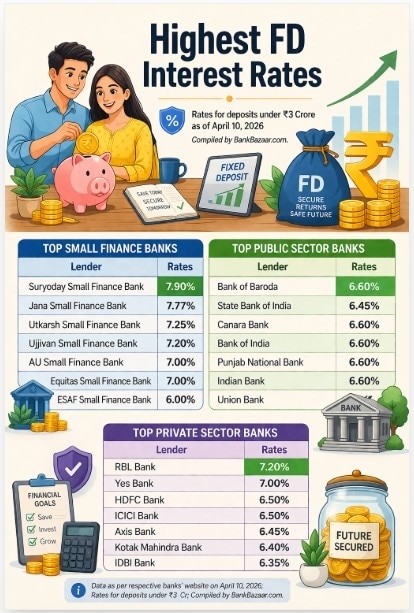
Fixed deposit (FD) schemes are regaining prominence in the current volatile market environment, offering stability and predictable returns as equity and commodity markets remain uncertain. With interest rates still elevated, FDs are increasingly being viewed as a safe parking option for surplus funds, particularly among conservative investors.
According to data compiled by BankBazaar from respective banks’ websites (as of April 10, 2026), FD rates continue to remain attractive across tenures, with small finance banks leading the pack.

 How Tim Cook introduced larger iPhone screens and changed Apple’s smartphone strategy
 HDFC Bank's next CEO: Deputy MD Kaizad Bharucha in focus after Jagdishan opts out
 NSE's ₹30,000 crore IPO: SBI, its investment banking arm to offload 1% stake
 India's debt ratio looks reasonable, but its interest cost doesn't, says ISB finance professor
 Less than $1 per tonne-km: Bengaluru startup announces autonomous seaplane to cut cargo costs
 “Women’s Reservation Will Be Fulfilled”: Kiren Rijiju On Delimitation And Census
 Freelancers & Content Creators: How To Plan Tax On Irregular Income? Expert Explains
 “Gen Z Is Not Anti-BJP”: Tejasvi Surya On Winning Young Voters And The BJP’s Youth Strategy
 Mid & Small Caps Rally: Why Strong Earnings Could Keep The Rally Going In 2026
 Content Creators: Are Free Products & Brand Gifts Taxable? GST & Income Tax Explain
 NSE's ₹30,000 crore IPO: SBI, its investment banking arm to offload 1% stake
 Jio Platforms IPO gets SEBI nod: Rs 27,500 crore debt repayment plan, $100 billion valuation in focus
 Closing Auction Session: Why the system expected to reduce volatility is still seeing occasional wild swings
 RIL-backed penny stock hits 52-week low; firm clarifies on high trading volume
 Happiest Minds shares slip despite IT stocks surge; here's what is weighing on the stock
 Escaped Kerala prisoner returns to police station for Aadhaar card, flees again after being recognised
 Do you still need Aadhaar for hotel check-ins? Here's what is changing“Women’s Reservation Will Be Fulfilled”: Kiren Rijiju On Delimitation And Census
 Pune Police detain three Bangladeshi nationals staying illegally, tighten festive season enforcement
 PM Modi conferred Uzbekistan's highest state honour. Watch PM's car diplomacy in Tashkent


