












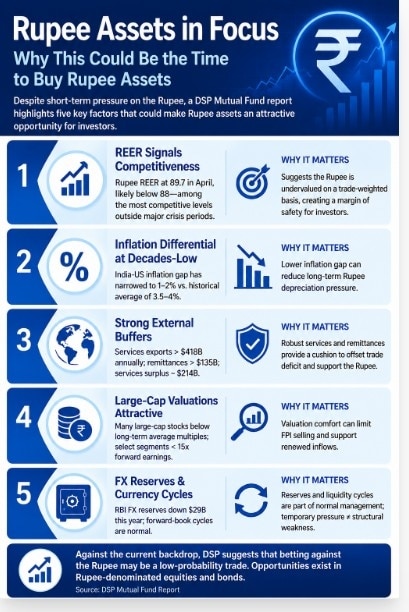



 DSP report suggests investors may consider opportunities emerging across Rupee-denominated equities and bonds.
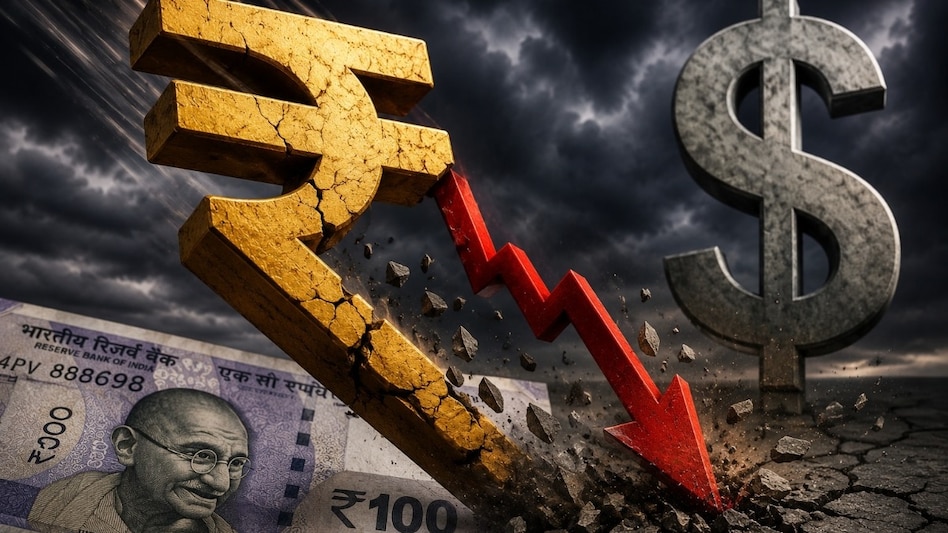
The Indian Rupee has come under pressure amid elevated crude oil prices, foreign investor selling, and concerns around India’s external balances. However, a recent DSP Mutual Fund note argues that current weakness may not necessarily be a sign of long-term structural stress and could instead create an opportunity for investors looking at Rupee-denominated assets.
The report highlights multiple macro indicators suggesting that despite short-term challenges, conditions may be turning favorable for the Rupee and domestic asset classes such as equities and bonds.

 'Vietnam revised GDP by 25% in 2019': Economist explains why last year's estimate changed
 NITI Aayog launches new platforms to scale up electric truck adoption
 'Beginning first round of reductions': JLR confirms 4,000 job cuts over next 2 years
 Honda outsells Hero MotoCorp for second straight month in August
  India goes big on defence: Rs 1.10 lakh crore acquisition plan cleared. What Army, Navy, IAF will get
 Non-Local Electric Bus Software Is A National Security Risk, Warns Eka Mobility Chairman Sudhir Mehta
 Mounjaro Sales Surge 502%: Why GLP-1 Drugs Are Taking Over India’s Pharma Market
 Auto Stocks Outlook: Why Investors Should Be Cautious Despite New Model Launches And Strong Demand
 U.S.-Iran War, Elevated Crude Hit Indian Stocks: Can Nifty Reverse Its Downward Trajectory Now?
 Crude Oil, Gold & Silver: What’s The Next Big Move? | Kunal Shah
 Tata Steel, Hindustan Copper, Lloyds Engineering shares: Expert weighs in; names top pharma, broking bets
 Adani Power secures LoI to acquire GVK Energy; details here
 Two upper circuits for Sterlite Technologies shares as firm discloses FY29 targets
 Sensex falls 383 points, Nifty settles at 23,779; IT, metals among top drags
 APL Apollo Tubes, KDDL, Globus Spirits among 11 stocks to turn ex-dividend tomorrow
 Pangea Ultima: New supercontinent could make 92% of Earth’s land uninhabitable for humans. Here's when
 UPI effect: ATM cash withdrawals fall even as cash in circulation rises
 International Literacy Day 2026: Why it matters and what this year's theme means 'Vietnam revised GDP by 25% in 2019': Economist explains why last year's estimate changed
 Geopolitics Is Now A Business Priority


