












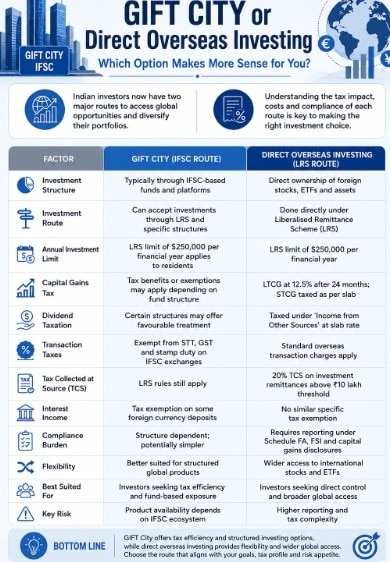



 Direct investing offers ownership and flexibility, while GIFT City may provide simpler structures and tax advantages.
As Indian investors increasingly look beyond domestic markets for diversification, global investing is becoming part of many portfolio strategies. A depreciating rupee, access to global companies and the search for broader growth opportunities are pushing investors to allocate capital overseas.
Today, investors broadly have two routes: investing directly in foreign markets under the Liberalised Remittance Scheme (LRS), or using Gujarat International Finance Tec-City (GIFT City), India’s International Financial Services Centre (IFSC). While both provide access to international assets, taxation, costs and compliance requirements can vary significantly.

 FTA with India to enter into force in 2027, says EU ambassador Jean-Eric Paquet
 Respite for passengers: No more train cancellations planned over CJP protest, says Railways
 124 former IAS and IFS officers back Election Commission, SIR; reject 'rigged' claims
 India’s 25-minute commute: Why short travel times may hide a deeper jobs crisis
 Make in India: Why India’s manufacturing gains look stronger against a turbulent decade
 REIT Returns Explained: Income, Capital Gains & Risks Investors Need To Know
 REIT Risks Explained: Key Factors Investors Must Check Before Investing In Commercial Real Estate
 Will IRDAI’s Broker Commission Crackdown Make Insurance Cheaper For Consumers?
 5 Reason Why Cheap Premium Insurance May Not Be The Best Choice
 Health & Life Insurance: How Much Cover Do You Really Need? Expert Explains
 Market on the back foot, opportunities ahead: where should investors put their money?
 Poonawalla Fincorp Q2 earnings: Net profit zooms 405%, NII at Rs 1,589 crore
  Vedanta, TCS shares to turn ex-dividend; Ola rights issue; 2 stock splits next week
 IPO rush: Rs 50,000 crore worth IPOs to hit Street by Diwali; Jio, Avada to lead fundraise
 Adani Ports, GMR Airports rise up to 5% amid block deal reports; check details
  'Undeclared emergency': Sonam Wangchuk threatens fast, padyatra over Delhi detentionsREIT Returns Explained: Income, Capital Gains & Risks Investors Need To Know
 'Arrest us all': Rahul Gandhi defies Modi govt, vows to protect democratic institutions124 former IAS and IFS officers back Election Commission, SIR; reject 'rigged' claims
 I was on flight when Dipke, CJP leaders were detained. Here's what unfolded


