India could lose more than 19 working days per worker every year due to extreme heat by 2030, according to a report by the Atlantic Council's Climate Resilience Center. The report highlights how climate change is becoming an economic issue, affecting not only businesses but also the day-to-day finances of households.
The biggest impact is likely to be on workers whose jobs require them to spend long hours outdoors or in hot environments. This includes construction workers, farmers, factory workers, delivery executives, transport staff and street vendors. As temperatures rise, working through the hottest parts of the day becomes unsafe, forcing many to cut back on working hours.
The report estimates that nearly 250 million workers in India could be exposed to heat stress in the coming years.
Lower earnings vs financial stress
For India's large informal workforce, fewer working hours usually mean less money. Unlike employees in the organised sector, informal workers generally do not receive paid leave, health insurance or social security benefits. If they don't work, they don't get paid.
This means every heatwave can have a direct impact on household income. Missing even a few days of work each month can make it difficult for families to pay rent, buy groceries, cover school fees or meet healthcare expenses.
The report says repeated income losses could force many households to dip into their savings or take loans just to manage day-to-day expenses. Families that already live on tight budgets are likely to be the most vulnerable.
Household bills
Heatwaves don't just reduce incomes—they also increase spending.
Electricity bills often rise sharply during prolonged periods of extreme heat as households rely more on fans, coolers and air conditioners. Water consumption also increases, adding to monthly utility costs.
Medical expenses can climb as well. Heat-related illnesses such as dehydration, heat exhaustion and heatstroke often require treatment, particularly for children, elderly family members and outdoor workers.
The combination of lower earnings and higher expenses can quickly strain household finances, leaving families with little room to save or prepare for emergencies.
How heatwaves affect your monthly budget
| Expense Head |
Impact During Heatwaves |
|---|
| Electricity bill |
Increases due to greater use of ACs, coolers and fans |
| Water bill |
Higher consumption for drinking and cooling |
| Healthcare |
More spending on heat-related illnesses |
| Income |
Falls if working hours are reduced |
| Savings |
Decline as families dip into emergency funds |
| Borrowings |
May increase to meet daily expenses |
Who pays the price
The impact goes beyond individual households. Lower labour productivity can slow construction projects, reduce agricultural output and disrupt manufacturing and logistics operations.
Businesses may also face higher operating costs as they invest in cooling systems, adjust work schedules and deal with productivity losses during peak summer months.
Who faces the biggest financial hit from heatwaves?
| Category |
How Heatwaves Affect Them |
|---|
| Construction workers |
Fewer working hours, lower daily wages, higher dehydration risk |
| Farmers |
Reduced outdoor working time, lower productivity, income losses |
| Factory workers |
Heat stress lowers productivity and raises health risks |
| Delivery executives |
Longer breaks, reduced deliveries, lower earnings |
| Street vendors |
Fewer customers during extreme heat and reduced working hours |
| Transport workers |
Higher health risks and productivity losses |
Experts say India's cities could face an even bigger challenge because of the urban heat island effect, where concrete buildings and roads trap heat, making urban areas significantly hotter than surrounding regions.
Better protection
The report says adapting to rising temperatures will require investments in climate-resilient infrastructure and stronger worker protection measures. These include better access to cooling facilities, flexible working hours, heat action plans and improved occupational safety standards.
It also calls for stronger social security for informal workers, who are most exposed to climate-related income shocks.
With heatwaves becoming more frequent and intense, the report warns that protecting workers is no longer only a public health issue. It is also essential for safeguarding incomes, preserving household savings and ensuring that rising temperatures do not push millions more Indian families into poverty.



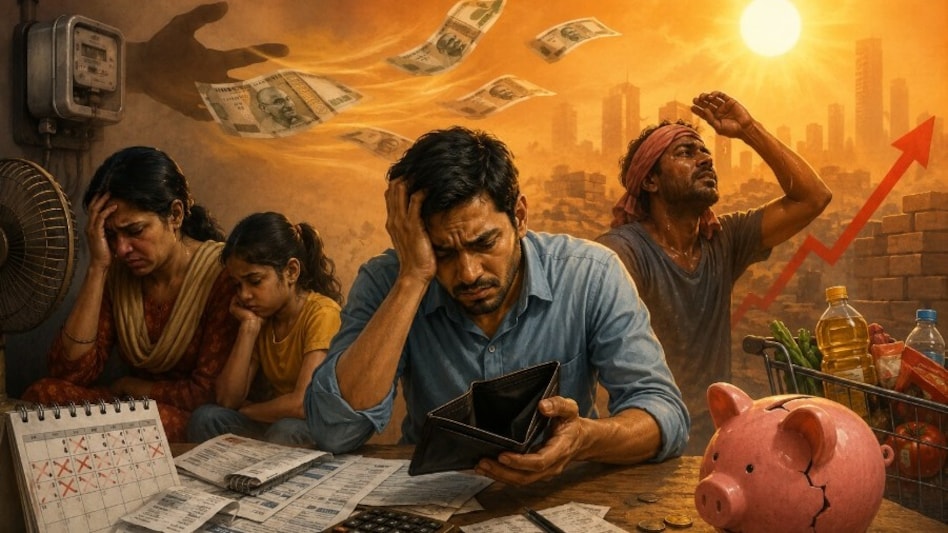 The biggest impact of climate change is likely to be on workers whose jobs require them to spend long hours outdoors or in hot environments
 Lack of US-India deal will not have an adverse impact on India’s growth, says Panagariya
 Sebi receives 20,000 comments on proposed CAS changes; framework to follow soon
 Apple removes Jack Dorsey’s Bitchat from India App Store, cites MeitY order under IT act
 Nvidia shares approach record high as AI optimism revives investor demand
 FM Sitharaman: Need to keep building resilience, not a one time exercise
  Mira Kapoor On Dhun Wellness, Clinical Longevity And The Dhun Intelligence Method
 Tech Gear EP 19 | iPhone 18 Pro Series, Apple Pay & Redmi Note 17 Pro Max | Business Today
 Mira Kapoor On Dhun Wellness, $4 Million Funding And Building Its Competitive Edge
 How To Transfer Data From Old iPhone To New iPhone | Easy Guide
 How Mira Kapoor Became An Investor And Decides Which Brands To Invest In
 Stock market sell-off: Nifty, Sensex log 8th straight weekly loss; key levels & top triggers now
 IPO boom: 69 Indian companies raise Rs 90,500 crore in Q3 despite stock market sell-off; what's next
 TCS, Infosys, HCL Tech, TechM, Wipro, LTM, Coforge, HEXT: Fresh target, Q2 previews for IT stocks
 Europe’s €3.2 billion grain loss: What it means for India’s food inflation outlook
 October Money Changes: UPI MDR, NPS Charges, FD Rules & Tax Deadlines Explained
 Mira Kapoor Highlights The Dhun Wellness Approach To Health, Metabolic Wellness & Longevity
 Mira Kapoor On Dhun Wellness, Beauty Business & Her Investment Journey












