











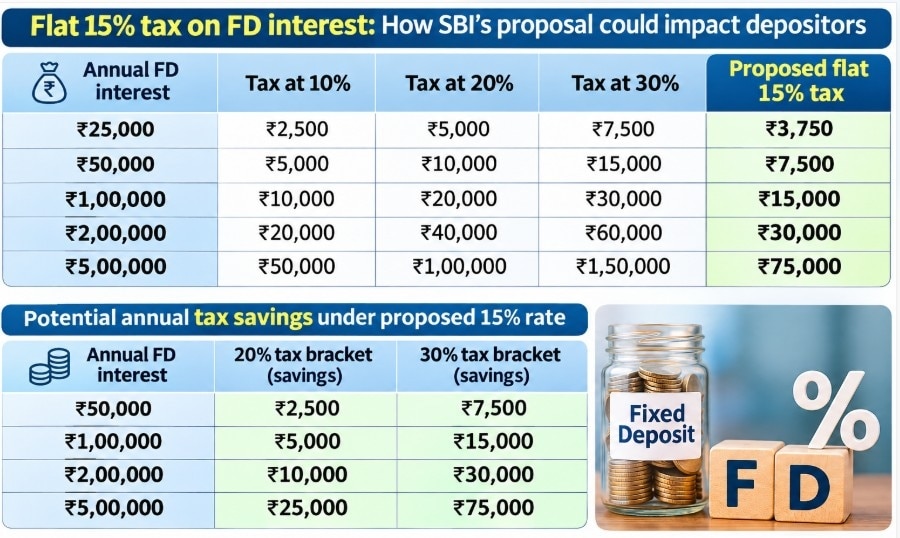



 SBI estimates that implementing the change would cost the government approximately ₹10,500 crore in annual revenue.
Fixed deposit investors could see a significant change in how their interest income is taxed if a proposal by SBI Research is accepted. In its latest Ecowrap report, dated November 2, the bank has recommended replacing the existing tax treatment of term deposits with a flat 15% tax rate across all maturities.
The proposal could particularly benefit depositors in higher income-tax brackets, who currently pay tax on FD interest according to their applicable slab rates. SBI estimates that implementing the change would cost the government approximately ₹10,500 crore in annual revenue.

 BT Exclusive: Indian IT sector needs to rediscover its growth model, says Raamdeo Agrawal
 Mukesh Ambani overtakes ByteDance founder Zhang Yiming to become Asia’s richest person after Reliance shares surge nearly 12%
 'You're looked down upon when...': IndiGo CEO as airline prepares for int'l expansion
 BT Explainer: How securities tax policies like LTCG have evolved
 Delhi pollution: Farm fires in Pakistan's Punjab to choke Delhi-NCR further? NASA pics suggest so
 U.S. Midterms 2026: Can Democrats Take Congress From Trump's Republicans?
 U.S. Polls, AI Valuations & Renewable Energy: Will India Could Attract Global Investors
 3 Catalysts Driving Reliance Industries’ Stock Outlook: Jio Valuation, O2C & Cash Flows
 U.S. Midterms 2026: Trump Faces Crucial Test As Congress Control Hangs In Balance
 Trump's Midterm Test: What It Means For Indian Stock Markets & Which Stocks To Watch

 SBI Q2 earnings: Net profit surges 14%, bad loans fall
 Bajaj Finserv Q2 results: Consolidated profit rises 25%; stock reacts
 Gold vs stocks: Why equities are better option; fixed income, InvITs outlook
 Vedanta clarifies on Odisha land allotment issue; check stock reaction
 NSE shares get 'Buy' ahead of Q2 results today; here's price targets
 Agniveer Scheme: Govt Weighs Tenure Extension Beyond Permanent Absorption
 EPFO WhatsApp Service: How To Check PF Balance & Download Passbook Step By Step
 Air India bets big on global expansion, CEO signals more widebody orders
 Market Regulator Proposes Govt To Scrap LTCG For FIIs: ReutersU.S. Midterms 2026: Can Democrats Take Congress From Trump's Republicans?


