


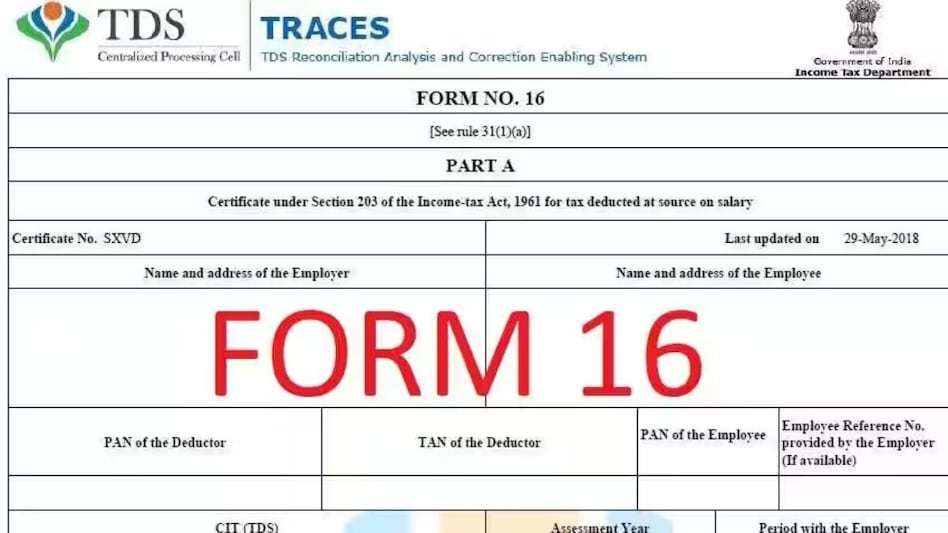
 Form 16 serves as the basis for reporting salary income, therefore, taxpayers should carefully review the document before submitting their returns.
Many salaried professionals believe that once their employer deducts tax every month and issues Form 16, their income tax obligations are fully taken care of. However, chartered accountant Nitin Kaushik has cautioned taxpayers against blindly depending on Form 16 while filing their Income Tax Returns (ITR).
“Relying blindly on your Form 16 to clear your tax slate is the fastest way to get a surprise demand notice,” said CA Nitin Kaushik.

 'Vietnam revised GDP by 25% in 2019': Economist explains why last year's estimate changed
 NITI Aayog launches new platforms to scale up electric truck adoption
 'Beginning first round of reductions': JLR confirms 4,000 job cuts over next 2 years
 Honda outsells Hero MotoCorp for second straight month in August
  India goes big on defence: Rs 1.10 lakh crore acquisition plan cleared. What Army, Navy, IAF will get
 Non-Local Electric Bus Software Is A National Security Risk, Warns Eka Mobility Chairman Sudhir Mehta
 Mounjaro Sales Surge 502%: Why GLP-1 Drugs Are Taking Over India’s Pharma Market
 Auto Stocks Outlook: Why Investors Should Be Cautious Despite New Model Launches And Strong Demand
 U.S.-Iran War, Elevated Crude Hit Indian Stocks: Can Nifty Reverse Its Downward Trajectory Now?
 Crude Oil, Gold & Silver: What’s The Next Big Move? | Kunal Shah
 Tata Steel, Hindustan Copper, Lloyds Engineering shares: Expert weighs in; names top pharma, broking bets
 Adani Power secures LoI to acquire GVK Energy; details here
 Two upper circuits for Sterlite Technologies shares as firm discloses FY29 targets
 Sensex falls 383 points, Nifty settles at 23,779; IT, metals among top drags
 APL Apollo Tubes, KDDL, Globus Spirits among 11 stocks to turn ex-dividend tomorrow
 Pangea Ultima: New supercontinent could make 92% of Earth’s land uninhabitable for humans. Here's when
 UPI effect: ATM cash withdrawals fall even as cash in circulation rises
 International Literacy Day 2026: Why it matters and what this year's theme means 'Vietnam revised GDP by 25% in 2019': Economist explains why last year's estimate changed
 Geopolitics Is Now A Business Priority












