


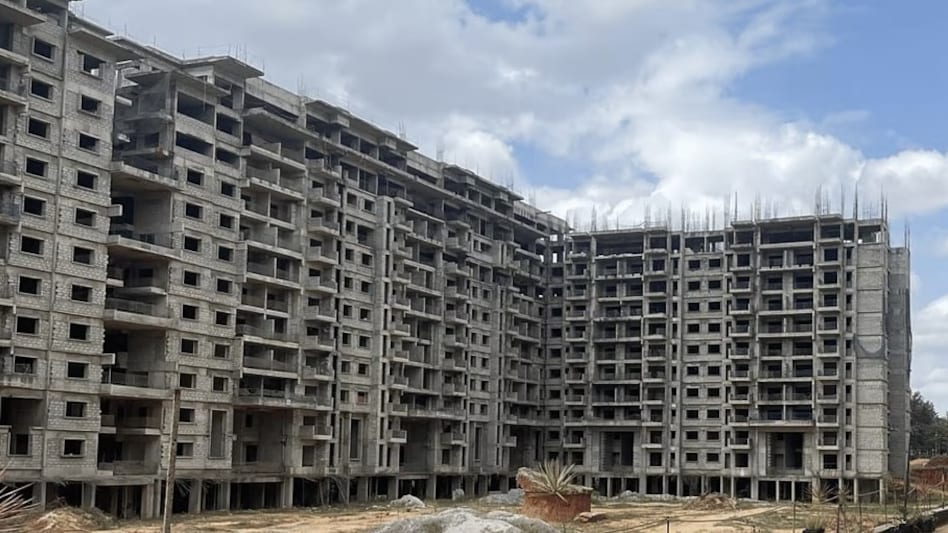
 Trump tariffs to take a toll on the demand of affordable housing
India's affordable housing market faces a new challenge following the imposition of 50% tariffs by the US. Experts warn that if these trade measures are not moderated, they could severely impact this critical segment, which is essential for many vulnerable sectors.
Dr. Prashant Thakur, Executive Director - Research & Advisory at ANAROCK Group, highlighted the situation, stating, "This category of homes priced INR 45 lakh or less was already gravely hit by the COVID-19 pandemic and is still struggling to find any semblance of firm ground. Trump's mercenary tariffs will snuff out even the dimmest ray of hope for this segment." This segment's fortunes are closely tied to the country's MSMEs and SMEs, which play a significant role in driving demand.

 Nvidia shares get 60% target cut! What should Indian stock investors know
 Noel Tata steps down as Tata Investment Chairman after 16 years; Bahram Vakil to take over
 Will October inflation breach 6%? What it means for interest rates, EMIs and GDP growth
 India overhauls visa rules: Tourist Visa renamed, 70% fewer form fields, new categories for foreigners
 'RBI may struggle to meet 4% inflation target': Economist flags fastest money, credit growth since 2012-13
 India's Jobless Rate Falls to 5.1%, But Why Is Urban Youth Unemployment Rising to 18.9%?
 Budget 2027: Industry Seeks LTCG Tax Abolition, STCG Cut To 10%, Lower STT Rates
 LIVE Daily Calls: Ask Your STOCK MARKET TODAY QUERIES | Market Update LIVE | Share Market News Today
 U.P. SIR Row: Yogi’s 1.27 Crore Hindu Voter Claim Gives Opposition Fresh Ammunition
 Big Challenge For Vijay Govt: 11 Diwali Murders Put Tamil Nadu Law & Order In Focus

 Cochin Shipyard shares tumble 7%: Weak Q2 earnings overshadow Rs 500 crore MoD order
 Sensex jumps 773 points, Nifty tops 25,250; profit booking trims gainsNvidia shares get 60% target cut! What should Indian stock investors know
 Mutual fund SIP inflows slip marginally to Rs 32,160 crore in October; equity inflows fall 14%
 TVS Motor expands global portfolio with Callisto 110 launch in IstanbulNoel Tata steps down as Tata Investment Chairman after 16 years; Bahram Vakil to take over
 Former VP Jagdeep Dhankhar collapses during morning walk, admitted to AIIMSIndia overhauls visa rules: Tourist Visa renamed, 70% fewer form fields, new categories for foreigners
 'I also love Gujarati food': Sonia Gandhi's 'Belonging' reveals her favourite Indian dishes'RBI may struggle to meet 4% inflation target': Economist flags fastest money, credit growth since 2012-13












