At the centre of this chain reaction is a deceptively simple concept: albedo.
What is albedo — and why should we care?
Albedo is a measure of how much sunlight a surface reflects back into space.
Fresh snow and ice can reflect up to 90% of incoming sunlight. Oceans, by comparison, reflect less than 10%. This means that when bright snow and ice disappear, darker surfaces are exposed and absorb more solar energy.
That creates a dangerous feedback loop: Higher temperatures → melting ice and snow → lower albedo → more absorbed sunlight → more warming.
The planet effectively loses part of its natural cooling mechanism.
NASA observations since 2000 have shown a declining trend in Earth's albedo. Estimates cited in the source material suggest that albedo loss has already contributed about 0.2°C of warming in recent years.
Why a warmer planet is a problem for life
The biggest concern is not simply that humans will experience hotter summers. Rising temperatures can disrupt the interconnected systems that make life possible.
1. Humans face greater heat stress: As average temperatures rise, heatwaves can become more frequent or intense. Extreme heat can affect the body's ability to regulate its temperature, increase pressure on healthcare systems and make outdoor work increasingly difficult. The risks are particularly high for older people, children and those who work outdoors. But heat is only one part of the problem.
2. Food production comes under pressure: Crops depend on a relatively narrow range of temperature, water availability and growing conditions. Higher temperatures can reduce yields, increase water demand and intensify drought stress in vulnerable regions. Changes in rainfall patterns can compound the problem. Livestock can also suffer as heat stress affects animal health, reproduction and productivity. The result is a climate challenge that can eventually become a food-security challenge.
3. Oceans absorb the consequences: The oceans absorb much of the excess heat generated by global warming. Warmer waters can disrupt marine ecosystems, alter the distribution of fish and contribute to coral bleaching. Since billions of people depend directly or indirectly on marine ecosystems for food and livelihoods, changes beneath the waves can eventually reach communities on land. A warmer ocean can also interact with the atmosphere and influence weather and climate patterns.
4. Wildlife loses stable habitats: Animals and plants are adapted to particular temperature ranges and seasonal cycles. When those conditions shift too quickly, species may have to move, adapt or compete for shrinking habitats. Some can migrate to cooler regions; others cannot. For species already living near their thermal limits, even relatively small changes can become critical.
5. Forests & ecosystems can become more vulnerable: Higher temperatures combined with drought can place additional stress on forests and other ecosystems. Dryer conditions can increase wildfire risks in some regions, while heat and water stress can weaken vegetation. As ecosystems change, the effects can spread through food webs — from plants and insects to birds, mammals and predators.
6. Ice loss threatens more than polar landscapes: The loss of snow and ice is particularly important because it creates the albedo feedback. As Arctic sea ice melts, darker ocean water absorbs more sunlight. That additional heat contributes to further warming and ice loss. Glaciers and snowpack also act as important freshwater stores for many communities. Their continued decline can alter water availability for people, agriculture and ecosystems.
This does not mean warming will suddenly accelerate uncontrollably. But it does mean that the climate system contains feedbacks that can amplify the initial warming caused by greenhouse-gas emissions.
Can we stop the planet from getting darker?
Some measures can help. Protecting snow and ice, preserving ecosystems and reducing pollution that darkens snow can help maintain Earth's natural reflectivity. Cities can also use lighter-coloured roofs and pavements to reflect more sunlight and reduce local heat absorption.
Scientists are also studying technologies such as marine cloud brightening and stratospheric aerosol injection that could artificially increase Earth's reflectivity.
But these approaches remain uncertain and carry significant risks. More importantly, they would not remove greenhouse gases from the atmosphere.
The fundamental solution remains reducing emissions. Earth's falling albedo is a reminder that climate change is not one problem happening in one place. It is a chain reaction moving through the planet's interconnected systems.



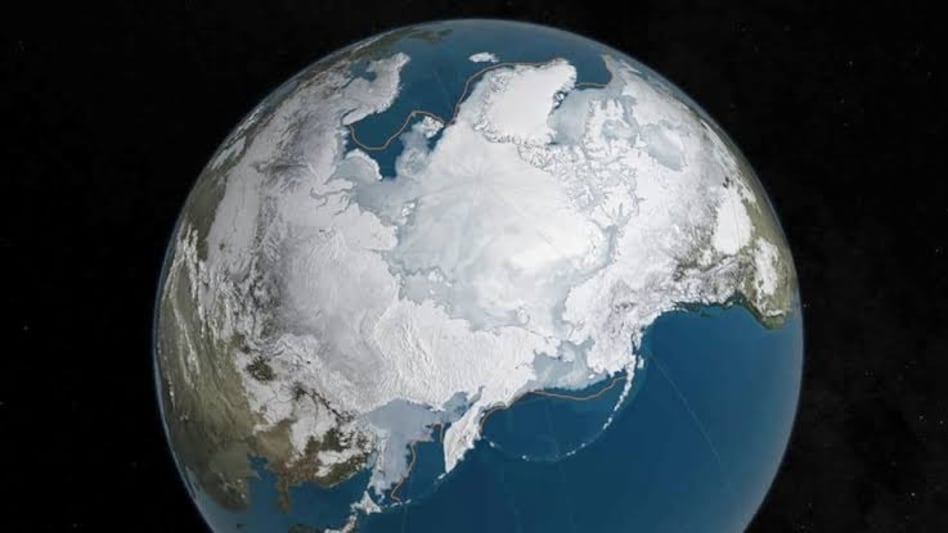 Protecting snow and ice, preserving ecosystems and reducing pollution that darkens snow can help maintain Earth's natural reflectivity.
 ‘Painful to hear allegations of data jugglery’: MoSPI secretary Saurabh Garg says every data is verifiable
 India competitively better placed amid uncertain times, says Piramal Group chairman Ajay Piramal
 BDL share price: Defence PSU fails to sustain breakouts; expert says ‘don’t chase’, shares key levels
 Subhash Garg was questioned 8 years ago: Letter from prominent BJP MP to PM surfaces
 HDFC Bank, PNB, SBI, RBL, Federal Bank, Axis, ICICI, Kotak Bank: Share price targets
 Auto Industry Price Hikes Remain Marginal: Hyundai India MD Tarun Garg
 EXCLUSIVE | MoSPI Secretary Saurabh Garg On 7.8% GDP | Rejects Data Manipulation Claims
 AI Is Moving To The PC: Dell’s Jacinta Quah On India’s 51% Adoption
 From Air Marshal To Ram Lalla’s Guardian: Meet The New CEO Of Ayodhya’s Ram Temple Trust
 Global Bond Carnage: Why Global Bond Yields Are Exploding - And What It Costs You
 Fintech smallcase launches US stock, ETF portfolios for Indian investors
 Sensex slumps over 400 points in final five minutes on F&O expiry day; CAS in focus
 Britannia, Tata Consumer, Marico: What should investors do as commodity inflation rise
 How EV-themed stocks could impact sentiment on Maruti Suzuki counter
  Olympic City to F1-ready motorsports hub: Tamil Nadu CM Vijay announces major sports infrastructure push in Chennai












