


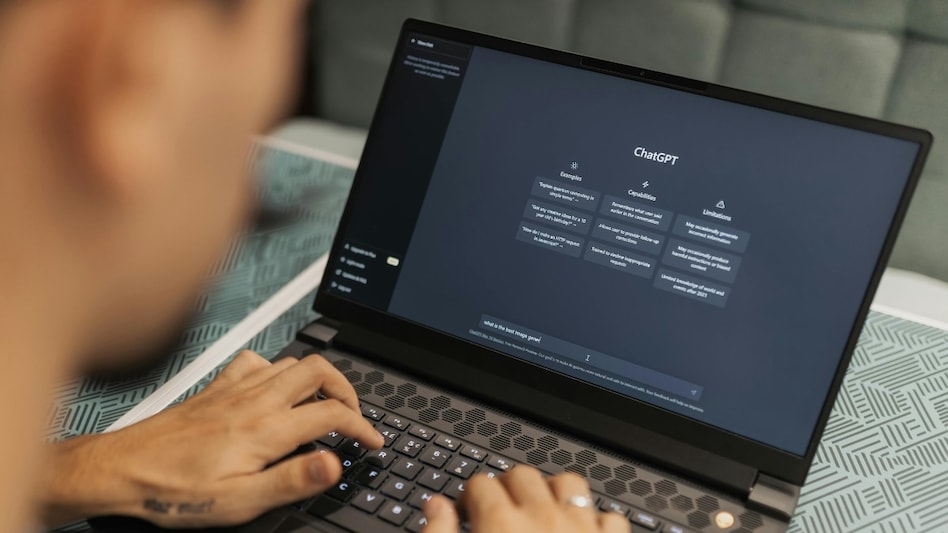
 ChatGPT
A new academic study has revealed that while ChatGPT can produce grammatically polished and coherent argumentative essays, it still falls short when it comes to the subtle craft of engaging the reader—a key element that human student writers handle far better.
The research, led by Professor Ken Hyland from the University of East Anglia in collaboration with Professor Kevin Jiang of Jilin University, analysed 145 essays written by UK university students and another 145 generated by OpenAI’s ChatGPT. The findings, now published in the journal Written Communication, show that student-authored essays were markedly stronger in deploying rhetorical strategies like questions, personal commentary, and direct appeals—features that build a persuasive and interactive connection with the reader.

 N Chandrasekaran’s reappointment: Tata board believes veteran’s association would benefit the company immensely
  Inside IndiGo’s FY26 hiring gap: Airline added 18,000 more flights but just 330 new pilots
 July 31 ITR deadline FY26: Over 5 crore returns filed, Here's what taxpayers must check last minute
 Indian stock market impact: What rising September Fed rate hike bets mean
 Inception, James Bond and now Ramayana: How India-linked DNEG became Hollywood’s Oscar-winning VFX giant
 U.S. Fed Holds Rates, Inflation Fears Return: Gaurang Shah Explains Impact On Markets
 Banking Stocks Outlook: Can Lower Costs And Strong Credit Growth Drive The Next Rally?
 Top Sectors For FY27 Growth: Why IT, Banks, Defense And Power Could OutI.T. Set For Re-Rating? Why FY27 Could Be A Turning Point | Banks, Defence In Focusperform
 FIIs Turning Positive On India After Massive Sell-Off? Ajay Bagga Explains The Flow Shift
 How To Build The Perfect Mutual Fund Portfolio | Active Vs Passive Strategy Explained
 Asian Paints Q1 show: MD & CEO Amit Syngle on price hike, rising competition, B2B business and more
 Tata Steel Q1 results preview: Net profit may fall 3-7%, sales may grow in double digits
 MTAR Technologies shares snap five-session losing streak, climb 5% after Q1 results, order update
 Asian Paints outlook: Single-digit volume growth likely amid high competition, war effects
  Suzlon shares in bear grip: down 20% in July so far; analysts still see up to 60% upsideAsian Paints Q1 show: MD & CEO Amit Syngle on price hike, rising competition, B2B business and more
 Snapdragon 8 Elite Gen 5, 9,000 mAh battery and 200MP camera: Redmi K100 Pro’s leaked specs are amazing
 From Odisha to Delhi: These states will see heavy rainfall as 2 weather systems merge
 Maruti Suzuki starts production at fourth Gujarat plant, takes total annual capacity to 2.9 million units
 Car ownership vs ride-hailing: Is buying a car still the smarter financial choice?










