


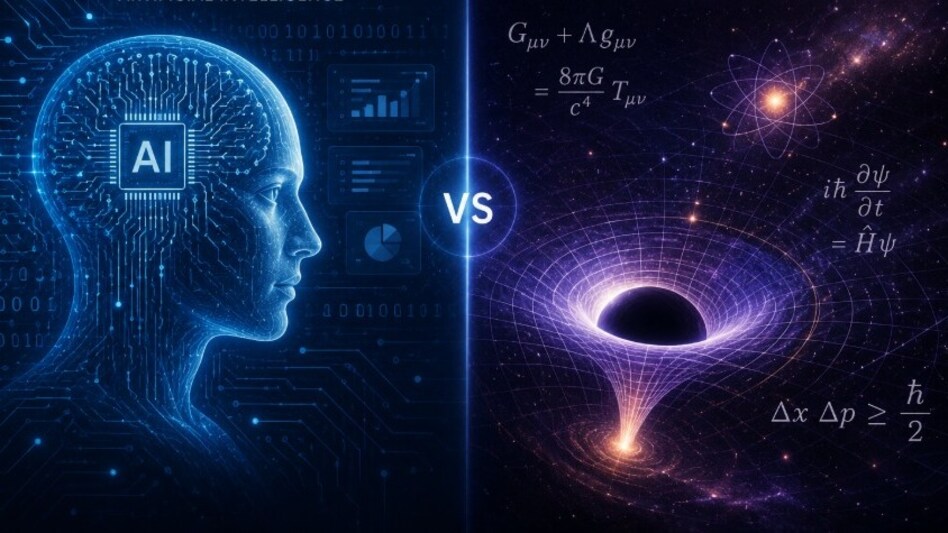
 Quantum gravity is regarded as one of the biggest unsolved problems in modern physics.
Artificial intelligence (AI) is rapidly transforming scientific research, raising questions about whether machines could one day solve some of physics' deepest mysteries. For Professor Ashoke Sen, one of India's most distinguished theoretical physicists, that possibility is not something to fear but to welcome. If AI succeeds in solving quantum gravity — the long-standing challenge of unifying quantum mechanics with Einstein's theory of gravity — he says physicists would have every reason to celebrate.
Speaking in an interview with Rocket Media, Sen said AI has already become a valuable part of his research, although it still falls short of replacing human scientists.

 Sugar price surge: Govt allows 1 million tonne duty free imports ahead of festive season
 PM Modi pushes bureaucracy to break data silos, use AI and take long-term policy view
 Merck, Moderna cancer vaccine clears Phase 3 milestone in melanoma
 SEBI allows FPIs to use digitally signed power of attorney for faster onboarding; check details
 'AI Jobocalypse': Raghuram Rajan proposes AI token tax to curb job losses, boost govt coffers
 Sugar Prices Surge Ahead Of Diwali: Is India’s Ethanol Push Creating A Food-Versus-Fuel Crisis?
 Sugar, Internet, Pharma Shares Rise In Strong Trade
 ₹30,000 Monthly SIP? 5 Funds Suggested For A 20-Year Wealth Creation Strategy
 Is ₹20,000 SIP Enough To Build Wealth? The 15–20 Year Investment Math Explained
 Starlink Renews India Push With 30,000-Satellite Plan Amid Regulatory Clearance Hurdles
 Nifty, Sensex, Nifty Bank outlook for today: GIFT Nifty up 38 points; key levels to watch
 Top stocks in news: IndiGo, HAL, Amagi Labs, TMPV, Manipal Health, RailTel Corp, KIMS, Niva Bupa
 ₹91,685 cr lost: 88% of individual traders lost money in FY26; options drove 92% of lossesSEBI allows FPIs to use digitally signed power of attorney for faster onboarding; check details
 Rays of Belief, parent of Mom's Belief, to launch IPO on September 1Nifty, Sensex, Nifty Bank outlook for today: GIFT Nifty up 38 points; key levels to watchTop stocks in news: IndiGo, HAL, Amagi Labs, TMPV, Manipal Health, RailTel Corp, KIMS, Niva Bupa
 Quote of the Day by Lakshmi Mittal: ‘When I think about parallels between myself and an Olympian, I believe that success in the world of business is underpinned by very similar principles of perseverance and hard work’
 Historic Kentucky horse farm once bought by Ryanair co-founder for $14 million now seeks $57.5 million
 Indane, Bharat Gas, HP users beware! LPG e-KYC deadline ends on August 23. Here's how to complete e-KYC on mobile, what happens if you miss last date












