The responsibility for closing those loopholes now appears to be extending beyond governments to chipmakers themselves.
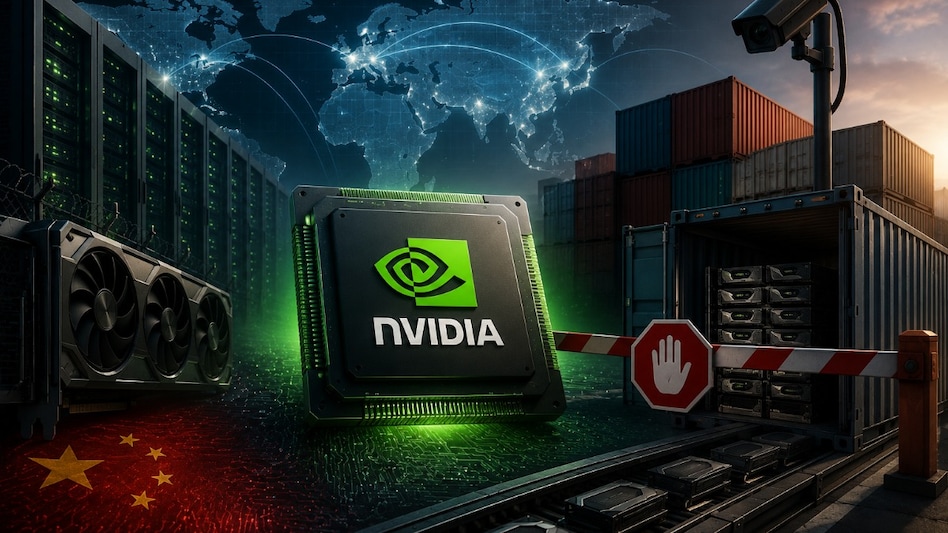
Nvidia has reportedly created a whitelist of approved customers in parts of Asia and tightened its vetting processes to prevent its AI processors from reaching China through indirect routes, according to the Financial Times. The move could mark a shift from merely complying with export controls to actively policing access to AI compute.
A new layer of AI chip governance
The reported measures come as the US steps up efforts to plug loopholes that have allowed advanced AI chips to reach China despite years of export restrictions.
Earlier this year, three Supermicro employees were reportedly charged with helping smuggle Nvidia-powered servers to China through a Southeast Asian intermediary, highlighting how advanced AI hardware can still be diverted even when direct exports are restricted.
Nvidia’s reported whitelist appears designed to address that problem by shifting the focus beyond the destination of a shipment to the identity of the buyer and the intended use of the processors.
“The reported whitelist alters the debate from the shipping locations of chips to the eventual customers of these chips. Up until now, most discussions have revolved around export control policies and sanctions imposed on particular nations. Customer whitelisting represents an extra step beyond such discussions as it involves examining the end-user and the expected workload,” said Devroop Dhar, MD and CEO at Primus Partners.
While most legitimate customers are unlikely to be denied access, procurement could come under much greater scrutiny as chipmakers seek more visibility into who is buying advanced AI hardware, where it will be installed and how it will be used.
More scrutiny, slower procurement
The tighter screening could reshape how Nvidia allocates its most advanced GPUs across Asia.
Although the reported crackdown is centred on Singapore, Malaysia and Japan, analysts said Indian enterprises may also feel its effects. The immediate consequence is more likely to be longer procurement timelines and higher compliance costs than an outright restriction on access.
“Although India is not the primary target of this specific Southeast Asian crackdown which centers on Singapore and Malaysia, Indian Cloud Service Providers and enterprises may still feel the ripple effects. The need for exhaustive KYC details, verified contract trails, and potential physical audits will prolong procurement lead times. Indian enterprise cloud providers will have to dedicate compliance, legal, and operational teams specifically to clear Nvidia's strict vetting processes,” said Pareekh Jain, CEO of EIIRTrend and Pareekh Consulting.
The additional scrutiny could weigh more heavily on startups and emerging GPU cloud providers than on large enterprises, which typically have stronger legal, compliance and procurement teams.
“A greater concern is likely to be with the newer companies and smaller AI companies that require quick access to the GPUs. Should new compliance paperwork or ownership declarations become part of the process, then the process of acquiring the necessary equipment could take longer. And, when dealing with tight budgets and schedules, that time is very important for a startups,” Dhar said.
For startups, even modest delays can affect product launches, model-training schedules and the ability to fulfil customer contracts. Smaller companies may also find it harder to provide extensive documentation on their ownership structures, customers and intended workloads.
Will the IndiaAI Mission be affected?
Analysts expect the immediate impact on the IndiaAI Mission, the government’s flagship artificial intelligence programme, to be limited.
Unlike private companies procuring GPUs independently, the mission is government-backed, works through empanelled infrastructure providers and follows defined procurement processes. That could make it easier to demonstrate the ownership, location and intended use of the chips.
“India is likely to remain insulated from these measures, as NVIDIA views it as a strategic AI growth market rather than an export-control risk. NVIDIA has already collaborated with next-generation cloud providers such as Yotta, L&T, and E2E Networks, as well as emerging AI startups such as Sarvam.ai, Gnani.ai, Commotion, Chariot, Soket.ai, and CoRover.ai, to help India build sovereign AI models, enhance AI capabilities, and support compute capacity. While the new governance process may delay procurement in the short term, it is unlikely to impact any planned GPU deployments,” said Soumen Mandal, Principal Analyst at Counterpoint Research.
India’s status as a large and rapidly growing AI market, coupled with government-backed demand for domestic compute infrastructure, may help protect planned deployments from major disruption.
However, analysts cautioned that India should not assume it will remain permanently insulated from tighter controls.
“India is not identified as the principal focus of the reported screening, and government-backed procurement through established domestic providers should provide clearer visibility into ownership, deployment and end use. However, future geopolitical and trade-policy developments could change the scope or intensity of these requirements, even if India is not a primary focus today,” said Sushovan Mukhopadhyay, Director Analyst at Gartner.
A new industry playbook
What begins as a compliance exercise by Nvidia could eventually become a broader industry playbook.
If the reported whitelist proves effective in preventing the diversion of chips, customer screening could become as integral to AI processor sales as export licences and shipping documentation.
“The US government is driving these rules, and they won't let other companies create loopholes. Soon, anyone buying high-end AI chips anywhere in the world will have to pass these same strict background checks. AMD, Intel and other AI chipmakers are expected to strengthen customer vetting and end-use verification. Nvidia's approach is likely to become the industry standard rather than an exception,” Jain said.
That would have implications well beyond China. Cloud providers, enterprises and AI startups around the world may increasingly be required to disclose their ownership, customers, deployment locations and intended workloads before gaining access to cutting-edge processors.
For India, the near-term impact may be slower procurement rather than reduced availability. But if Nvidia’s reported approach becomes the norm, the next phase of the AI race may no longer be determined only by who builds the best models or can afford the most GPUs. It may also depend on who is authorised to buy them.




 BT Market Outlook: The drivers, risks and opportunities for the week ahead
 India releases draft steel policy, targets 604 million tonnes of capacity by 2047
 SIR protests: No illegal detention of those gathering peacefully, says Supreme Court
 Ex-Army chief on Starlink: 'I wouldn't depend on any foreign-owned telecom system in India'
 Satya Nadella flags ‘black box’ AI risks: Why Microsoft CEO wants stronger controls over superintelligence
 REITs & AI Boom: Can Data Centres And AI-Ready Offices Drive Future Real Estate Growth?
 Should You SIP In REITs During A Market Downturn? Key Risks & Asset Allocation Explained
 REIT Returns Explained: Income, Capital Gains & Risks Investors Need To Know
 REIT Risks Explained: Key Factors Investors Must Check Before Investing In Commercial Real Estate
 Will IRDAI’s Broker Commission Crackdown Make Insurance Cheaper For Consumers?
 Market on the back foot, opportunities ahead: where should investors put their money?
 Poonawalla Fincorp Q2 earnings: Net profit zooms 405%, NII at Rs 1,589 crore
  Vedanta, TCS shares to turn ex-dividend; Ola rights issue; 2 stock splits next week
 IPO rush: Rs 50,000 crore worth IPOs to hit Street by Diwali; Jio, Avada to lead fundraise
 From Physical Science to AI research in Japan: Meet IIT Madras student Shudhanshu Kumar Yadav selected for University of Tokyo lab
 Passenger's power bank catches fire onboard, IndiGo flight to Chennai diverted to Hyderabad
 ‘All we saw was cactus’: Ex-Army officer and wife turn 2.5 acres of barren Udaipur land into 10-room homestay
 Mahadev betting app probe: Shefali Bagga surrenders bulk of ₹1.2 cr promotional fee to ED












