


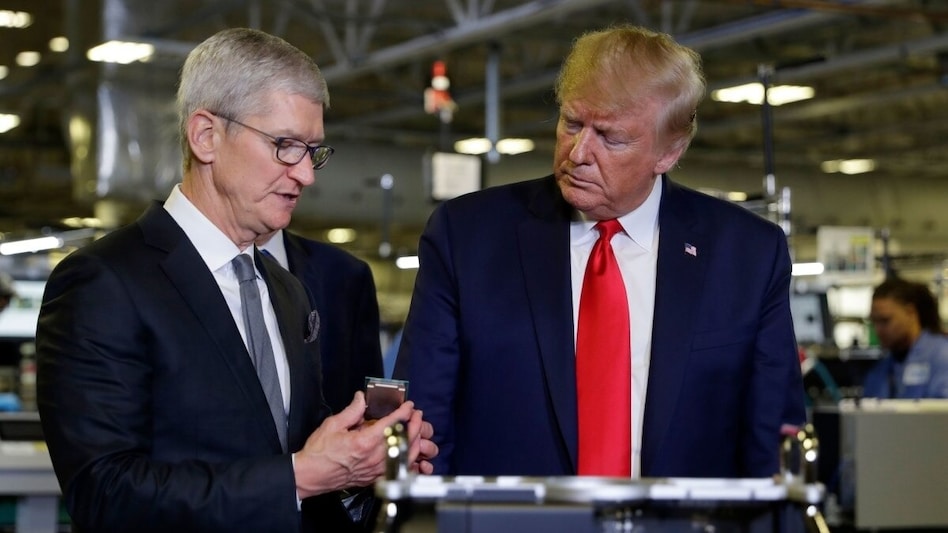
 Tim Cook and Donald Trump
Apple has announced it will invest an additional $100 billion in the United States, raising its total domestic investment commitment to $600 billion over the next four years. The move comes as former President Donald Trump ramps up pressure on American tech companies to shift production back home.
“This is a significant step toward the ultimate goal of ensuring that iPhones sold in America also are made in America,” Trump said during a briefing at the Oval Office, where Apple CEO Tim Cook presented him with a US-made souvenir mounted on a 24-karat gold base.

 From 5% to 30%: How soaring oil shipping costs are fuelling a global inflation threat
 Nifty, Sensex defy Asia-wide selloff, stand tall in sea of red this quarter
 Aircraft to run on 40% green fuel by 2040? India proposes mandatory SAF blending from 2027
 AI hackers use ₹1 test transactions to move bigger sums from financial firms: CERT-In warns
 Adani Power shares gain 60% from 52-week low: What investors should know before entering the counter
 Delhi Chokes As AQI Crosses 400; BJP-AAP Clash As Capital Battles Severe Pollution
 Brent Crude Falls To $94: What Next For Oil, Paint And Aviation Stocks? Gaurang Shah Explains
 U.S. Midterm Elections: Democrats Capture Senate & Congress, Trump Faces Washington Power Shift
 U.S. Midterm Results: Trump Setback, Crude Oil And FII Flows; What Lies Ahead For Indian Markets?
 Where To Invest In Samvat 2083? Gaurang Shah Shares His Top Sector Picks For Investors

 Investor wealth crosses Rs 500 lakh crore for first time as Sensex rises for sixth session
 BSE share price rally after Q2 results, Analysts flag valuation concerns; check fresh targets & more
 CLSA raises Nykaa target price after Q2 results; retains Outperform rating, stock reacts
 PI Industries shares dive 16% to hit 52-week low after Q2 earnings; net profit plunges 70%
 NHPC shares jump 6% as CLSA reiterates outperform rating; Check target
 Gold Back Above ₹1.45 Lakh, Silver Nears ₹2 Lakh! Is The Big Rally Finally Back?Delhi Chokes As AQI Crosses 400; BJP-AAP Clash As Capital Battles Severe PollutionInvestor wealth crosses Rs 500 lakh crore for first time as Sensex rises for sixth session BSE share price rally after Q2 results, Analysts flag valuation concerns; check fresh targets & more
 Donald Trump Defends Iran War Despite Midterm Setback; Says 'If I Were On The Ballot, We'd Have Won'












