


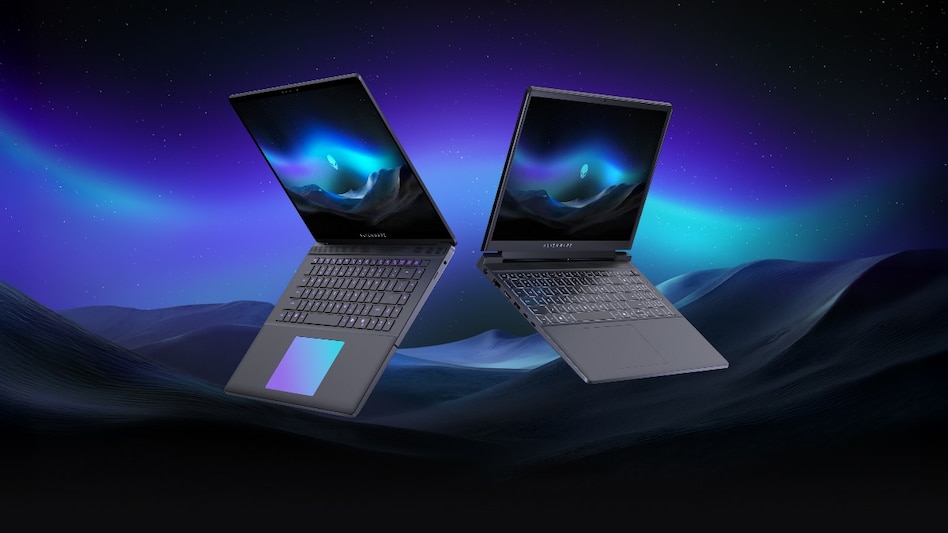
 A slimmer Alienware laptop coming soon
In a candid conversation with Business Today, Matt McGowan, Head of Product for Dell’s Gaming Business Unit, offered a glimpse into the future of Alienware, a future that is thinner, more inclusive, and perhaps eventually, handheld.
McGowan addressed the elephant in the room: the disappearance of Dell’s massive, heavy "Area 51-style" laptops in favour of sleeker, more portable machines like the m16 R2. He also tackled the confusing merger of the budget-friendly Dell G-Series into the premium Alienware brand, admitting that even his own children game on older G-Series laptops because of the steep entry price of Alienware’s flagship machines.
The Death of the "Chunk-saurus"
When asked about the shift away from massive desktop replacements toward ultra-slim designs similar to Razer’s Blade series or the MacBook Pro, McGowan didn't mince words about the engineering challenges involved in balancing heat and performance in a thinner chassis.
"Traditionally, Alienware has always had the chunky Area-51 laptops," a journalist noted. "Sure, yeah. Chunk-saurus," McGowan joked. He confirmed that a new high-performance AMD product is in the works for the coming year that follows this slimmer philosophy. "You have to really balance performance and wattage and getting the heat out with portability and z-height thinness... It’s a product I’m going to carry every day. I carry an m16 R2, and it’s a great product... but it’s a little heavy and it’s a little low on the battery life. So we hope to fix a lot of that going into that new one."
Blurring the Lines: Alienware for Everyone?
A major point of contention during the briefing was Dell’s recent strategy to fold its budget-friendly G-Series DNA into the Alienware brand. Journalists questioned whether this diluted the premium feel of the Alienware name. McGowan defended the move as a necessity to grow the brand beyond just the wealthy enthusiast demographic.
"In a lot of ways, Alienware was shrinking because the market was growing way faster in the lower price bands," McGowan explained. "Products like the Area 51 are expensive to build. It’s crazy expensive to buy one... I’ve got two kids and they don’t play on Alienwares. They play on old Dell G-Series that are three years old. Because I didn’t want to spend $2,000."
He emphasised that the goal is to build brand affinity early. "I want our customers to look at Alienware as it doesn't matter how much money you have... I don't want to say goodbye to a customer just because they don't have enough money to spend."
The Handheld Dilemma
With competitors like ASUS (ROG Ally), Lenovo (Legion Go), and Valve (Steam Deck) dominating the handheld market, Dell has been conspicuously absent since showing off its "Concept UFO" prototype years ago. When pressed on the possibility of an Alienware handheld, McGowan was cautious but open.
"The handheld space has always been evolving... if you asked me last year, I wasn't fully convinced it would stay around," McGowan admitted. "So now that we're seeing more stability there, we're looking at it. We're continuing to incubate some things in the labs. Now, we're the latecomer in that category, so I don't want to have a 'me too' product."
AI Beyond Frame Generation
While the briefing was light on AI buzzwords compared to other tech events, McGowan shared his vision for how AI will evolve beyond simple performance boosting (DLSS) into gameplay mechanics.
"What's new and what the studios are talking about is really around: What else can I use these TOPS (Trillions of Operations Per Second) for?" McGowan said. "How do I go and improve the NPC interactions that people have within a game?... How can I integrate more natural language with voice and text? Those are, I think, the next frontiers in how AI really starts to change your immersiveness."
For Unparalleled coverage of India's Businesses and Economy – Subscribe to Business Today Magazine

 'Tax officers struggled for own land': Nirmala Sitharaman slams laidback attitude of govt depts
 CBDT issues new crypto reporting guidance: No new tax, but exchanges must track and report all transactions
 Did Cockroach Janta Party's 'Chalo Sansad' 2.0 threat trigger Dharmendra Pradhan's resignation? What we know so far
 'Will discharge my responsibilities with complete humility': Pralhad Joshi after being appointed Education Minister
 Curious about Pralhad Joshi's wealth? A closer look at his assets, investments and liabilities
 AI Data Centers, Aerospace & Gas Turbines: What's Powering Indo-MIM's Future Growth?
 Best Healthcare Stocks: Gaurang Shah's Outlook On Apollo Hospitals, Fortis & The Manipal Health IPO
 Is Indo-MIM's IPO Valuation Justified? Here's Why The Company Sees Strong Growth Ahead
 Treasury Bills Explained: Why T-Bills Are One Of The Safest Short-Term Investment Options
 FDs vs Markets: Where Should You Keep Your Short-Term Money?
 Gland Pharma stock: Price target of Rs 3,250 likely in medium term, says analyst
  Metal recycling stocks to buy: Gravita, Pondy Oxides, Jain Resource among top picks
 TRIL shares: Should you average the falling stock? Here's 'fixed and final' stop loss
 Adani Power: 45 GW target, Rs 2 lakh crore capex plan among conference call highlights
  ITC Hotels, Chalet, Ventive, IHCL, SAMHI: Hotel stocks to buy despite travel disruptions'Tax officers struggled for own land': Nirmala Sitharaman slams laidback attitude of govt depts
 Delhi targets traffic bottlenecks on Aruna Asaf Ali Marg with ₹1.97 crore elevated road studyAI Data Centers, Aerospace & Gas Turbines: What's Powering Indo-MIM's Future Growth?
 'This is the behaviour of...' : Congress leader Kanhaiya Kumar detained by Delhi police after Kerala House altercation
 'You can do whatever you want?': Delhi HC questions EC over mandatory election duty for school teachers









