
Search
Advertisement
From compromised certificates to malicious software: Inside October’s cybersecurity alerts

From compromised certificates to malicious software: Inside October’s cybersecurity alerts

A wave of cybersecurity incidents in October has exposed critical vulnerabilities in PHP, digital certificates and developer platforms. Experts warn of widespread risks and call for immediate security measures across sectors in India and globally.

Business Today Desk
Business Today Desk
  • Noida,
  • Updated Oct 22, 2026 1:19 PM IST
From compromised certificates to malicious software: Inside October’s cybersecurity alerts  We have entered "black October," as dozens of cybersecurity risks comes to light, raising concerns.

In the last couple of days, a series of cybersecurity incidents has come forward, raising fresh concerns about security across software, cloud infrastructure and online services, with several high-profile disclosures arriving one after another.

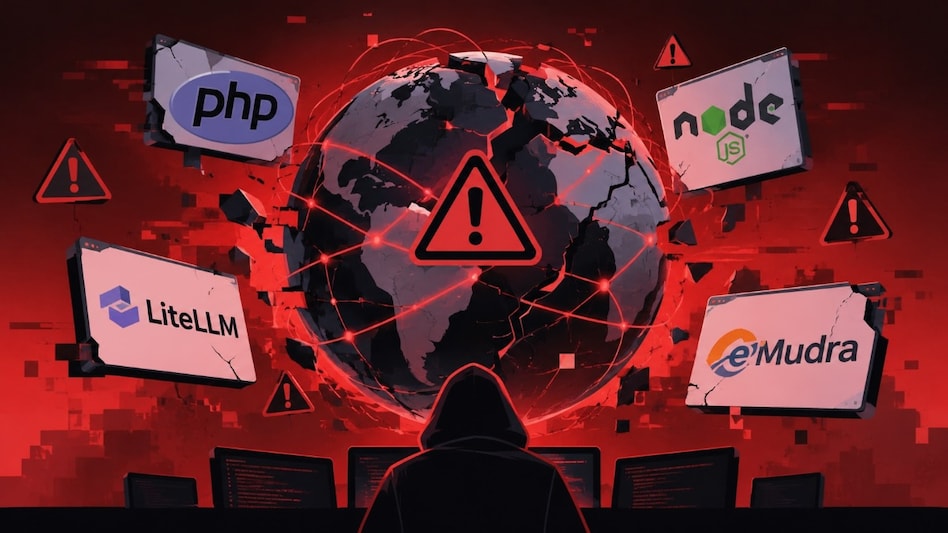
The incidents span several different layers of the technology ecosystem, including vulnerabilities in PHP, a programming language used to build websites; compromised certificate-authority keys; a breach at developer-hosting platform Zeabur; and a malicious release of the widely used AI development tool LiteLLM.

Advertisement

These incidents have not only raised serious concerns, but many cybersecurity experts are calling, and observers are describing the period as “Black October”. A X post reveals that more than 25 such incidents of different severity and scale were reported. However, there are some of the prominent cases which has shaken the entire world.

Must read: AI uncovers critical PHP security flaws: Why website owners must patch servers immediately

Critical PHP vulnerabilities

On October 21, two critical vulnerabilities in PHP were reported, tracked as CVE-2026-109618 and CVE-2026-109619 and referred to as “PHP2Shell”, which triggered urgent warnings around the world. For this reason, several government, educational, and hospital websites in several European countries were taken offline, according to Reuters, as a precaution while organisations assessed the vulnerabilities and applied fixes.

Advertisement

Experts suggest that the flaws could allow attackers to execute arbitrary code remotely on affected systems, raising concerns about data theft, server compromise, and service disruption. This highlights how vulnerabilities in widely used software can disrupt essential online services within hours, even before any confirmed attack is reported.

Advertisement

The incident caught the attention of the Prime Minister of Japan,the  US government, major tech giants, and others in less than 24 hours.

eMudhra certificate incident

In a separate case, Indian digital trust company eMudhra exposed weaknesses in its digital certificates that verify websites. These certificates come with a private key, which is only accessible to the owners of the website. However, eight of these certificates consisted of weak cryptographic keys, leading to a major scare.

Must read: What is eMudhra certificates? What to know about the security scare and could your data be at risk?

Google and Mozilla blocked the affected website-certificate authorities. However, the incident raised questions about applications that rely on their own certificate trust stores rather than browser protections, including server-side software that may not receive the same updates.

Its potential consequences could include fraudulent website impersonation and interception of encrypted communications. However, no reports of data breaches or confirmed exploitation linked to the incident have emerged so far.

Apart from this, several other incidents were reported in the month of October. In one incident, a breach involving the California Department of Education's contractor Educational Testing Service exposed personal information of millions of students enrolled over three school years. On October 21, LiteLLM reported that its release pipeline had been compromised, resulting in a malicious version of its software being published to public package registries.

Advertisement

Developer-hosting platform Zeabur disclosed a breach in which over 321,810 account records and more than 3.2 million environment-variable records were affected.

This incident raises concerns over vulnerabilities in widely deployed software, weaknesses in credential storage, compromised software-release pipelines, and the difficulty of distributing security protections consistently across different systems.

For Unparalleled coverage of India's Businesses and Economy – Subscribe to Business Today Magazine

Follow us on

ABOUT THE AUTHOR

Business Today Desk
Business Today Desk

Business Today brings you the latest news, views and analysis from the world of finance, economy, markets, corporates, startups, tech, and the digital economy. You can find everything from breaking news to deep dives to immersive essays and more on a variety of subjects across all formats - online, magazine, television, data visualisation, et al.

Published on: Oct 22, 2026 1:19 PM IST





