


 surat cyber crime
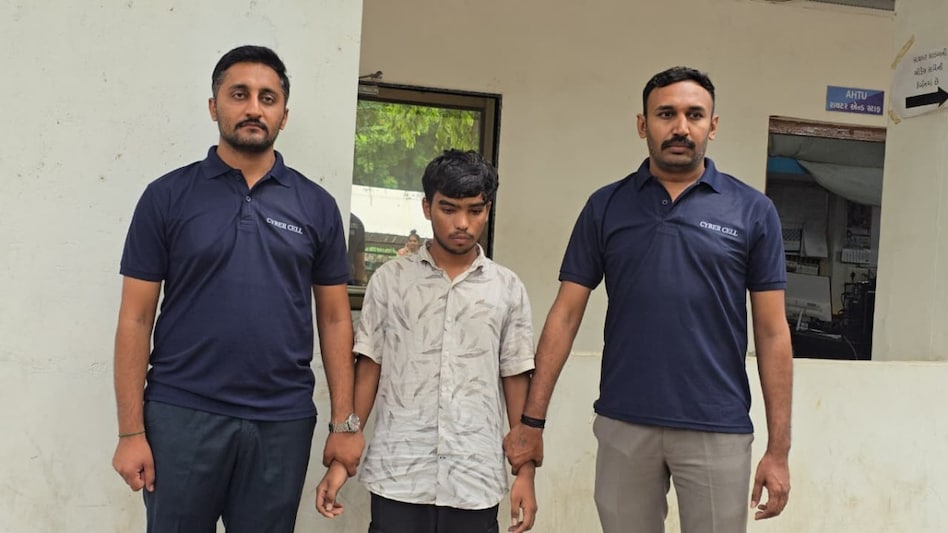
 Surat Police have arrested an 18-year-old accused of allegedly running an AI-assisted cyber fraud operation that investigators say enabled scams worth over ₹64 crore across India. According to an India Today, the teenager allegedly created malicious Android APK files that mimicked banking and government applications, allowing cybercriminals to steal victims' banking credentials and empty their accounts.
Teen built malware using AI
The accused, identified as Rohit Virendra Singh Shakya from Uttar Pradesh, is a Class 11 dropout. Police claim he learned coding through YouTube videos and AI tools before developing sophisticated malicious applications for cybercrime syndicates.
READ THIS: Fake airline jobs, fake insurance payouts: Noida police bust call centres targeting job seekers
Police said the teenager supplied these APK files to cybercriminals operating in cybercrime hotspots, including Jamtara (Jharkhand), Haryana, and Rajasthan, where they were allegedly used to target unsuspecting victims.
Fake APK files
According to the investigation, the accused developed 121 fake APK applications that impersonated popular banking, payment, and government service apps. Once installed on a victim's Android phone, the malware reportedly gave fraudsters remote access to sensitive information, including OTPs, banking passwords, and personal data.
Police said the malicious apps reported that 21,672 mobile phones had the malicious apps installed, resulting in over 21,672 mobile phones, leading to more than 54,000 fraudulent banking transactions. Authorities estimate the total fraud linked to the network at approximately ₹64.38 crore.
Surat to nationwide probe
The investigation began after a businessman from Surat's Adajan area allegedly lost ₹5 lakh after downloading a fake "PNB One.apk" file sent via WhatsApp. Believing it to be a genuine banking application, the victim installed it, following which cybercriminals allegedly gained access to his phone and bank account, according to India Today.
The victim reported the incident through the national cybercrime helpline 1930, prompting Surat Cyber Crime Police to launch a technical investigation that eventually traced the accused to a hotel in Kanpur, where he was arrested.

 How Elon Musk's Starlink could interfere with sovereign nations. Ukraine war reveals the risks
 BT Market Outlook: The drivers, risks and opportunities for the week ahead
 India releases draft steel policy, targets 604 million tonnes of capacity by 2047
 SIR protests: No illegal detention of those gathering peacefully, says Supreme Court
 Ex-Army chief on Starlink: 'I wouldn't depend on any foreign-owned telecom system in India'
 REITs & AI Boom: Can Data Centres And AI-Ready Offices Drive Future Real Estate Growth?
 Should You SIP In REITs During A Market Downturn? Key Risks & Asset Allocation Explained
 REIT Returns Explained: Income, Capital Gains & Risks Investors Need To Know
 REIT Risks Explained: Key Factors Investors Must Check Before Investing In Commercial Real Estate
 Will IRDAI’s Broker Commission Crackdown Make Insurance Cheaper For Consumers?
 BT Market Outlook: The drivers, risks and opportunities for the week ahead
 Market on the back foot, opportunities ahead: where should investors put their money?
 Poonawalla Fincorp Q2 earnings: Net profit zooms 405%, NII at Rs 1,589 crore
  Vedanta, TCS shares to turn ex-dividend; Ola rights issue; 2 stock splits next week
 IPO rush: Rs 50,000 crore worth IPOs to hit Street by Diwali; Jio, Avada to lead fundraiseHow Elon Musk's Starlink could interfere with sovereign nations. Ukraine war reveals the risks
 From Physical Science to AI research in Japan: Meet IIT Madras student Shudhanshu Kumar Yadav selected for University of Tokyo lab
 Passenger's power bank catches fire onboard, IndiGo flight to Chennai diverted to Hyderabad
 ‘All we saw was cactus’: Ex-Army officer and wife turn 2.5 acres of barren Udaipur land into 10-room homestayIndia releases draft steel policy, targets 604 million tonnes of capacity by 2047












