


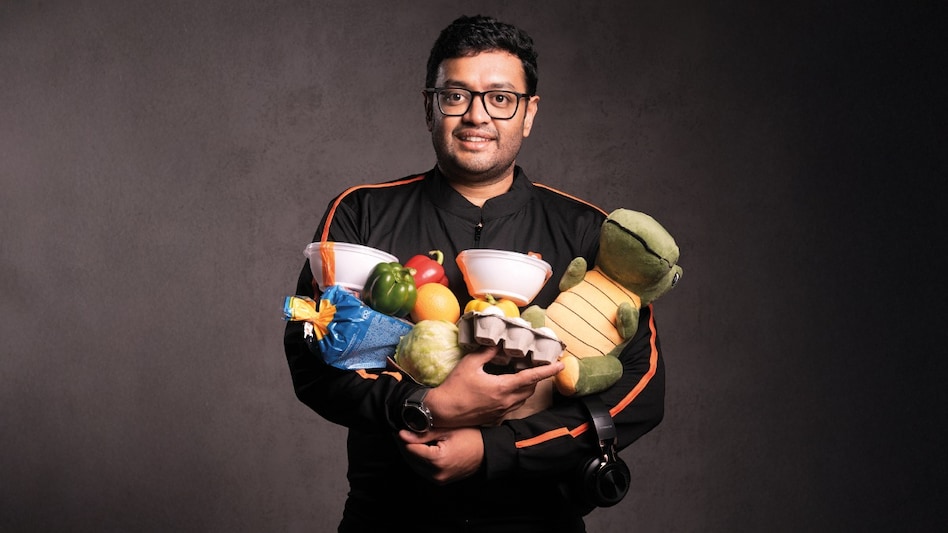
 Sriharsha Majety, Swiggy Co-founder and CEO (Photo:Selvaprakash Lakshmanan)
 As Rapido gears up to enter India’s already competitive food delivery market, Swiggy’s founder and group CEO Sriharsha Majety has said that the company remains “super agile and paranoid,” and will not hesitate to act if it spots an opportunity.
Speaking at an investor event hosted by Prosus in London, Majety acknowledged that the space is not easy to crack, regardless of how well-backed the entrant is. “There were a dozen players in food delivery in 2015. In 2017, Uber and Ola threw their hat into the ring. Then, in 2019, Amazon threw its hat into the ring. In 2021, there was the entry of ONDC,” he said. “Credit to us and Zomato for having seen these…and I genuinely think we do a pretty good job of serving the consumer. It is not easy to get an opening that you can take a home run with.”

 'I wish I was 20 years younger': Sunil Mittal on India's next 20 years, recalls OneWeb pitch to Rishi Sunak
 RIL group to become India's largest conglomerate by m-cap after Jio IPO: Uday Kotak
 IDBI Bank sale to Fairfax faces union resistance, black-badge protest on October 16
 'The question was when, not if': Sunil Mittal recalls 3 'Mahabharatas' that nearly sank Bharti Airtel
 Supreme Court overturns Yes Bank’s ₹8,400 crore bond write-off, raising liability risks: Report
 Weekend OTT Releases: The Diplomat 4, Aasha, Sacrifice And More
 How Jio Transformed India From Data Scarce to Data Abundant! | Akash Ambani | Jio Platforms IPO
 Akash Ambani Decodes Jio's Financial Muscle | Reveals The 5 Key Business Drivers | Jio Platforms IPO
 From Dhirubhai’s 1977 IPO to Jio's Mega Launch | Uday Kotak Calls Jio IPO a ‘Moment in History’
 Where To Invest To Benefit From The RBI’s Rate Hike | Personal Finance | Money Today
 RIL group to become India's largest conglomerate by m-cap after Jio IPO: Uday Kotak
 Gold eyes sharp recovery; can MCX prices hit Rs 1.5 lakh? Vandana Bharti explains
 Tech Mahindra Q2 results: PAT rises 33% YoY to Rs 1,586 crore; recommends 1:1 bonus issue
 Jio Platforms IPO: How HFCL promoter Mahendra Nahata's investment could rise over 110 times
 South Indian Bank shares hit 52-week high on Q2 earnings, close higher
  IDBI Bank employees and pensioners have nothing to fear: DIPAM Secretary
  Indian consulate opens 24x7 control room in Makkah amid flight disruptions
 NDMC announces two-day closure of Central Park ahead of CJP’s Friday march
 'Doesn’t even feel like an Indian film': Ramayana's second trailer impresses fans with visuals'I wish I was 20 years younger': Sunil Mittal on India's next 20 years, recalls OneWeb pitch to Rishi Sunak












