








 The move coming ahead of the festive season is likely to dampen sales
 The move coming ahead of the festive season is likely to dampen sales
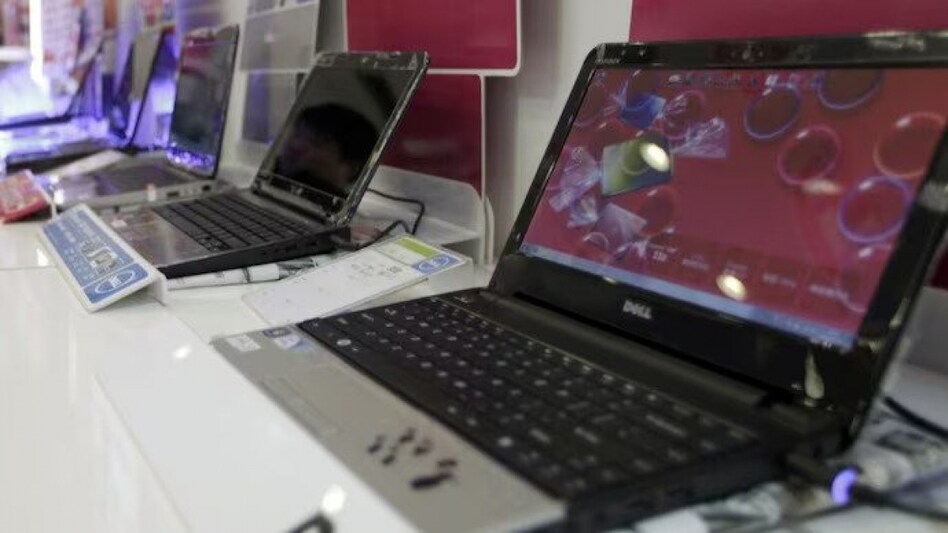
The government of India has restricted the imports of laptops, tablets and personal computers with immediate effect. The notification issued by the government states that imports would be allowed with a valid licence for restricted imports. As the move comes just months after the Production Linked Incentive 2.0 for IT hardware was announced, industry experts believe this is aimed at boosting manufacturing in India.
"The PLI Scheme 2.0 for IT Hardware is expected to enhance the hardware manufacturing ecosystem. Today’s policy announcement is a positive move, as it seeks to restrict certain electronics imports and enforce licences for restricted items, promoting domestic production and self-reliance," explains Prabhu Ram, Head of Industry Intelligence Group (IIG) at CyberMedia Research.
The Ministry of Commerce and Industry’s notification stated that the import of laptops, tablets, all-in-one personal computers, and ultra-small form factor computers and servers falling under HSN 8741 should be ‘restricted’, and their import would be allowed against a valid licence for restricted imports. The ministry added that the restrictions will not apply to imports under Baggage Rules. Baggage Rules refer to the Customs checks every passenger entering or leaving the Indian border has to pass.
The ministry also stated in the notification that there would be an exemption from the import licensing requirements for the import of one laptop, tablet, all-in-one personal computer, or ultra-small form factor computer, including those purchased from e-commerce portals through post or courier. However, these imports will be subject to the payment of duty as applicable.
However, Faisal Kawoosa, founder and Chief Analyst at Techarc, says, "With this new notification, the government now has the control to regulate which laptops, etc. can be imported to India. I don’t see a reason why it was required." He added, "Most of the brands selling these products are reputed brands, though now they would be required to obtain a licence to import and seek permission for the items they want to import. Maybe this helps the government have tighter control on entry-level segments where lesser-known brands might be sneaking in without any quality assurance. But I'm still not sure why it was done."
In July 2020, Prime Minister Narendra Modi’s administration imposed restrictions on TV imports, mainly to contain imports from China and to boost local manufacturing.
Throwing light on this new development, Arjun Bajaj, Director of Videotex, said, "The focus now is on the potential benefits such support can bring to research and development (R&D) and the manufacturing of electronics products in the country. This highly encourages building the whole manufacturing ecosystem in the country. By reducing the reliance on imports, the country can achieve self-reliance or ‘Atma Nirbhar’ in manufacturing electronics products. Furthermore, by supporting the ‘Made in India’ initiative by the government, the emphasis can be placed on promoting locally manufactured electronics, which can boost the economy, create jobs, and reduce dependence on foreign imports. Overall, it shall build a comprehensive approach to strengthening the electronics manufacturing ecosystem in India, ensuring a self-sufficient and thriving industry."
The sudden move by the government is being looked upon as unnecessary red tape by the industry. Responding to the criticism on X (formerly Twitter), Rajeev Chandrasekhar, Minister of State, Ministry of Electronics and IT, stated, "India is becoming one of the world’s fastest-growing markets for digital products including laptops, servers etc. It is the government’s objective to ensure trusted hardware and systems, reduce import dependence and increase domestic manufacturing of this category of products." He added, "This is not at all about licence raj; it is about regulating imports to ensure trusted and verifiable systems, and ensuring India tech eco-system uses trusted and verified systems only that are imported and/or domestically manufactured trusted systems / products."
India is aiming to boost domestic manufacturing. However, imposing restrictions on imports of laptops will prolong the wait times for introducing new products in the market, especially when the brands are gearing up for the festive season that starts in August and lasts till the end of November.
For Unparalleled coverage of India's Businesses and Economy – Subscribe to Business Today Magazine
 ‘Absolutely no compromise on agriculture, dairy, sugar’: Piyush Goyal on India-US trade deal
 Exclusive: Adani Group to start coal gasification work this year, expand MRO operations, says Jeet Adani
 Kalyan Jewellers, Vaibhav Global, Thangamayil, Senco, PN Gadgil & Goldiam jump up to 15%; here's why
 Shipping Corp shares zoom 14% on Q3 earnings, dividend; check details
  Elon Musk shifts SpaceX focus to ‘self-growing’ Moon city over Mars colony
 India-U.S. Trade Deal Triggers Political Storm As Congress Says Trump Wins, Modi Loses On Farmers
 US Map On Trade Deal Shows Full J&K As India, Sending Sharp Signal To Pakistan And China
 “India’s Trade Policy Has Shifted Fundamentally After The US Deal,” Says Piyush Goyal
 Govt Scraps Small Car Concessions In Emission Norms; Maruti Seen Most Impacted
 Bhaijaan Meets Bhagwat: Salman’s RSS Appearance Triggers Political Firestorm
 Kalyan Jewellers, Vaibhav Global, Thangamayil, Senco, PN Gadgil & Goldiam jump up to 15%; here's whyShipping Corp shares zoom 14% on Q3 earnings, dividend; check details
  YES Bank shares snap two-day fall; analysts advise caution on near-term outlook
 Tata Steel shares hit record high on Q3 earnings; here's what brokerages say
  Suzlon Energy price target cut by 33%, order inflows at risk; here's why