

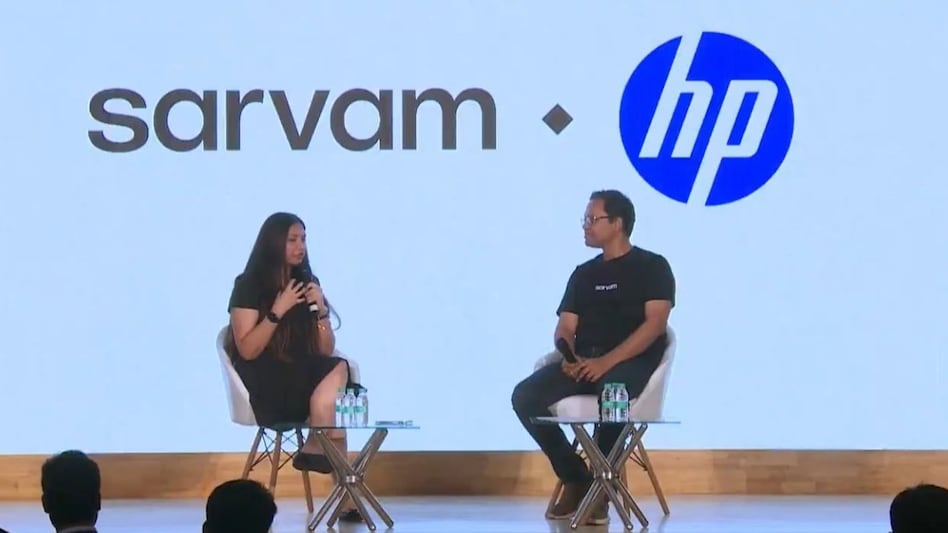
 The first major application highlighted under the partnership is Kivi, a voice application powered by Sarvam.
 Imagine using your PC without constantly reaching for the keyboard or mouse — simply speaking to it in Hindi, Tamil, Bengali or another Indian language. That is the experience HP and Indian AI company Sarvam AI are seeking to build through a new technology partnership.
HP and Sarvam have signed a memorandum of understanding (MoU) to bring Sarvam’s voice and language AI capabilities to HP devices at scale. The partnership initially focuses on voice, but the companies say it could eventually expand to a wider range of AI-powered experiences on PCs.
 BRICS must remove top 10 trade barriers, secure sea routes for seamless trade, says PM Modi
  NSE's selling shareholders set to rake in bonanza amid a weak broader market
 Modi, Putin review India-Russia ties across trade, defence, energy and space
 Solar scale must now give way to resilient grids, storage and finance: Prahlad Joshi
 Apple launches AppleCare One: Includes one plan, six people, and multiple Apple devices
 Market Commentary: Arun Kejriwal On Nifty, Stocks & The Next Big Move
 Gadkari: FASTag Is More Than Toll Payment, It’s Digital Mobility Infrastructure
 Russia Eyes Bigger India Investments: Sberbank CEO Herman Gref On The Next 2-3 Years
 India’s Cybersecurity Is Still In The Awareness Phase?
 Modi-Putin Meet: Trade Deficit, Defence And The Next Phase Of India-Russia Ties In Focus
 NSE IPO: Haven't applied for shares to trade on own platform, says MD and CEO ChauhanNSE's selling shareholders set to rake in bonanza amid a weak broader market
 Milky Mist shares hit 5% upper circuit; here's what analysts say
 Sensex, Nifty settle lower but recover sharply from intraday lows; here's why
 Quantum AMC bets on cash logistics revival as consolidation boosts pricing power
 Marvel’s Wolverine Review: ‘A fun yet chaotic ride in the Insomniac Universe’
  India’s forex reserves jump $44.9 billion to record $785.71 billion
 IMF says new statistical series could improve India GDP estimates; fresh forecast due in October WEOModi, Putin review India-Russia ties across trade, defence, energy and space
 India’s BRICS trade doubles to $417 billion in five years: ASSOCHAM












