












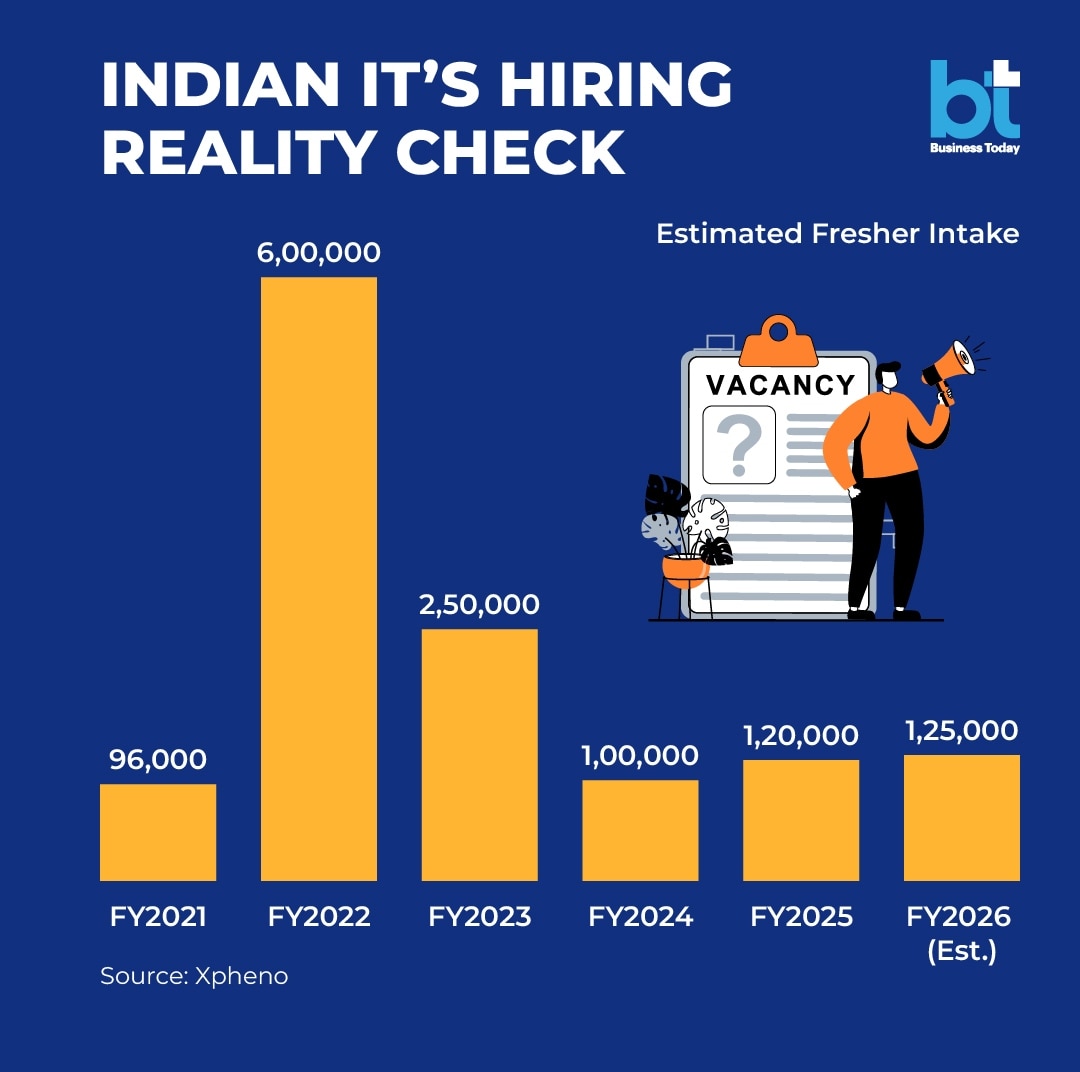



 Fresher hiring in India’s IT sector has fallen from a peak of 600,000 in FY22 to about 120,000 in FY25, according to Xpheno
India’s IT services industry is undergoing a quiet but significant shift in how it hires and deploys talent, as fresher intake drops sharply and delayed onboarding becomes increasingly common.
Over the past few years, there has been a growing pattern of companies issuing offer letters to campus recruits but pushing joining dates by months. One such student told Business Today that after receiving a letter of intent from Wipro in May 2025 with an August joining date, the onboarding was deferred by seven months, with only vague explanations citing “business requirements.” A group of affected candidates has since approached an IT workers’ union, citing a lack of clarity from the company.

 State finances are turning into a matter of concern. Here’s why
 GE HealthCare targets 2X+ exports from India by 2030
 Hisar to Sohna-Palwal: Haryana approves ₹9,700 crore for five major bypass projects
 ‘No amount of US pressure should justify recklessness’: Sam Altman backs 'slow' frontier AI pace
 NSE IPO: Nithin Kamath recalls how NSE supported Zerodha in its early years
 Amit Shah Hails India’s Rise From Fragile Five To Top Five, Politics Of Performance Since 2014
 MEA Details BRICS Summit Outcomes as India Pushes Practical and People-Centric Cooperation
 Modi@25: Amit Shah Highlights 25 Years Of Leadership, Governance And 2047 Vision
 “Development And Environment Are Complementary”: PM Modi On Sustainability At BRICS
 Modi@25: Amit Shah Announces Seva Sankalp Campaign From Sept 17 To Mark Modi’s 25 Years Of Service
 Motilal Oswal MF buys stake in Spectrum Electrical; Fidelity offloads 2.69% stake in CAMS
 Solar Industries to acquire South African firm Omnia Holdings for Rs 12,951 crore
  Tata Sons: A look at net worth of the holding company as IPO buzz gains traction NSE IPO: Nithin Kamath recalls how NSE supported Zerodha in its early years
 Tata Sons listing: Tata Steel, TMPV, Tata Chemicals among stocks that could benefit; here's why
 ‘Some more jobs gone’: Machine applying intricate mehendi designs gets Harsh Goenka’s attention
 JSW Motors readies rugged Combat PHEV SUV for festive launch, likely to get 1,200-km range
 'No good deed in govt goes unpunished': Ex-Telecom Secretary's memoir makes rare revelations on BSNL, 2G
 It’s official! Hyundai’s new mid-size SUV to be called BayonMotilal Oswal MF buys stake in Spectrum Electrical; Fidelity offloads 2.69% stake in CAMS


