


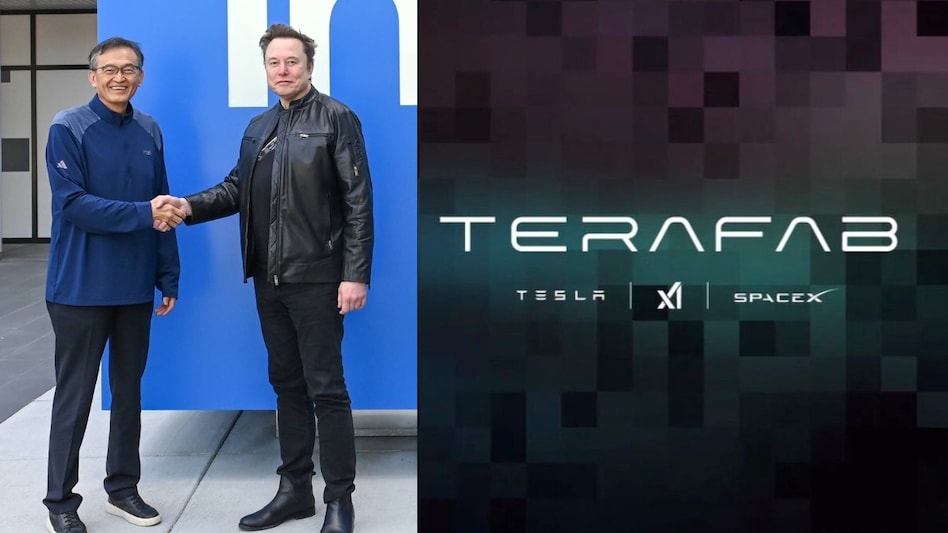
 Intel x Elon Musk
Intel, the semiconductor giant, has teamed up with SpaceX, xAI and Tesla to support Elon Musk’s Terafab project, a U.S. semiconductor facility in Texas aimed at developing processors to power next-generation robotics and data centres.
Intel has shared an X post announcing the partnership that said, “Our ability to design, fabricate, and package ultra-high-performance chips at scale will help accelerate Terafab’s aim to produce 1 TW/year of compute to power future advances in AI and robotics.”

 How Tamil Nadu is continuing to lead in manufacturing with factories and factory workers
 Did you know India’s cash demand is strong despite the digital payment boom?
 Xi Jinping likely to visit India after 7 years for BRICS summit, may bring 400-member delegation
 Bitcoin price today: BTC crosses $80,000 for first time since May, rises 25% in week; what's driving it
 Onion prices soaring: Centre to sell onions at ₹35/kg, sends Kanda Express to boost supply
 Trump Moves To Make H-1B Visa Fee Permanent And Higher: What It Means For Indians
 Market Rally Vs Geopolitical Risk: What Wins From Here? Aditya Agarwal
 Daily Calls: Ask Your STOCK MARKET TODAY QUERIES | Market Update | Share Market News Today
 Symbiotec Pharmalab IPO | Top Management On Growth Plans, Business Outlook & IPO Strategy
 Chennai Second Airport Halted: Parandur Project Faces Wetland Concerns & Political Storm
 Paytm shares up 33% in a month: Time to book profits or is there more upside left?
 Nykaa shares: Elara Capital hikes target price; sees 43% upside potential
 Crompton Greaves shares: Brokerage sees 67% upside potential; check target price
 Dixon Tech, Amber Enterprises: Will they benefit from MPMS? Kotak shares views
 Vodafone Idea, Paradeep Phosphates, Hindustan Copper shares: What expert says
 Long weekend getaway planned? Here’s how Axis Bank cardholders can save on MakeMyTrip bookings
 Carney strikes back: Canada retaliates against US tariffs with duties on $20 billion of goods
 From GIFT City to global finance: British Virgin Islands pitches trade ties with India
 NITI Aayog calls for overhaul of India’s skilling system, proposes five big reforms for Viksit Bharat 2047
 Staywell.Health secures Equanimity-led investment to scale AI-native health insurance platform












