


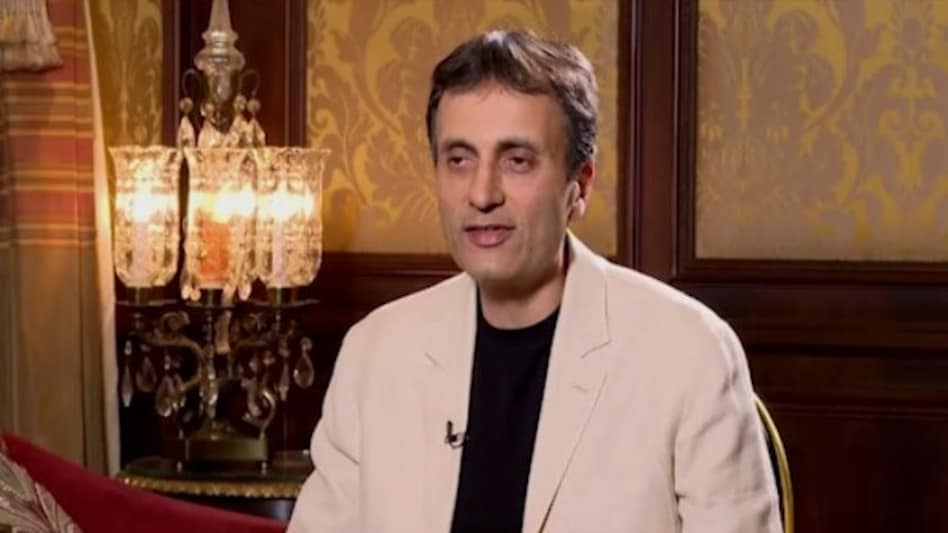
 Ruchir Sharma, Chairman of Rockefeller International
The current artificial intelligence (AI) boom may not be sustainable over the long term, according to Ruchir Sharma, chairman of Rockefeller International, who cautioned that the global investment narrative has become excessively concentrated around a single theme.
“…what’s happened is that the entire world today has a monomaniacal focus, which is AI,” Sharma told the Indian Express.
Drawing parallels with the late-1990s dot-com bubble, he argued that while earlier cycles had offered India a clear participation route through its IT services model, the present wave has left the country without a compelling positioning in the AI ecosystem. This, he said, has translated into a lack of enthusiasm among foreign investors.
“…as far as India is concerned, in my 30-year investing history, what I can tell you categorically is I’ve never seen such indifference towards India, right? So which is the fact that, as that old line goes, the opposite of love is not hate, it is indifference. Indifference, being ignored…,” Sharma said.
Must read: Vietnam is winning the chip race India wanted to lead
He added that India’s earlier IT success, often criticised as an arbitrage-driven model, is now resurfacing as a structural limitation. “…this was always said, by the way, for a long period of time, that our IT is just doing an arbitrage business; it’s not actually, you know, doing innovative stuff, and we lived with that. But today, that is coming back to haunt us a bit, because we don’t have any of that. So, that is the reflection today, that the main reason foreign investment is not coming into India today, because the entire focus is on AI,” he said.
According to Sharma, global capital flows are increasingly concentrated in a handful of markets leading the AI race. He pointed to the dominance of countries such as the US and Japan among developed economies, and South Korea and Taiwan among emerging markets.
“…in fact, in the financial world, we are being called the anti-AI play…the moment this AI bubble ends, then we are hoping we will get some attention again,” he said.
Must read: AI layoffs may hurt companies too, not just workers: Study warns of ‘automation trap’
Highlighting the scale of this concentration, Sharma noted that Taiwan Semiconductor Manufacturing Company (TSMC) now carries more weight in global indices than India as a whole. “…I never thought I’d live to see this day, where one company of Taiwan, which is TSMC, their weight in the most popular index that everyone uses, the MSCI index, their weight is greater than all of India put together,” he said.
Despite his concerns, Sharma believes the current fixation on AI will eventually fade. “I believe that this too shall pass, right? As we said, at some point in time, this mania can’t continue, you can’t have the entire global economy being run on one factor,” he said.
He added that while near-term headwinds such as US tariffs, geopolitical tensions in West Asia, and the global AI shift have weighed on sentiment, India’s long-term growth outlook remains intact.
However, Sharma flagged structural challenges that continue to deter foreign capital. “India is still a difficult place to do business on the ground, whether it’s the regulatory framework that we have, or the investigative agencies, or the daily toll that you deal with. There also needs to be more focus on research and development,” he said.
He also pointed to India’s relatively low investment in research and development as a share of GDP. “…the structural weakness of India shows itself, which we’ve spoken about, that the amount of money we spend on research and development in India as a share of GDP, again, shows our priorities,” Sharma said.
While countries such as South Korea and Taiwan spend around 4-5% of GDP on R&D and the US about 3%, India’s spending remains close to 0.6%, he noted. Sharma added that measures such as reducing securities transaction taxes could also help improve India’s appeal to global investors.
For Unparalleled coverage of India's Businesses and Economy – Subscribe to Business Today Magazine

 Dharmendra Pradhan to not resign, issues with NTA to be resolved: Govt sources
 India's next 'eyes in the sky': Adani-DRDO seal landmark AEW&C Mk-II deal for IAF
 Indian govt orders GitHub to block access of Jack Dorsey's messaging app, Bitchat amid CJP protest
 'My partner is half-Indian': Elon Musk rejects racism claims; why his son is named after Chandrasekhar
 'Ad hocism has troubled us for years': Amid CJP protest, Supreme Court to monitor NEET paper leak reforms
 PM Modi Announces Fast-Track Courts Amid NEET Row, CJP Continues Demand For Pradhan's Resignation
 Sona Comstar Q1 Results | Profit Jumps 47%, EV Business Drives Record Revenue
 IIT Madras Incubated Startup Unveils e200X: World's Most Compact Passenger eVTOL Air Taxi
 Fractal Q1 Results | CEO Srikanth Velamakanni On 92% Profit Jump, AI Demand & Growth Outlook
 Stop Predicting Markets! Focus On These Long-Term Investment Themes
 Tata Consumer Products Q1 earnings: Net profit rises 29%, revenue at Rs 5,349 crore
  Suzlon shares: Is the multibagger's dream run over? What investors should expect next
 PVR Inox shares jump 6% after Q1; Nuvama cites continued debt reduction
 Adani Energy wins Rs 8,500 crore Andhra Pradesh order; stock reacts
 Hindustan Zinc: Q1 profit jumps 145% to Rs 5,469 crore; names ex-SAIL chief Amarendu Prakash as CEO
 GST compensation cess is gone. Why SBI Research says states will still gain ₹1.43 lakh crore
 Big action on fake degrees: 249 Karnataka guest lecturers lose jobs, face police cases
 Japan Recognizes Crypto As Financial Assets! What Are The Implications For India’s Crypto Ecosystem?
 Ahead of mega ₹9,275-crore IPO, Manipal plans 3,000 new beds, eyes expansion
 Can 5 Years Of AI Skills Beat 15 Years Of IT Experience? The Salary Gap May Shock You!









