


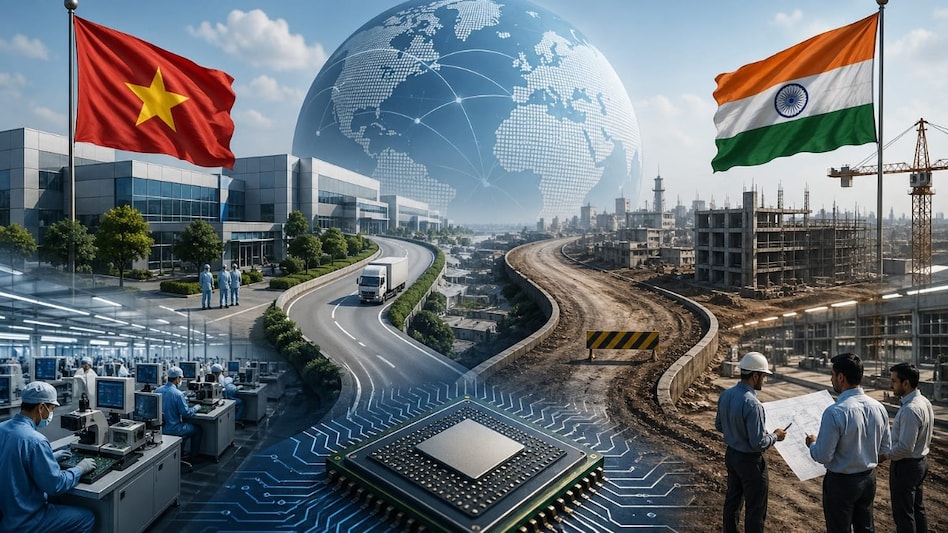
 Unless India can move faster from approvals to ground execution, experts warn that investments will continue to flow to ecosystems that are already operating at scale.
India has rolled out aggressive incentives and cleared proposals to build a semiconductor ecosystem, but global capital is flowing elsewhere. For two of the world’s biggest chipmakers, Intel and Samsung Electronics, Vietnam has emerged as the preferred destination for semiconductor packaging expansion.
Intel has already scaled its assembly, test and packaging (ATMP) operations in the country, anchoring one of its largest facilities there. Samsung, while yet to formally announce its plans, is in talks to set up a multi-billion-dollar chip packaging unit.
FAQs
Why is Vietnam attracting more semiconductor packaging investment than India?
Vietnam is moving faster because it has a 15-20 year head start in electronics and back-end semiconductor manufacturing, along with stronger execution, ready industrial parks, reliable logistics and a more mature supplier ecosystem. For global chipmakers, this makes investment decisions easier and less risky.
What makes Vietnam’s semiconductor ecosystem more attractive to companies like Intel and Samsung?
Vietnam offers a well-established electronics manufacturing base, skilled workers, export infrastructure and plug-and-play high-tech parks. It also benefits from proximity to China and deep links with East Asian supply chains, which help reduce logistics costs and improve turnaround times for chip packaging operations.
How do Vietnam’s incentives for semiconductor firms compare with India’s?
India offers strong upfront capital support under the India Semiconductor Mission, with the Centre providing up to 50% and states adding 20-25%. Vietnam, however, complements incentives with long-term tax benefits such as lower corporate income tax rates, tax holidays, land rent exemptions and support for training and R&D, making operations cheaper over time.
Why is execution seen as India’s biggest challenge in semiconductor manufacturing?
Experts say India’s main issue is not intent but execution. Delays in approvals, coordination problems and infrastructure readiness can slow projects. In semiconductors, where time-to-market matters a lot, investors usually prefer locations where construction, utilities and shipments happen on schedule.
What should India do to compete better for global semiconductor packaging investments?
India needs to improve speed, predictability and ecosystem readiness. That means faster approvals, stronger coordination between governments, better infrastructure and a deeper supplier network around chip facilities. Building a reliable electronics manufacturing ecosystem will be key to attracting more global semiconductor majors beyond Micron.

 Trump says the US could just decide to stay in Iran and ‘keep the oil’ like Venezuela
 ‘If it’s not under human control, it’s not worth pursuing’: Satya Nadella's warning on AI
 Anthropic sets sights on Nasdaq for potential October IPO, eyes $2 trillion valuation: Report
 Stock market holiday: Why NSE, BSE will remain closed on September 14
 Gold and silver ETFs beat equity ETFs in FY26: What investors should make of the shift
 Amit Shah Hails India’s Rise From Fragile Five To Top Five, Politics Of Performance Since 2014
 MEA Details BRICS Summit Outcomes as India Pushes Practical and People-Centric Cooperation
 Modi@25: Amit Shah Highlights 25 Years Of Leadership, Governance And 2047 Vision
 “Development And Environment Are Complementary”: PM Modi On Sustainability At BRICS
 Modi@25: Amit Shah Announces Seva Sankalp Campaign From Sept 17 To Mark Modi’s 25 Years Of Service
 SoftBank shares tumble 13% as OpenAI, Anthropic raise AI safety alarm
 IPOs this week: NSE, Hero Motors, SS Retail, Jindal Supreme, Sonaselection; check GMP, key datesStock market holiday: Why NSE, BSE will remain closed on September 14
 Avoid jewellery; stick to ETFs, bars and coins for investment this festive season: Navneet Damani
 SEBI’s CAS proposals: Expert weighs in on new expiry-day settlement price methodologySoftBank shares tumble 13% as OpenAI, Anthropic raise AI safety alarmIPOs this week: NSE, Hero Motors, SS Retail, Jindal Supreme, Sonaselection; check GMP, key dates
 China spies on us, we spy on China too: Trump after Iran satellite images report
 LPG, CNG, PNG prices today (September 14): Check latest rates in Delhi, Mumbai, Kolkata, other cities
 Petrol, diesel prices today, September 14: Check latest rates in Delhi, Mumbai, Chennai, Kolkata & more












