

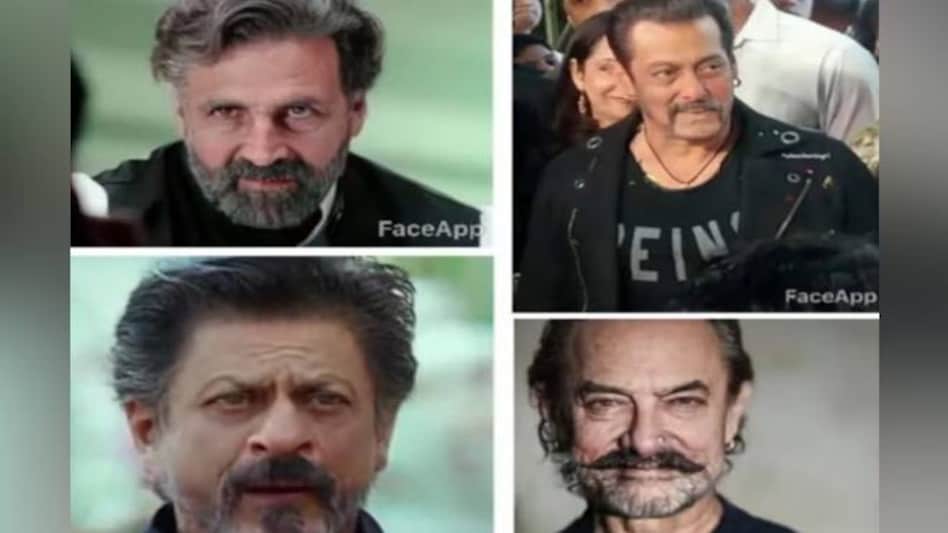
 FaceApp uses artificial intelligence (AI) and neural engine to edit selfies and add filters to the photos.
FaceApp has caused a minor kerfuffle on the internet for showing how users will look when they age. The app uses artificial intelligence (AI) and neural engine to edit selfies and add filters to the photos. Driven by celebrities, the app has gone viral and people are clicking and uploading their aged versions on to the social media sites. However, many missed the darker side of this app which is developed by a Russian company called Wireless Lab.
The biggest concern is the FaceApp's terms and conditions that are inherently vague. FaceApp not just captures the user's face but also acquires private user data. FaceApp's terms of use clearly state that the users of the app grant it a "royalty-free, worldwide" ability to "use, reproduce, modify, adapt, publish, translate, create derivative works from, distribute and display" photos and other materials. The company policy also states that it can share certain information with unidentified businesses that are or may become its "affiliates". FaceApp shares the cookie data with the third-party advertisers to "deliver targeted advertisements" and "other things."
 Setback for Subhash Chandra: NCLT puts media baron's repayment plan on hold, seeks CBI response in 4 weeks
 Tata power play: Chandrasekaran family's TVS ties emerge days after Venu Srinivasan backs his third term
 BT Big Story: Why India Inc is warming up to non-English-speaking executives
  'Looking forward to hosting him': Mark Carney confirms PM Modi's Canada visit in December, CEPA likely to be signed
 Mahindra Thar OG launched at same ₹10.32 lakh starting price, gets more features
 S&P Upgrades India’s FY27 Growth Forecast By 40 Bps To 7%; Expects RBI Rate Hike To 5.50%
 Supreme Court On Medicine Prices: ₹27,000 MRP For ₹2,700 Drug | ‘Extortion’, ‘Daylight Dacoity’
 Macro Volatility Vs Earnings: Why Earnings Matter More Than Valuations | Anshul Saigal
 India’s CDMO Opportunity: Anshul Saigal Spots Underappreciated Names
 IT Stocks Under Pressure: What Next For Indian Markets? | Chakri Lokapriya
 NSE IPO: Sunil Munjal, RK Damani, Raamdeo Agrawal, Dolly Khanna, Kris Gopalakrishnan turn big winners; here's how
 Adani Ports shares: CLSA retains 'Outperform'; highlights logistics, marine growth
 IDFC First Bank shares rise 5% as MOFSL upgrades rating; check target price
 Dixon Technologies stock slips 29% from 52-week high; tracking price targets, recovery prospects
  Oswal Pumps shares jump 8% bags Rs 297 crore solar project in Telangana NSE IPO: Sunil Munjal, RK Damani, Raamdeo Agrawal, Dolly Khanna, Kris Gopalakrishnan turn big winners; here's howMahindra Thar OG launched at same ₹10.32 lakh starting price, gets more featuresAdani Ports shares: CLSA retains 'Outperform'; highlights logistics, marine growth
 Beats 360 launches in India at ₹42,900, offering new headphones with interchangeable cushions
 'Unverified claims': DDCA junks former Ranji player's allegations, seeks probe












