









 These disputes, the federation said, have locked up significant capital and management bandwidth, constraining cash flows for concessionaires and contractors.

 These disputes, the federation said, have locked up significant capital and management bandwidth, constraining cash flows for concessionaires and contractors.
With the Union Budget 2026 around the corner, the National Highways Builders Federation (NHBF) has urged the government to revive the Vivad se Vishwas II – Contractual Disputes scheme, arguing that faster resolution of legacy disputes could unlock liquidity, revive stressed balance sheets, and accelerate execution in the road and core infrastructure sectors.
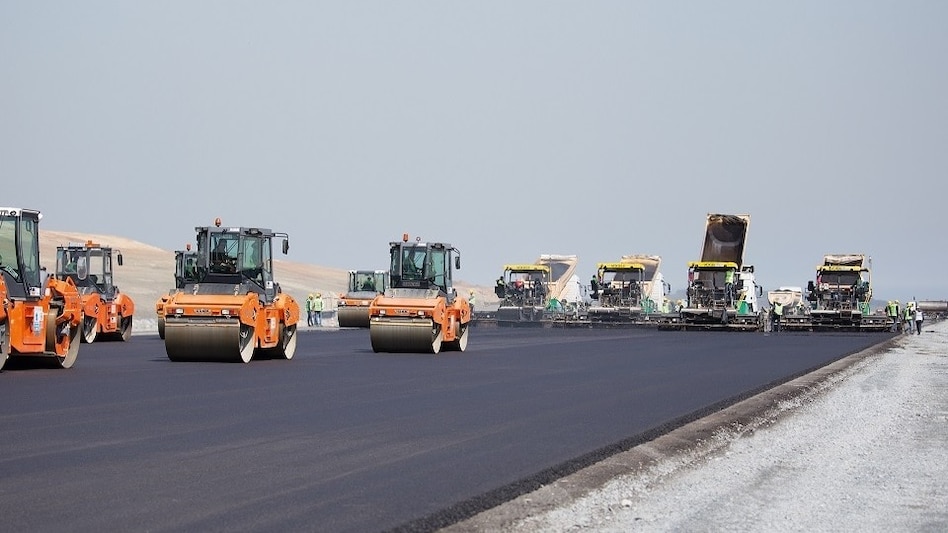
In a representation to Finance Minister Nirmala Sitharaman, NHBF highlighted that the national highways sector continues to grapple with a large backlog of unresolved contractual disputes involving authorities such as the National Highways Authority of India (NHAI) and the Ministry of Road Transport and Highways (MoRTH). These disputes, the federation said, have locked up significant capital and management bandwidth, constraining cash flows for concessionaires and contractors.
The one-time Vivad se Vishwas II scheme, implemented earlier for contractual disputes, had provided a structured and time-bound mechanism for early settlement. According to NHBF, the scheme played a key role in reducing litigation, saving costs, and releasing liquidity back into the system, thereby enabling smoother execution of ongoing projects and encouraging participation in new bids.
Despite these benefits, the federation said a substantial number of disputes remain unresolved. Once arbitration under Model Concession Agreements is invoked, matters often stretch across multiple stages of litigation. While arbitral awards are rarely overturned, prolonged legal processes lead to mounting interest liabilities for authorities and sustained financial stress for private developers.
“Prolonged litigation adversely affects both parties and weakens investor confidence in the infrastructure sector,” NHBF said, adding that unresolved disputes also delay closure of legacy projects and divert resources away from fresh capacity creation.
The federation has requested the government to revive and re-open the scheme, or notify a similar one-time settlement window with extended cut-off dates and timelines, particularly for road projects and other core infrastructure contracts. NHBF said such a move would provide immediate relief to contractors, improve cash flows for project authorities, and reinforce the government’s stated commitment to ease of doing business and timely dispute resolution.
 India's monsoon runs on a double engine: The hidden weather tag team deciding where the rain falls
 Same 43°C temperature, different reality: Why Europe's heatwave is more brutal than India's
 'Think of yourselves like stocks': WhatsApp chief Kunal Shah's advice for youth - what he means
 Dixon Technologies shares: Four factors why JM Financial upgraded the EMS stock
  From engineers to product managers: Here's how much Anthropic pays, with salaries up to ₹13.02 crore
 HP EliteBook X G2a Review: An AI PC in 2026 With 64 GB RAM And A Price To Match
 China’s Modern Inequality System | Akshita Nandgopal Unpacks The Brutal Reality Of The Hukou System
 India Food Label Scam Explained By Sneha Mordani | FSSAI Issues Strict Action
 Should You Get Your Heart Check Before Gym? Sneha Mordani & Dr Devi Shetty Explain
 Biggest Water Dispute In Asia | India-Pakistan Indus Crisis Update
 Dixon Technologies shares: Four factors why JM Financial upgraded the EMS stock
  Coforge, KPIT Tech, Cyient among top IT stocks to buy for upto 44% upside amid AI recovery
 Infosys, Hindalco, Redington: How FPI-heavy stocks fared in June as outflows hit ₹53K crore
 Last chance next week to buy four Bajaj Group stocks for dividend; check payout, record dates
 Coforge, Mphasis, Persistent, LTIMindtree: Share price targets as IT stocks under pressure