


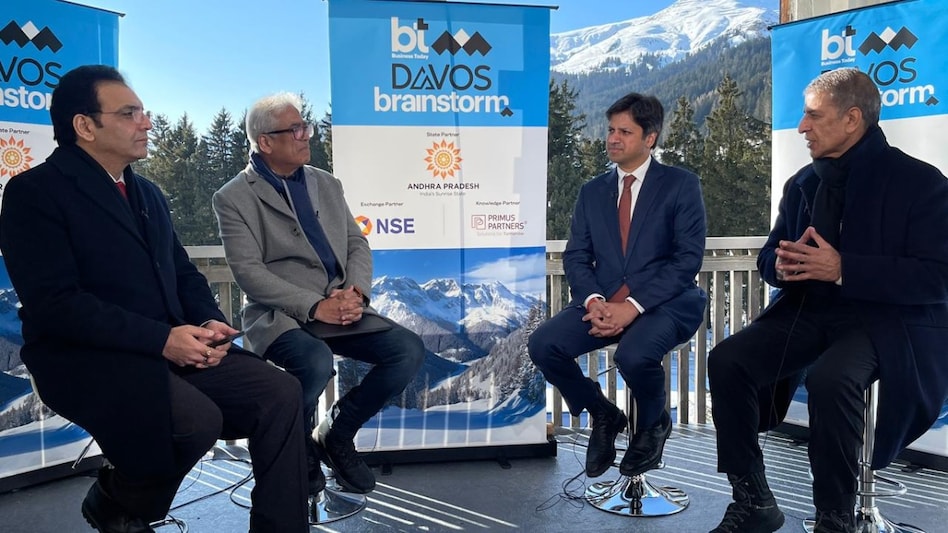
 Anant Goenka, Vice Chairman, RPG Group and President, FICCI, and Rajan Mittal, Vice Chairman, Bharti Enterprises with Siddharth Zarabi, Group Editor, Business Today and Rajdeep Sardesai, Consulting Editor, India Today TV.
 Davos 2026: India’s economic outlook remains resilient despite persistent global uncertainty, shifting trade dynamics and delayed negotiations with the United States, according to senior industry leaders Rajan Mittal and Anant Goenka. Speaking on India’s position in the evolving global order, both leaders highlighted the country’s growing focus on diversification through free trade agreements (FTAs), domestic reform momentum and the need to accelerate ease and speed of doing business.
Anant Goenka, Vice Chairman of RPG Group and President of FICCI, said India has been actively expanding its trade footprint beyond traditional partners as negotiations with the US continue to face delays. “For the last few quarters, we have believed a US trade deal was around the corner, but it has remained elusive,” he said. In response, India has stepped up FTA efforts with countries such as New Zealand, Oman and Jordan, while negotiations with the European Union are expected to be a major milestone.

 Russian oil & gas purchase: Trump signs Bill into Act targeting 100% tariffs on India, China
 Panic button: California governor issue order for mandatory kill switch on advanced rogue AI
 Countries with the highest take-home pay: Switzerland tops global ranking, Check full list here
 5 best alternative foldable phones to iPhone Duo: Samsung, Motorola, Google and more
 Canada visa processing: Indians get faster visitor visas, Super Visa wait hits 70 days
 “Unacceptable And Unprofessional”: MEA Rejects Pakistan’s Claims Over INS Kolkata Collision
  Commodity Trading For Beginners: How MCX & NCDEX Work | Trading Basics | Money Today
 US Fed Rate Hikes A Headwind For Foreign Flows? | Jibi Jacob | Jefferies
 ₹25 Billion FII Outflow: What Could Bring Foreign Investors Back? | Jefferies' Jibi Jacob
 India’s Private CapEx Picks Up: Christopher Wood On The Market Outlook
 Jindal Supreme, SS Retail, Hero Motors IPOs subscribed up to 181 times on final day; details here
 Sensex, Nifty post sixth weekly loss; TCS, Titan among top laggards, slip up to 4%
 How AI collapse could benefit Indian equity market; Jefferies' Christopher Wood explains
  Banks are no more secular growth story, prefer NBFCs: Chris Wood
 Jefferies' Christopher Wood sees gold at $10,000 'sooner or later'; likes India's small, midcaps
 100% tariffs immediately? What Trump’s new Russia sanctions law means for India
 Petrol, diesel prices today, September 19: Check latest rates in Delhi, Mumbai, Chennai, Kolkata & more
 Quote of the Day by Steve Jobs: 'For you to sleep well at night, the aesthetic, the quality, has to be carried all the way through'
 New Mahindra Thar facelift teased: Expected lights, cabin upgrades and the price question buyers should watch
 Trump’s announces Greenland deal with Denmark: What it means for US military presence












