Iran's Response
Israel’s military said it targeted Iran’s ballistic missile and air defence systems in strikes carried out on Sunday morning.
In response, Iran’s armed forces said they would soon launch their biggest offensive yet against US bases and Israel. The Islamic Revolutionary Guard Corps made the pledge in a statement on Sunday.
Shortly after 6 a.m., air raid sirens sounded repeatedly across Israel, warning residents of incoming attacks. In Tel Aviv, a series of explosions were heard as Israel’s air defence system intercepted Iranian missiles. There were no immediate reports of damage or injuries.
Witnesses in the Gulf cities of Dubai and Doha said they heard several loud blasts.
Iran had already responded to Saturday’s initial strikes by launching hundreds of missiles and drones targeting US troops and cities in Israel, as well as locations in Arab countries allied with Washington.
The escalation led to widespread flight cancellations across the Middle East.
The Pentagon said there were no US deaths or injuries, but acknowledged new risks for Americans in the region.
A senior US intelligence official told Reuters that while the main threat was to US military personnel, cyber attacks on critical US infrastructure were also a possibility.
Major airports across the Middle East, including Dubai — the world’s busiest international travel hub — were shut on Saturday. The disruption followed Iran’s missile retaliation and became one of the most serious shocks to global aviation in years.
Dubai’s landmark Burj Al Arab hotel and the airport, which handles more than 1,000 flights a day, were damaged in overnight attacks across Gulf states. Airports in Abu Dhabi and Kuwait were also hit.
On SaturStrait of Hormuz, the narrow waterway through which about a fifth of global oil consumption passes. The move raised fears of a sharp jump in oil prices.
Iran’s ambassador to the United Nations, Amir Saeid Iravani, told an emergency meeting of the UN Security Council that hundreds of civilians were killed and injured in the US and Israeli strikes. He described Iran’s retaliation as an act of self-defence and said the bases of hostile forces were legitimate military targets.
UN Secretary-General Antonio Guterres urged an immediate end to the fighting, saying he deeply regretted that an opportunity for diplomacy had been "squandered."
Following reports of Khamenei’s death, witnesses said some Iranians took to the streets in Tehran, Karaj and Isfahan. Videos circulating on social media showed scenes of celebration in some areas, though Reuters said it could not immediately verify them.
US sources said Israel and the United States timed the strikes to coincide with a meeting of Khamenei and his top aides. State media reported that he was working in his office when the attack happened. The strike also killed his daughter, grandchild, daughter-in-law and son-in-law.
In a statement, the Revolutionary Guards mourned the loss of " a great leader"
While, Trump and Israeli Prime Minister Benjamin Netanyahu called on Iranians to rise up and overthrow their government after the attacks. Israel’s military said the strikes killed at least seven senior military commanders.
Failed Talks
Israeli military operations over the past two years had already killed some senior Iranian military officials. These actions also seriously weakened several of Tehran’s proxy groups across the Middle East.
After Israel carried out a 12-day air war in June, with support from the United States, both countries warned they would strike again if Iran continued its nuclear and ballistic missile programmes.
At a United Nations meeting, representatives from Russia and China criticised the strikes. They said the attacks were launched while Tehran was still holding talks with Washington.
Russia’s UN envoy, Vasily Nebenzya, said Iran had been "stabbed in the back." He disagreed with the US claim that the strikes were meant to stop Iran from developing a nuclear weapon.
China called for an immediate ceasefire. It urged all sides to avoid further escalation and return to negotiations. The official Xinhua news agency also described the attacks on Sunday as "brazen aggression against a sovereign nation."
Senior US officials said recent talks showed that Iran was not willing to stop enriching uranium. Iran says the enrichment is for nuclear energy. However, US officials say it could allow the country to build a nuclear bomb.



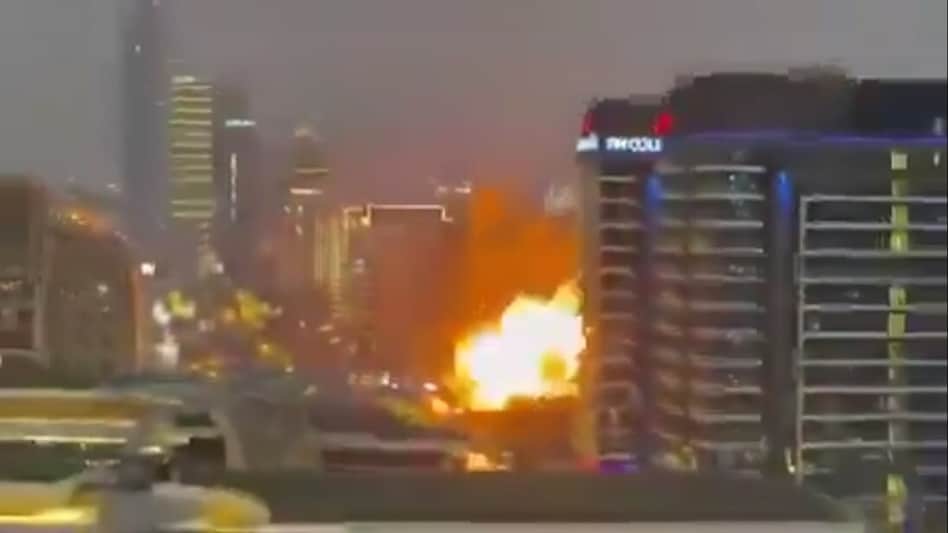 Israel said it launched another wave of strikes on Iran on Sunday.
 How Tamil Nadu is continuing to lead in manufacturing with factories and factory workers
 Carney strikes back: Canada retaliates against US tariffs with duties on $20 billion of goods
 Get a lifetime membership at Delhi's iconic Roshanara Club; DDA opens 750 slots, check prices
 Did you know India’s cash demand is strong despite the digital payment boom?
 Xi Jinping likely to visit India after 7 years for BRICS summit, may bring 400-member delegation
 Trump Moves To Make H-1B Visa Fee Permanent And Higher: What It Means For Indians
 Market Rally Vs Geopolitical Risk: What Wins From Here? Aditya Agarwal
 Daily Calls: Ask Your STOCK MARKET TODAY QUERIES | Market Update | Share Market News Today
 Symbiotec Pharmalab IPO | Top Management On Growth Plans, Business Outlook & IPO Strategy
 Chennai Second Airport Halted: Parandur Project Faces Wetland Concerns & Political Storm
 Paytm shares up 33% in a month: Time to book profits or is there more upside left?
 Nykaa shares: Elara Capital hikes target price; sees 43% upside potential
 Crompton Greaves shares: Brokerage sees 67% upside potential; check target price
 Dixon Tech, Amber Enterprises: Will they benefit from MPMS? Kotak shares views
 Vodafone Idea, Paradeep Phosphates, Hindustan Copper shares: What expert says
 India’s gold derivatives market crosses ₹2.2 lakh crore in daily turnover; physical deliveries hit 175 tonnes
 Apple launches refreshed Mac Mini and Mac Studio with M6 and M5 Pro silicon in India
 'It is the feeling of being...': Suniel Shetty reveals what keeps him working at 65 despite financial success
 AI-generated music faces a chart ban in Australia. Here's what the new rules say












