









 This heightened tension follows fears of Iranian retaliation for airstrikes on its consulate in Syria on April 1.
 This heightened tension follows fears of Iranian retaliation for airstrikes on its consulate in Syria on April 1.
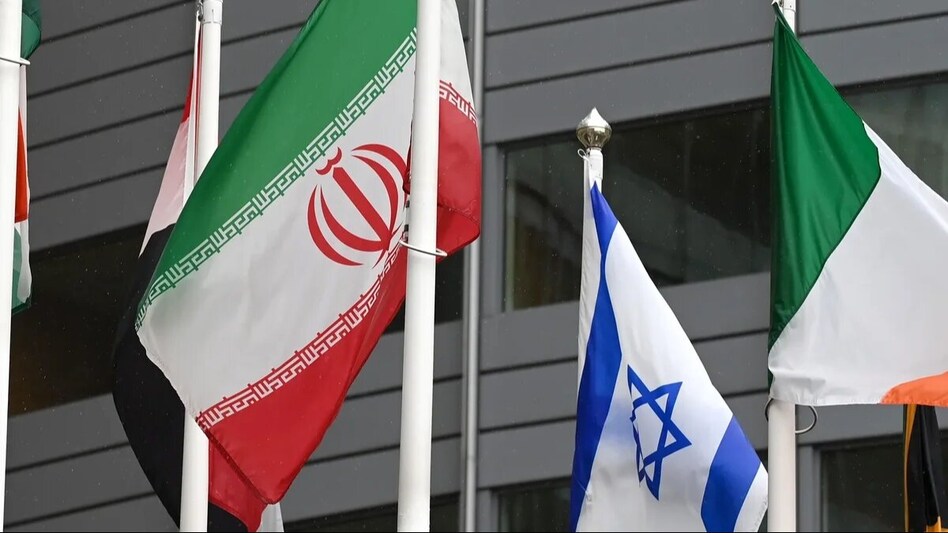
The spectre of war refuses to leave Middle East as Israel has now announced preparations for "scenarios in other areas" amidst its ongoing military operation in Gaza. This heightened tension follows fears of Iranian retaliation for airstrikes on its consulate in Syria on April 1.
The strike, resulting in the death of a senior Iranian general and six other military officers, led Iranian Supreme Leader Ayatollah Ali Khamenei to say that an attack on Israel was 'inevitable.'
Israel, which conducted a military operation in the Gaza Strip six months ago targeting Hamas, backed by Iran, has not officially confirmed its involvement in the strike on Damascus. However, the Pentagon has stated that Israel was behind the strike.
Here are the top developments:
1. Israeli Prime Minister Benjamin Netanyahu announced on Thursday that the country is continuing with its military operations in Gaza while also bracing for potential threats in other regions, amidst growing apprehension over potential Iranian strikes on Israel.
"We are actively preparing to address the security requirements of the state of Israel, encompassing both defensive and offensive measures," he stated.
2. Lufthansa, Germany's renowned airline, announced the suspension of its flights to and from Tehran, with the suspension expected to last until April 13. A spokesperson for the airline explained that the decision was made to prevent the crew from disembarking and spending the night in Tehran. Additionally, Lufthansa's subsidiary, Austrian Airlines, stated that while it still intends to operate flights to Tehran on Thursday, it is adjusting timings to avoid crew members having to disembark for an overnight layover.
3. Germany's Foreign Minister, Annalena Baerbock, was in a discussion with her Iranian counterpart regarding the heightened tensions in the Middle East, and emphasised the importance of all parties acting responsibly and exercising restraint.
The Foreign Ministry conveyed the message on the social media platform X, stating, "No one stands to benefit from a broader regional escalation."
4. Meanwhile, Moscow too urged restraint in the Middle East in order to prevent further destabilisation, emphasising the need for a calm approach.
5. Iranian President Ebrahim Raisi condemned Israel's airstrikes in Gaza City, denouncing them as revealing the 'brutal nature' of the regime.
6. The US expressed concern over the possibility of a major Iranian attack on Israel and highlighted that this poses an imminent threat to Israel, urging caution on all sides.
7. General Michael Kurilla, head of the US Central Command, is set to discuss the Iranian threat with Israel's Defence Minister Yoav Gallant in Tel Aviv.
8. US President Joe Biden also reaffirmed his unwavering support for Israel's security during talks with Japanese Prime Minister Fumio Kishida.
9. According to the CNN, Iran may use proxies like Hezbollah and Houthis to launch strikes against Israel, instead of directly going in for an attack.
10. Israel, meanwhile, confirmed the return of 13 hostages freed from Hamas captivity in Gaza after 40 days.
 Tata Sons’ crucial June 12 board meeting: Here's what to look out for
  HDFC Bank shares slip 26% in 2026; recovery or more correction on cards?
  After Gymkhana, it’s the turn of Jaipur Polo Ground. Govt sends eviction notice
 Elon Musk could soon become world’s first trillionaire; Here's what $1 trillion fortune looks like
 TCS could soon have as many AI agents as employees, says N. Chandrasekaran
  Anthropic's Mythos AI Is Coming: Revolutionary Tool Or New Cyber Threat?
 TCS Chairman's Big AI Prediction: 5 Lakh AI Agents Could Work Alongside Employees
 Gold & Silver Demand Weak, But Discounts Are Shrinking: Is A Buying Wave Coming Soon?
 EXCLUSIVE: Manoj Bajpayee Reveals Untold Story Behind India's 1991 Economic Crisis | Governor
 Iran Conflict Raises Fuel Costs, Airlines Cut Flights As IATA Slashes 2026 Profit Outlook
 After a near-5x rally from IPO, brokerage sees 38% more upside in this small-cap metal stock
 Tata Steel shares rise 36% from 52-week low; price targets, outlook for investors
  Infosys, TCS, Tech Mahindra, HCL Tech, Wipro: Check fresh target pricesHDFC Bank shares slip 26% in 2026; recovery or more correction on cards?
  BT Closing Bell | Sensex, Nifty snap two-day losing run; IndiGo, SBI lead index gainers