


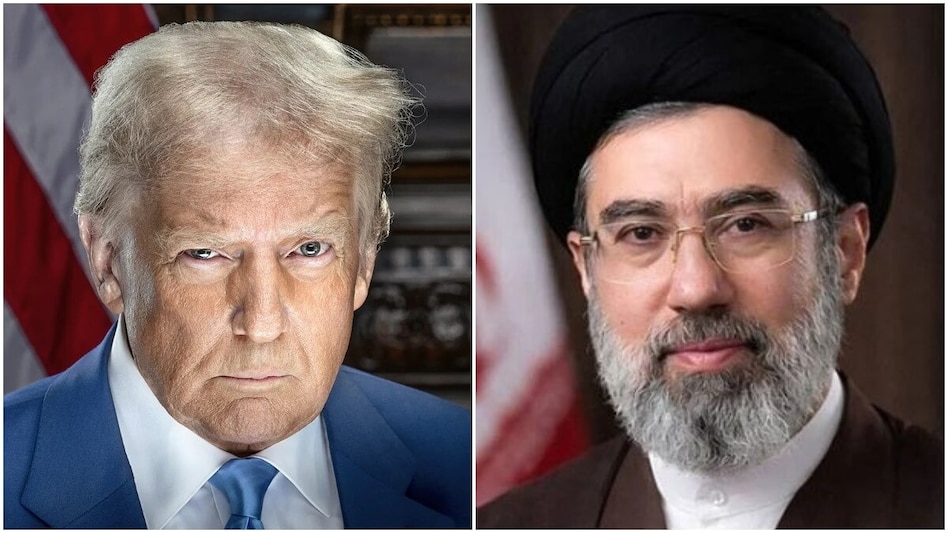
 He said US action had prevented a nuclear catastrophe.
 US President Donald Trump said the US is in a war with Iran because “lunatics can’t have a nuclear weapon”, even though he has told the US Congress that the conflict stands terminated. Speaking at an event in Florida, Trump said: “You know, we're in a war because I think you would agree we cannot let lunatics have a nuclear weapon. Do you agree?” His remarks drew chants of “USA” from the crowd.
Trump also said he had rejected Iran’s latest proposal to end the conflict, which was conveyed through Pakistan, and said he was not ready to end the war early. On the other side, Iran’s Foreign Minister Abbas Araqchi said Tehran remained open to diplomacy if Washington changed what he called its “excessive approach, threatening rhetoric and provocative actions”. He also said Iran’s armed forces remained ready to defend the country against any threat.

 India's $30 trillion goal needs 8-10% growth, $400 billion more annual investment: Jayant Sinha
 BT India@100: ‘India has not lost the AI race,’ says Amitabh Kant, highlights the country’s biggest advantage
 Will Tukaram Mundhe enter politics? Here's what the Maharashtra FDA commissioner said
 Deepinder Goyal’s Temple gets a major redesign, shrinks to 'less than half the size'
 Bitcoin price today: Rs 16 lakh gain just in a week! What led to a sharp rally in crypto market?
 #IndiaAt100 : Dr. Pawan Goenka On India’s SpaceTech Lift-Off And The Race To 2047
 #IndiaAt100 : P Chidambaram On India’s Growth Dilemma | What Could Hold Back $30 Trillion Dream?
 #IndiaAt100 | India’s Coolest Start-Ups: Meet The Innovators Building Tomorrow
 #IndiaAt100 | The Labour Code For Manufacturing: What Changes For Jobs & Industry?
 #IndiaAt100 : India’s Resilience Playbook | How Can The Economy Stay Strong Through Crises?
 Cupid, NTPC Green, NTPC, Raymond Realty, HAL shares: Key technical levels to watch
 Defence stock with Rs 2,654-crore order book hits record high; here's why
  GACM Technologies: FII holding jumps to 29%; penny stock in focus
 Puravankara shares rise 5% on fresh order win
  20 high-conviction ideas for up to 95% upside | stocks to buy #IndiaAt100 : Dr. Pawan Goenka On India’s SpaceTech Lift-Off And The Race To 2047
 #IndiaAt100: Sanjeev Sanyal Debunks Bengal’s “Anti-Business” Image
 1.1 billion barrels gone: IMF warns that global oil market is running out of safety cushions
 Maharashtra FDA Tukuram Mundhe's 3-Month Drive: 3,000 Inspections, ₹55 Cr Seized#IndiaAt100 : P Chidambaram On India’s Growth Dilemma | What Could Hold Back $30 Trillion Dream?












