












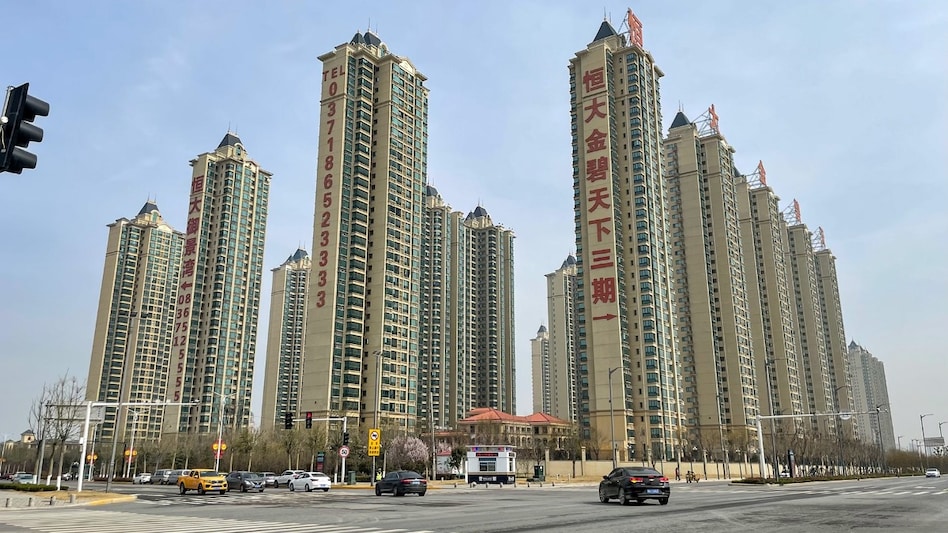
 Real estate once contributed roughly a quarter of China’s economic activity when related industries are included.
 Real estate once contributed roughly a quarter of China’s economic activity when related industries are included.
China’s housing market is now facing one of the deepest and longest property downturns in modern economic history, with inflation-adjusted home prices effectively falling back to levels last seen around 2005. The correction has erased much of the wealth created during the country’s two-decade real estate boom and is reshaping the world’s second-largest economy.
China’s property boom has reversed
For nearly two decades, real estate was the backbone of China’s economic rise. Apartments became the preferred investment for millions of households, while developers expanded aggressively across hundreds of cities.
But recent data from the Bank for International Settlements (BIS) shows China’s inflation-adjusted residential property price index has fallen sharply from its 2021 peak. Analysts say the decline has effectively wiped out most real gains accumulated since the mid-2000s.
In nominal terms, home prices in many major cities are still far higher than in 2005. However, after adjusting for inflation, the market has undergone a dramatic reset.
What triggered the collapse
The slowdown accelerated after Beijing introduced the “three red lines” policy in 2020 to curb excessive borrowing by property developers.
That move exposed severe debt problems across the sector. Developers such as Evergrande and Country Garden struggled to repay obligations, construction projects stalled and buyer confidence weakened rapidly.
At the same time, China began facing broader structural pressures:
Housing starts have plunged since 2021, while unsold inventory remains elevated across many lower-tier cities. Analysts increasingly describe the downturn as a “slow-motion property crisis” rather than a sudden crash.
Why the crisis matters so much
Real estate once contributed roughly a quarter of China’s economic activity when related industries are included. Property was also deeply tied to household wealth, banking exposure and local government finances.
As prices fall, consumers feel poorer and become more cautious about spending. Local governments are also under pressure because land sales — once a major revenue source — have slowed sharply.
The property downturn is now one of the biggest drags on China’s post-pandemic recovery.
The pain is uneven across China
Not every Chinese city has suffered equally. Top-tier cities such as Beijing and Shanghai have held up relatively better due to stronger incomes, tighter supply and continued demand from wealthier buyers.
The sharpest corrections are being seen in smaller cities where developers built massive housing inventories during the boom years. In several regions, falling populations and weak job growth have worsened the oversupply problem.
Could India face a similar housing crash?
At the moment, most economists believe India’s housing market remains structurally different from China’s.
India still benefits from:
Unlike China, India has not seen the same scale of speculative overbuilding across hundreds of smaller cities. India’s property sector is also less dominant in the economy compared with China’s peak dependence on real estate. However, analysts say some warning signs are still worth monitoring.
Areas of concern for India
Still, India’s situation remains fundamentally different because demand is still being supported by demographics and urban migration. China’s downturn, by contrast, emerged after years of oversupply, slowing population growth and extremely high leverage among developers.
 Will gold rally again? Expert sees range-bound trend amid geopolitical, inflation pressures
 No layoffs, only hiring: Infosys CEO bets big on freshers while rivals cut thousands
 RBI’s NBFC rule poses a hurdle for Tata Sons’ plans to remain unlisted
 Vietnam is winning the chip race India wanted to lead
 Alphabet’s Google revenue jumps 22%, Google Cloud crosses $20 billion milestone
 5 Incredible Facts About India’s Mega Ganga Expressway Rewriting UP’s Growth Story
 Bengal Phase 2 Polls Turn Violent: Clashes, Bomb Scare, EVM Row Trigger Tension Across State
 Bengal Phase 2 Turns Into High-Stakes Showdown Amid Heavy Voting, Violence Claims, And Political
 Exit Poll Predicts Big Win For NDA In Assam, Himanta Biswa Sarma In Strong Position
 Lost Your Android Phone? Find It Instantly With Find My Device!
 Sensex, Nifty crash: Not exit polls results, but these 3 reasons behind market fall today
 Union Bank shares tumble 16% in 6 sessions; PSU lender issues clarification
 Price target upgrades for this multibagger stock but West Asia headwinds remain; Buy or sell?
 Why Qualcomm shares jumped after CEO Cristiano Amon's comments
 AWL Agri Business shares: Nuvama maintains 'Buy' but trims target price; here's why