


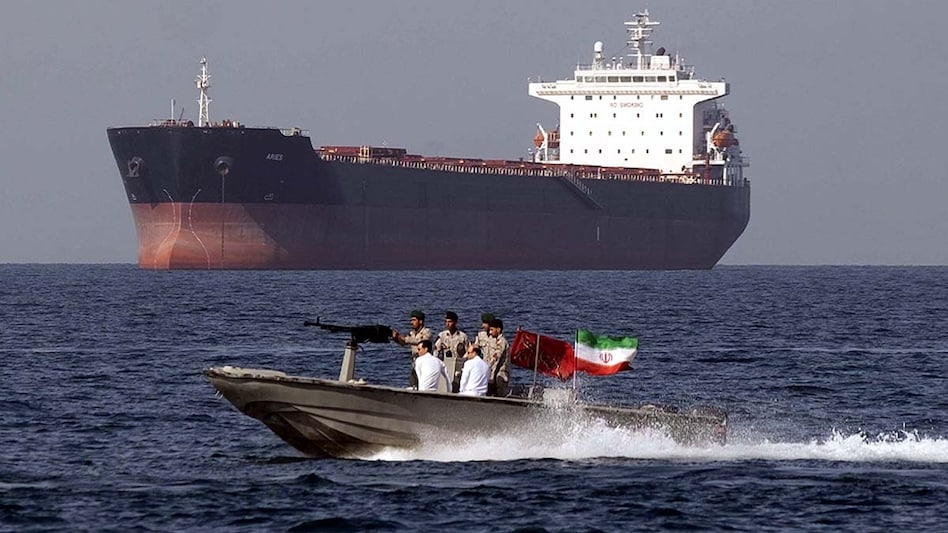
 The warning comes after the collapse of US-Iran talks and Trump’s announcement of a sweeping naval blockade targeting Iranian-linked shipping.
 In an unusual blend of geopolitics and mathematics, Iran has responded to US President Donald Trump’s proposed naval blockade of the Strait of Hormuz with a symbolic equation—one that carries a stark warning for global oil markets and economic stability.
A formula as a warning

 Mahindra takes battery-as-a-service to entire electric SUV line-up
 Closing Auction Session: Why the system expected to reduce volatility is still seeing occasional wild swings
 Reliance Industries denies Subhash Chandra’s media allegations
 Silver may be cheaper than gold as 2026 draws to a close: Report
 India paid 29% more for cooking gas after Hormuz strikes: Report
 Gen Z Is Changing Politics? D.K. Shivakumar On Youth Power & Rahul Gandhi’s Outreach
 Babita Singh Reporting, Part-Timers, Bandar & More: 5 OTT Releases To Watch This Weekend
 Using AI To Write? You Could Be Caught! Anthropic's Invisible Watermark Explained
 Shah Rukh, Salman & Madhuri-Backed Pernia’s Pop-Up Shop Parent Eyes ₹680 Cr IPO
 Explained: How China Is Using Old Chips, New Designs And Robots To Beat The Blockade
 Jio Platforms IPO gets SEBI nod: Rs 27,500 crore debt repayment plan, $100 billion valuation in focusClosing Auction Session: Why the system expected to reduce volatility is still seeing occasional wild swings
 RIL-backed penny stock hits 52-week low; firm clarifies on high trading volume
 Happiest Minds shares slip despite IT stocks surge; here's what is weighing on the stock
 BEL, Solar Industries shares remain Nuvama's top defence picks; here's what it said on BDL, Data Patterns, HAL
 “Govt Will Cover Cooking Gas Costs”: CM Vijay Announces Relief For Tamil Nadu Public
 Tamil Nadu Expands Free Bus Travel For Women; ‘Vetri Payanam’ To Launch On October 2
 India’s First Fully Indigenous AK-203 ‘Sher’ Rifle Successfully Test-Fired In Amethi
 Raghuram Rajan says Fed should raise rates as inflation remains elevatedGen Z Is Changing Politics? D.K. Shivakumar On Youth Power & Rahul Gandhi’s Outreach












