


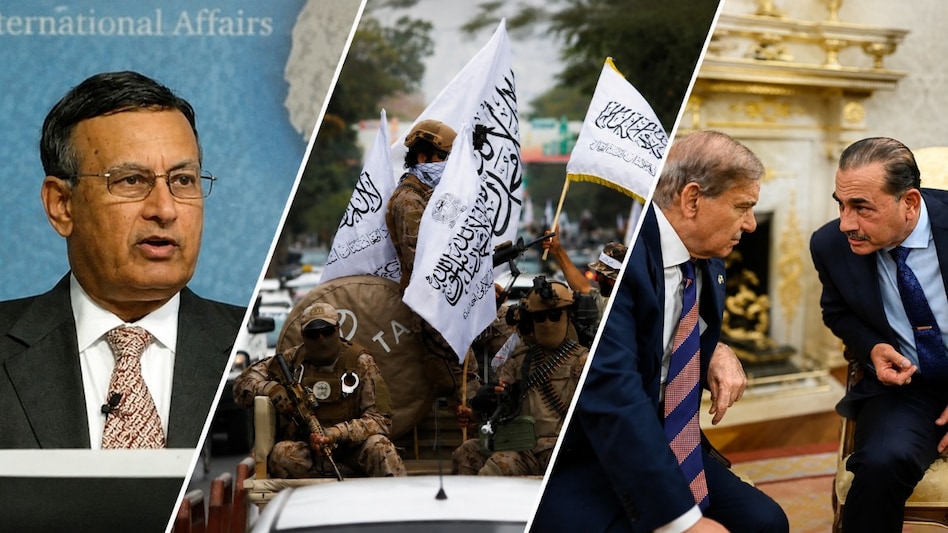
 Former Pakistan envoy Husain Haqqani warned of Taliban blowback in 2021
"Islamabad will come to regret" - that was Husain Haqqani's warning in 2021, just weeks before the Taliban seized Kabul. Five years later, the former Pakistan ambassador to the US says events have proved him right.
"In 2021, when many in Pakistan were celebrating the return to power of Taliban in Afghanistan, I had warned that Islamabad Will Come to Regret Aiding the Taliban’s Resurgence. Events of the last 5 years have proved that analysis right," Haqqani, now a senior fellow at the Hudson Institute, wrote on X on Sunday.

 ‘Global South must become a global decision-maker’: PM Modi at BRICS Summit with Xi, Putin
 ‘Everything will work out just fine’: Trump says Iran war will end very soon, oil prices will drop
 SEBI proposes new expiry-day settlement formula for derivatives after CAS concerns
 ‘Mojtaba is alive, doing his job’: Iranian President Pezeshkian says US is spreading propaganda
  BRICS Summit 2026: Malaysia, Ethiopia want stronger defence cooperation with India
 “New Airports Must Create Tourism”: Ram Mohan Naidu On India’s Aviation Push
 Gen Z Portfolio Guide: How To Balance Emergency Funds, Investments And Future Financial Security
 U.P CM Yogi Adityanath Says Youth Still Read Books, Need Better Access In Digital Age
 BRICS 2026: South African President Cyril Ramaphosa Meets Gautam Adani
 Why Gen Z Chooses Experiences Over Traditional Financial Goals Like Homes And Cars
 Large caps stocks under pressure as rising US bond yields, crude prices weigh on foreign flows
  SEBI proposes bringing unexecuted Iceberg orders into closing auctionSEBI proposes new expiry-day settlement formula for derivatives after CAS concerns
 Silver may climb to Rs 3.25 lakh, but January peak looks distant: Navneet Damani
 NSE IPO: Should you subscribe? Check price band, key details, fresh GMP, valuations & brokerage view
 PM Modi At BRICS Summit: “From Voice To Impact, From Privilege To Partnership”
 PM Modi Calls For Urgent UN Security Council Reform At BRICS Summit
 BRICS Summit 2026: Ramanathaswamy temple’s grand corridors take centre stage as PM Modi welcomes global leaders
 Xi Jinping warns against war in Middle East, Gulf, urges BRICS to stand on ‘right side of history’‘Everything will work out just fine’: Trump says Iran war will end very soon, oil prices will drop












