


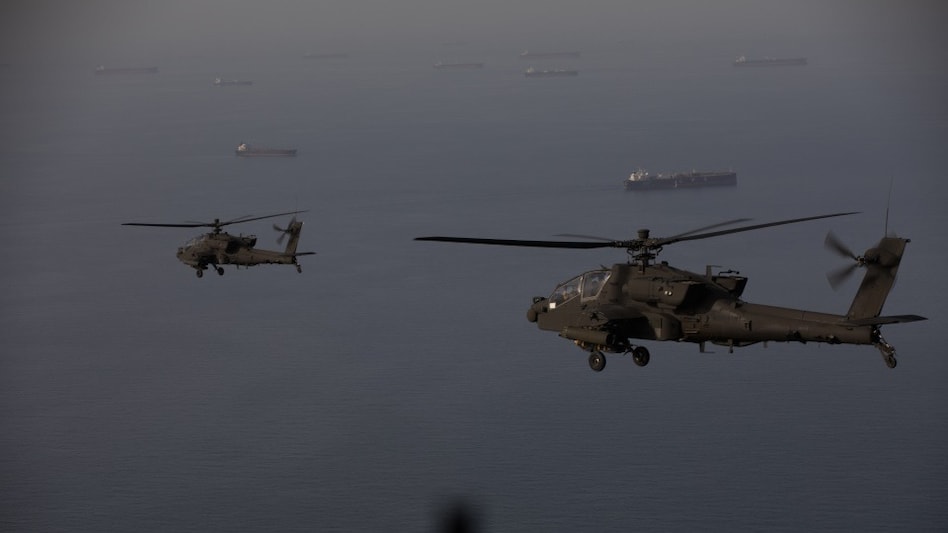
 AH-64 Apaches fly above the Strait of Hormuz during a patrol, April 17. (Photo: US Central Command)
Tensions in the Strait of Hormuz spiraled into dangerous territory on April 18 as competing US and Iranian blockades triggered fresh confrontation, including gunfire at a passing tanker and disruptions to global shipping. The day also saw claims and counter claims from both the sides, which failed to ease tensions across the globe.
The rapidly evolving standoff has deepened uncertainty over one of the world’s most critical oil transit routes, raising fears of a prolonged energy shock and the risk of direct conflict between Washington and Tehran.

 'No country should help Iran evade sanctions': Marco Rubio on Modi-Pezeshkian meet at SCO summit
 ‘Ill-educated, egregiously wrong…’: Neelkanth Mishra says ‘2.6% GDP growth’ claim is obviously incorrect
 Buyback tax: How India changed the rules three times in 18 months and what investors need to know
 Nifty, Sensex, Nifty Bank outlook for today: GIFT Nifty up nearly 90 points; key levels to watch
 'Stay away or...': After Marco Rubio's SCO ultimatum, Scott Bessent warns Iran's allies
 U.S. May Tighten Child Passport Checks Under Trump, Indians And Birth Tourism Families Face Scrutiny
 Market Commentary | Deven Choksey On Buying Opportunities & Market Trends
 “India Is Certainly Not In Crisis”: Arvind Panagariya On Growth, Investment And Reforms
 Daily Calls: Ask Your STOCK MARKET TODAY QUERIES | Market Update | Share Market News Today
 What’s Hot: Stocks, Gold & Big Money Moves | Daily Markets Show | September 02 | Business Today
 Inox Wind shares in focus after Rs 755 crore repeat order from IOC; key detailsBuyback tax: How India changed the rules three times in 18 months and what investors need to know
 SBI, Coal India, HAL: Top PSU stocks to trade — Check key levels, target prices & stop loss
 Hexaware Tech shares in focus as CEO resigns; read full resignation letterNifty, Sensex, Nifty Bank outlook for today: GIFT Nifty up nearly 90 points; key levels to watch
 ₹600, AC cabin and a Taj Mahal trip: Dutch couple shares the good and bad of India train rideInox Wind shares in focus after Rs 755 crore repeat order from IOC; key details
 Earth nearing climate red line: World set to cross 1.5°C warming threshold, warns UN bodyBuyback tax: How India changed the rules three times in 18 months and what investors need to know‘Ill-educated, egregiously wrong…’: Neelkanth Mishra says ‘2.6% GDP growth’ claim is obviously incorrect












