


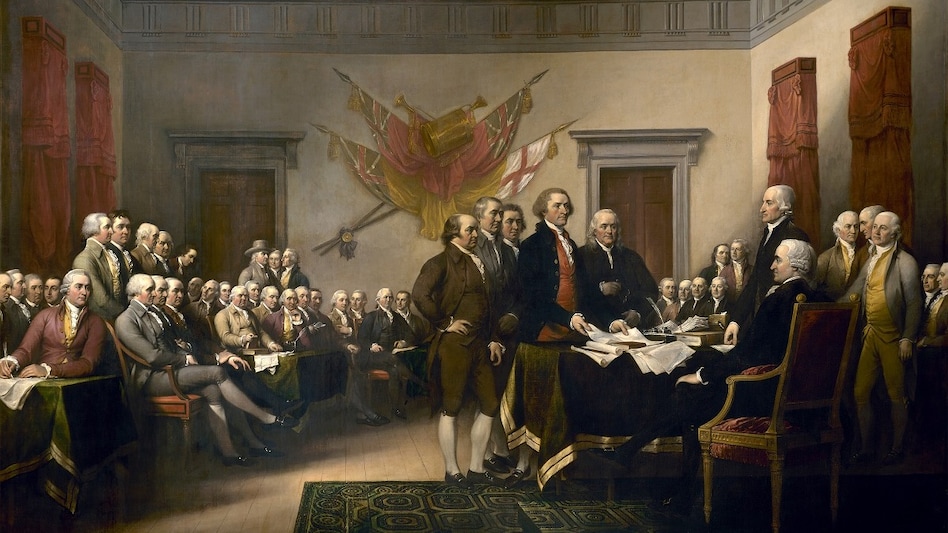
 Another enduring myth is that all 56 delegates gathered on July 4 to sign the Declaration. Historical records show that this did not happen.
 Fireworks, parades and backyard barbecues have become synonymous with July 4 in the United States. Yet one of the biggest assumptions about America's Independence Day is historically inaccurate. Contrary to popular belief, July 4, 1776, was neither the day the Declaration of Independence was signed by all its delegates nor the day the Continental Congress voted to break away from Britain.
The path to American independence unfolded over several weeks rather than a single defining moment. The crucial vote came on July 2, 1776, when the Second Continental Congress approved a resolution introduced by Richard Henry Lee declaring that the thirteen colonies "are, and of right ought to be, free and independent States."

 BT Infra Summit 2026: How Sagarmala 2.0 is going to steer India's maritime growth
 Why Bloomberg isn't ready to add Indian bonds yet despite sweeping market reforms
 BT Infra Summit 2026: India's energy security needs a new playbook as clean power, storage and grid modernisation take centre stage
 ITR filing 2026: WazirX launches free crypto tax reporting platform ahead of ITR deadline
 Maruti Suzuki Q1 results: Profit slips 9% YoY to Rs 3,447 crore; revenue climbs 36%
 #BTInfrastructureSummit: How India Is Building Its Infrastructure Muscle For 2047
 India's Energy Security: Kearney's Gaurav Gulati On Import Dependence, Storage & Logistics Risks
 IRFC CMD Manoj Kumar Dubey On ₹20 Lakh Crore Rail Funding, IRFC 2.0 & India's Infra Push
 "Critical Minerals Are Shaping The Future": G Kishan Reddy On India’s Next Infra Push
 Sagarmala 2.0 Explained: How India’s Mega Maritime Push Could Cut Costs, Create Jobs
 Maruti Suzuki Q1 results: Profit slips 9% YoY to Rs 3,447 crore; revenue climbs 36%
 ITC Q1 results: Profit slips 16% to Rs 4,394 crore YoY; revenue climbs 28%
 BTTV Exclusive: M&M CEO Rajesh Jejurikar on Q1 earnings, business outlook, order book and more
  Nifty IT stocks rebound in July as semiconductor shares falter; reverse AI trade at play?
 Dixon Technologies Q1 earnings: Net profit at Rs 718 crore, revenue rises 21%#BTInfrastructureSummit: How India Is Building Its Infrastructure Muscle For 2047India's Energy Security: Kearney's Gaurav Gulati On Import Dependence, Storage & Logistics RisksIRFC CMD Manoj Kumar Dubey On ₹20 Lakh Crore Rail Funding, IRFC 2.0 & India's Infra Push"Critical Minerals Are Shaping The Future": G Kishan Reddy On India’s Next Infra PushSagarmala 2.0 Explained: How India’s Mega Maritime Push Could Cut Costs, Create Jobs










