








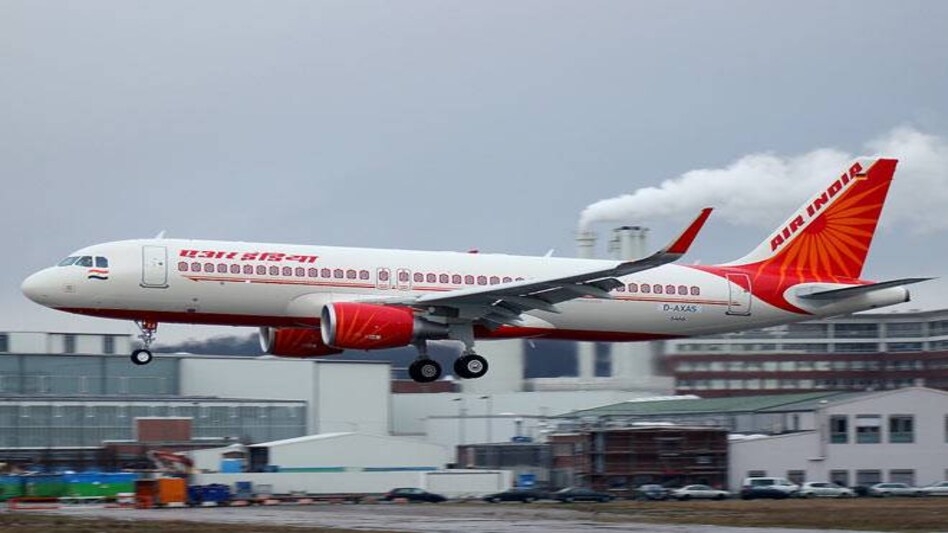
Days after Niti Aayog recommended the government to disinvest in debt-trapped Air India, Aviation Minister Gajapathi Raju feels that finding a "bakra" may not be easy to sell the national carrier.
The Aviation Minister was speaking to a TV channel where he said: "There are hardly any bakras around, so to get one is difficult and businessmen are businessmen. There are limitations. One thing is for sure, the taxpayer's money cannot be committed for eternity. So, that is one problem. Failures are there on the financial front, so, there are problems and these will be attended to."
The Minister was responding to a question where he was asked about the Aayog's recent suggestion on Air India's disinvestment.
Niti Aayog recently submitted a report with a detailed roadmap for Air India's disinvestment, including writing off loans to the tune of Rs 30,000 crore.
Before Niti Aayog, Finance Minister Arun Jaitley had also hinted at the privatisation of Air India . Last week, the Finance Minister while speaking to DD News expressed his concern over Air India's financial condition and said: "Air India's market share today is around 14 percent while the debt is Rs 50,000 crore while the government has not put in money in private carriers."
Jaitley further said if private airlines could handle 86 per cent passengers then they can also manage 100 per cent.
Both Jaitley and Raju's concerns about Air India are completely valid. The national carrier is in a complete mess when it comes to finances. Unless the government takes definite action, Air India's fortune is unlikely to change.
HERE ARE THE MAIN PROBLEMS WITH AIR INDIA
Huge Debt Burden
The Times of India reported that Air India has debt of around Rs 60,000 crore, which includes around Rs 21,000 crore of aircraft-related loans and around Rs 8,000 crore working capital. Niti Aayog's recent proposal was to transfer the loans and the working capital to the new owner.
Never Ending Losses
Under a financial restructuring plan in 2012, Air India was slated to receive Rs 30,231 crore equity infusion over 10 years. It has received some Rs 23,993 crore so far. Even after pumping in huge money, the airline has not shown significant financial and operational improvement. For instance, the airline reported losses of Rs 3,587 crore in 2015/16, down from Rs 5,859 crore in 2014/15. The national carrier seems to be a bottomless pit. Air India's cost structure, including high employee-to-aircraft ratio, keeps the airline away from profitability. A turnaround - without considering privatisation (or even a strategic sale) at some point - appears to be a pipe dream.
Decreasing Market Share
Air India is gradually losing market share in the domestic market to private players - both old and new. Its market share has dipped from 18.4 per cent in 2014 to 14.6 in 2016. An operating profit of Rs 105 crore in 2015/16 is the only silver lining. Air India's woes began soon after it merged itself with Indian Airlines. Two years prior to that, it had decided to buy 111 Boeing aircraft -a decision which came under scrutiny. Recently, the apex court has asked the Central Bureau of Investigation to conclude a probe into alleged irregularities in purchase (or hiring) of those 111 aircraft. It cost the exchequer about Rs 70,000 crore.
Workers Problem
Wooing professionals to work with Air India - assuming they come from the private sector - could be challenging. Many professionals would be reluctant to work with a loss-making entity, especially in a public enterprise set-up. In India, public sector companies, albeit profitable, have rarely attracted professionals from the private sector.
 Budget 2026: Wider slabs, gratuity taxation, NPS - What’s next for tax after FM’s 2025 reforms
  Elon Musk's X suffers second outage this week, disrupting service in India, globally
  RIL Q3 earnings: Net profit rises to Rs 18,645 crore; revenue up 10.5%
  GRAP-III curbs imposed across Delhi-NCR as AQI threatens to turn severe. Check what is banned
 Union Budget 2026: NSE, BSE declare Sunday trading schedule; F&O and commodities also open
 Gold Too Risky? Why Metal Stocks Could Be The Smarter Bet Now
 Andhra Pradesh: India’s Electronics Powerhouse
 HCLTech Vs Infosys Vs TCS: Which IT Bellwether Is The Best Buy After Q3 Results?
 India’s Biggest Change Is Youth Self-Confidence, Says Union Minister Piyush Goyal
 Rats Roam Around Hospital Ward In UP’s Gonda | Viral Video Exposes Shocking Hygiene Failure
 RIL Q3FY26 results: Jio Platforms crosses 515 million users, profit rises 11% on strong data growthRIL Q3 earnings: Net profit rises to Rs 18,645 crore; revenue up 10.5%
  Sebi proposes fund netting for FPIs to reduce funding burden in cash marketUnion Budget 2026: NSE, BSE declare Sunday trading schedule; F&O and commodities also open
 Tata Tech Q3 results: Profit tumbles over 96% to nearly Rs 7 crore; revenue up 4%