








 Manufactured products, fuel and power also see sequential pick up
 Manufactured products, fuel and power also see sequential pick up
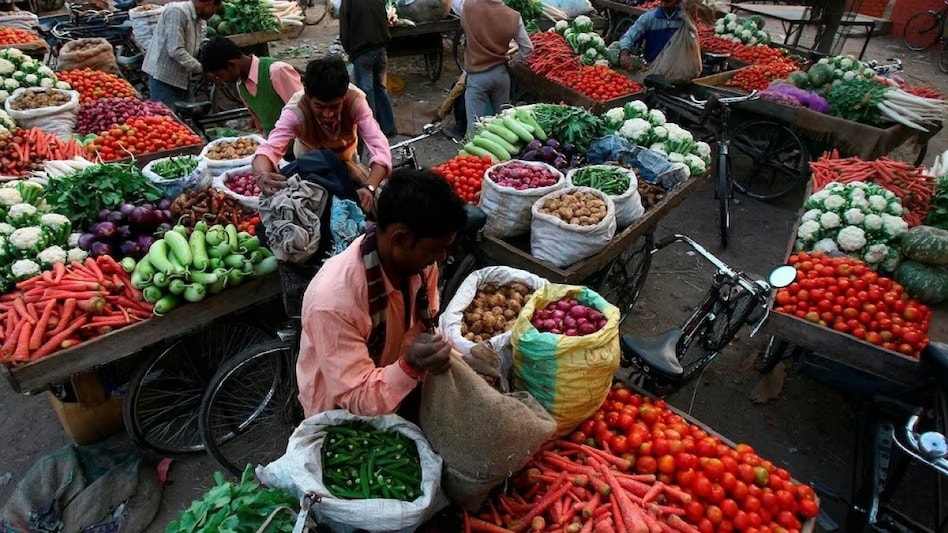
Food inflation worries are persisting amid rising concerns over fuel prices due to the continuing Israel-Hamas conflict. Wholesale price index (WPI)-based inflation remained in the negative territory in September at -0.26 per cent with inflation in the food index at a benign 1.54 per cent in the month, but prices of most food items at the wholesale level have been increasing.
Official data released on Monday revealed that wholesale inflation in the food index declined by 4.46 per cent sequentially in September as prices of vegetables contracted by 15 per cent in the month from a rise of 48.39 per cent year-on-year in August.
However, prices of most food grains at the wholesale level rose, which has been a concern in retail inflation too. WPI inflation in pulses shot up to 17.69 per cent in September from 10.45 per cent in August. Wholesale inflation in cereals remained steady at 7.28 per cent in September compared to 7.25 per cent in August, while it rose to 6.33 per cent in wheat last month from 5.81 per cent in August. WPI inflation in paddy remained high, but eased marginally to 8.97 per cent in September from 9.18 per cent in August.
“There is a structural and longer-term challenge with regards to food inflation in the cereal and the pulses category. Wholesale cereal inflation stands at 7.3 per cent year-on-year in September on the back of a high 11.9 per cent YoY in September 2022. Pulses wholesale inflation has sharply climbed to 17.7 per cent YoY in September 2023 and has been near double digits since June,” noted Suman Chowdhury, Chief Economist and Head–Research, Acuité Ratings and Research.
Rahul Bajoria, MD and Head of EM Asia (ex-China) Economics, Barclays, also highlighted that barring vegetables, prices of most other food items rose sequentially, particularly cereals, pulses, eggs and meat, spices, and even fruit. This indicates price pressures in food persist, despite some cooling of the seasonal price surge,” he said.
There are also concerns about rising core inflation with prices of manufactured items rising for the second month in a row as well as higher inflation in fuel and power category though they remained in the deflationary zone at -1.34 per cent and -3.35 per cent, respectively, in September. However, on a sequential basis, WPI inflation in the category of manufactured products rose by 0.36 per cent in September while in fuel and power, it increased by 2.34 per cent.
WPI inflation is likely to return to positive territory in the coming months and retail inflation is likely to remain at about 5 per cent for the remainder of the year, experts said.
“The sequential rise in the WPI for manufactured products bears watching, if producers pass on higher costs into retail prices,” Barclays said, while noting that as of now, firm surveys indicate the pace of increases in selling prices is lower than that in input prices (as seen in PMIs for manufacturing and services, and the RBI's industrial outlook survey).
Chowdhury also noted that one important trend in the WPI data is the reversal of the deflationary trend in manufactured products from August and said such a trend is likely to continue, as reported by the last PMI Manufacturing Survey. “Fuel and power inflation has also started to gain sequential momentum,” he said, adding that core WPI continues to be in contraction but will be vulnerable to a migration to the positive zone in the near term.
 US-Israel-Iran war LIVE Updates: Daily Swiggy, Zomato deliveries down to 5; gig workers fear COVID-like scenario
 Before missiles came Mossad: How Israel pulled off the biggest nuclear heist in Iran
 Iran war: Stock investors pay Rs 23,00,000 crore price for a conflict far from home
 L&T, KEC, KPIL, NCC, PNC Infra may benefit as Rs 8.7 lakh crore Jal Jeevan Mission extended till 2028, says JM
 Borosil shares slide 7% as LPG crunch hits Jaipur plant production
 BJP Vs Congress Clash Over LPG Crisis As War Triggers Fuel Supply Concerns
 Can The U.S. Take Control Of The Strait Of Hormuz As Iran Threatens Global Oil And LNG Supply?
 West Asia War Triggers LPG Shortage Across India As Panic Buying Hits Cities
 Reliance Joins $300 Billion Texas Refinery Deal, Boosting India-US Energy Partnership
 Opposition Moves No-Trust Motion Against Speaker Om Birla As Parliament Sees Heated Showdown
 L&T, KEC, KPIL, NCC, PNC Infra may benefit as Rs 8.7 lakh crore Jal Jeevan Mission extended till 2028, says JMBorosil shares slide 7% as LPG crunch hits Jaipur plant production
 Adani Total Gas shares surge 33% in 3 days; analysts 'divided' on outlook
 Aarti Industries shares jump 6% after securing $150 million deal; key details Iran war: Stock investors pay Rs 23,00,000 crore price for a conflict far from home