












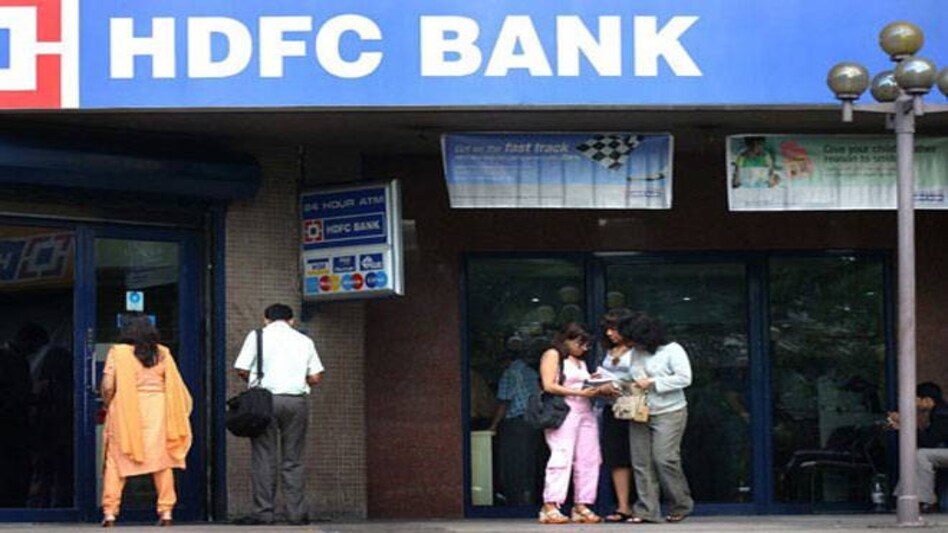
The Reserve Bank of India (RBI) on Monday said that it has identified private major HDFC Bank as Domestic Systemically Important Bank or D-SIB. HDFC is the third in RBI's domestic important banks' list after state-run SBI and ICICI which were included in 2015. Every year in August, the RBI has to disclose the names of banks designated as D-SIBs and place these banks in appropriate buckets depending upon their Systemic Importance Scores or SISs.
What does D-SIB mean?
D-SIB is also referred as Domestic Systemically Important Bank. These are those banks which are - in domestic market - big in size and have the potential to disrupt the financial stability in case they fail. Therefore, every country was asked to identify such banks and put them under tight supervision. India has three such banks that figure in the list - SBI, ICICI and HDFC bank.
Why was the identification of such banks needed?
The RBI in a brief introduction explained as to why the identification of such banks is needed. It said that some banks, due to their size, large scale activities, lack of substitutability and interconnectedness, become important. "The disorderly failure of these banks has the potential to cause significant disruption to the essential services they provide to the banking system, and in turn, to the overall economic activity," the RBI stated. It further said that problems faced by large and highly interconnected financial institutions hamper the orderly functioning of the financial system, which in turn, negatively impact the real economy.
What will happen to these banks?
Banks which figure in D-SIBs list will be subjected to differentiated supervisory requirements and higher intensity of supervision based on the risks they pose to the financial system. As such large banks have the potential to disrupt the banking system, government intervention was considered necessary to ensure financial stability. The RBI in statement had explained that the cost of public sector intervention requires that future regulatory policies should aim at reducing the probability of failure of SIBs and the impact of the failure of these banks.
How the whole process started?
After 2008 global financial crisis, the Financial Stability Board or FSB recommended that all member countries needed to have in place a framework to reduce risks attributable to Systemically Important Financial Institutions in their jurisdictions. In November 2011, the Basel Committee on Banking Supervision came out with a framework for identifying the Global Systemically Important Banks or G-SIBs and the magnitude of additional loss absorbency capital requirements applicable to these G-SIBs. The BCBS further required all member countries to have a regulatory framework to deal with D-SIBs.
New risk posed by SIBs
The RBI says that SIBs are perceived as banks that are 'Too Big To Fail' (TBTF). This TBTF perception creates an expectation of government support in for these banks at the time of distress. The perception alo helps these banks in the funding markets and bring advantage for them. However, the RBI notes, perceived expectation of government support amplifies risk-taking, reduces market discipline, creates competitive distortions, and increases the probability of distress in the future. Which is why it was felt that SIBs should be subjected to additional policy measures to deal with the systemic risks posed by such banks.
 Vedanta is set for the next phase of growth and value creation: Anil Agarwal
 'Operation Epic Fury is over': US declares Iran bombing campaign over after 66 days of attack
 ‘Project Freedom’ to rescue ships in Hormuz paused; Trump cites US-Iran deal progress
 L&T share price targets: Q4 miss, Lakshya 31 announced; buy, sell or hold?
 Bajaj Auto Q4 results: Stage set for dividend amount, share buyback announcement | Preview
 Mutual Fund Strategy: Why You Shouldn’t Exit Underperforming Funds Too Soon
 "Badla Nahi, Badlav!": PM Modi Hails Violence-Free Election As Bengal Enters A New Era Of Peace
 India Vs Global Markets: Why Experts Still Prefer Domestic Mutual Funds
 Tehran Crisis: India Today Reports From Damaged Golestan Palace Amid Protests
 Stalin Defeated! The Unbelievable Rise Of Vijay That Has Shaken Indian Politics | TVK
 L&T share price targets: Q4 miss, Lakshya 31 announced; buy, sell or hold?Bajaj Auto Q4 results: Stage set for dividend amount, share buyback announcement | Preview
 Marico, AB Capital, Mankind Pharma: Stocks to buy— Check target prices, stop loss & more
 Voltamp Transformers shares: Stock downgraded. More fall ahead?
 Nifty, Sensex, Nifty Bank outlook for today: GIFT Nifty up 185 points; key levels to watch