

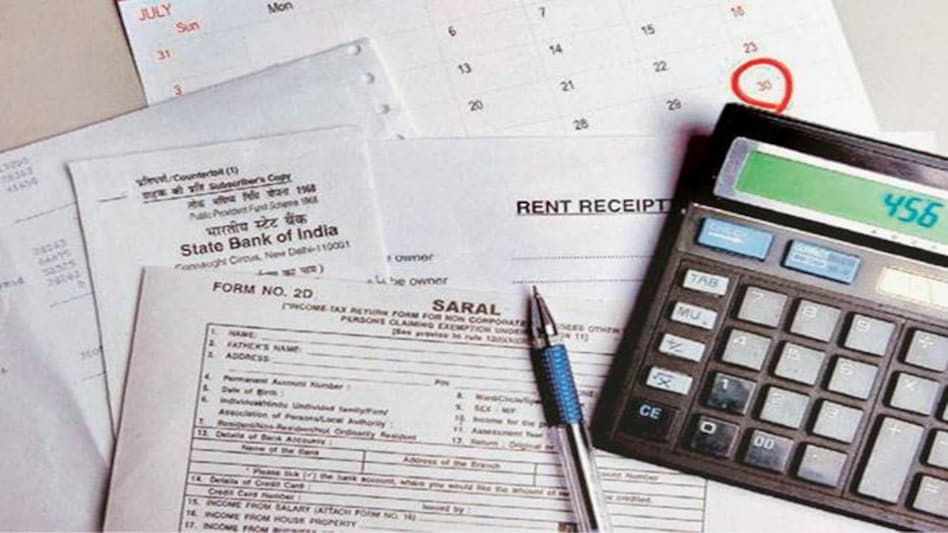
If you are a tax payer who has received an e-mail from the income tax department informing about an error in calculating tax and a refund has to be issued, be careful as it may be a phishing e-mail which would re-direct you to another website seeking your financial details such as bank account number and other related details.
Delhi Police has warned that cyber criminals are now targeting people filing income tax returns online by sending malicious bulk emails to trick them to provide their net banking credentials. These kind of e-mails are camouflaged in a manner that one feels that it has come from an authentic e-mail id.
 Major security flaw triggers action from Google and Apple against eMudhra certificates
 Sensex tanks 1,300 pts from day's high; India VIX surges 8%
 Two HDFC Bank senior executives leaked confidential business information, finds probe
 Jio Platforms IPO becomes fastest subscribed mega-IPO, QIBs lead demand; brokerages remain bullish
 Marco Rubio arrives in Jamnagar to visit Reliance refinery as India-US trade deal moves closer to final agreement
 U.S.-India Trade Deal: Why Markets Remain Cautious During Marco Rubio’s Visit
 Market Volatility: Pankaj Pandey Sees Buying Opportunities In Midcaps And Smallcaps
 Jio Platforms IPO Sees Record Demand, Subscribed 2.3 Times As QIB Bids Surge
 Sensex, Nifty Turn Volatile: Sharad Avasthi On What Investors Should Do Next
 Market Commentary | Stock Market Strategy | Amit Goel On Market Opportunities
 Bajaj Finance shares fall 4% as NBFC flags rise in overdue gold loans
 Rs 11 lakh crore investor wealth gone as market ends lower for second day
 YES Bank: Good news for lender post AT1 bonds write-off shock
 Waaree Renewable Technologies shares fall 12% as costs hit Q2 profit; revenue rises
  Eternal Q2 earnings: Net profit rises 92%, revenue at Rs 24,138 crore
  Carlsberg India Set For IPO? $700 Million Offer Could Launch In December 2026
 Waiting for OPPO Find X10 before buying a premium phone? What the official India teaser tells us
 Mumbai to get world-class yacht marina at Victoria Dock; bids invited for ₹923 crore project
 Renault Duster Hybrid starts at ₹16.99L: What family SUV buyers should check before stretching their budget
 Blinkit targets 5,000 stores by March 2028: Can smaller cities drive quick-commerce growth?












