

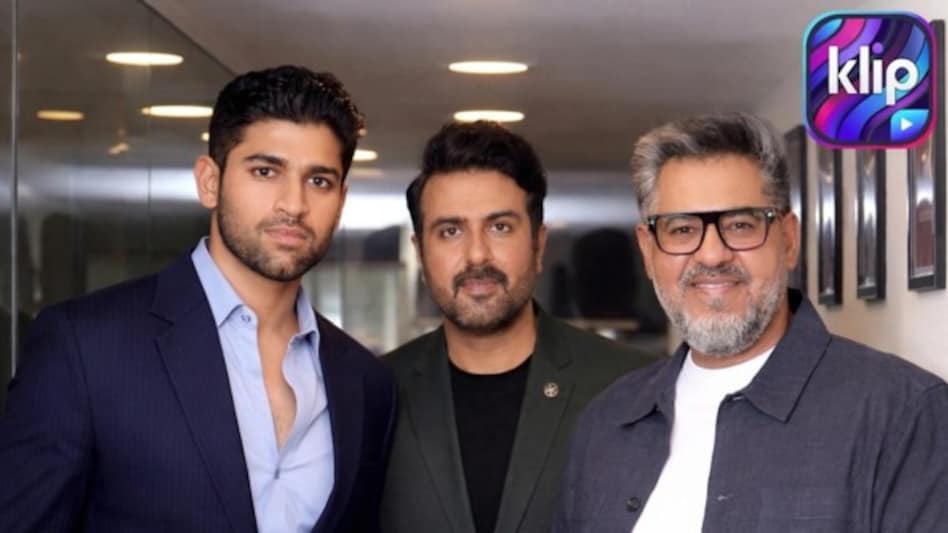
 KLIP, founded by filmmaker Vicky Bahri, actor-producer Harman Baweja alongside growth strategist Dev Gupta
India’s micro-drama market is still in its formative phase, but the questions around it are already shifting. The conversation is no longer limited to whether short episodic fiction can attract viewers on mobile. It is increasingly about whether that attention can be turned into a durable business.
KLIP, founded by filmmaker Vicky Bahri, actor-producer Harman Baweja alongside growth strategist Dev Gupta, is entering that conversation at an interesting moment. The platform launched with a straightforward proposition: professionally produced, two-minute episodic dramas built for mobile viewing. But the company’s longer-term direction points beyond the shows themselves. Its focus is expanding toward the commercial structure around micro-drama, how audiences are retained, how the format is monetised, and how production can be scaled without inheriting the cost structure of traditional streaming.
 Where are the jobs: Youth unemployment remains high; fewer jobs for those with higher education in India
 What’s slowing the next phase of GCC growth?
 576 individuals reported gross income exceeding ₹100 crore in AY 2025-26
 NFO alert: SBI MF floats Nifty Midcap 150 Momentum 50 ETF FOF; why should you choose it
 Nitin Gadkari moves Bombay High Court against viral E20 deepfakes, hits Meta with suit
  R K Forgings Q1 Results | CFO Lalit Khetan On 291% Profit Jump, Order Wins & FY29 Roadmap
 Daily Calls: Ask Your STOCK MARKET TODAY QUERIES | Market Update | Share Market News Today
 Pharma, Hospitals Or Diagnostics? InCred CIO Reveals Best Healthcare Bets
 Active Vs Passive Funds: Where Should You Invest? | Mutual Fund Guide | Personal Finance | Money Today
 What’s Hot: Stocks, Gold & Big Money Moves | Daily Markets Show | July 27 | Business Today TV
 Sensex, Nifty snap five-session losing run; investors add Rs 5.1 lakh crore in wealth
 Trent or DMart: Analyst decodes short-term and long-term outlook
  Multibagger infra stock with 6,626% returns hits upper circuit, check details
 Canara Bank Q1 results: Net profit up 2% at Rs 4,856 crore; NII rises 13%
 Zen Technologies in bear grip: Triggers behind the 10% fall in the defence stock Sensex, Nifty snap five-session losing run; investors add Rs 5.1 lakh crore in wealth
 PM Modi Announces Nandan Nilekani-Led Task Force for Exam Reforms | NEET Update
 India Unveils "Bhargavastra": Vehicle-Mounted Anti-Drone Rocket System Built To Crush Swarm Attacks
 Actor Rakesh Bedi Inaugurates "Dhurandhar Corner" At Srinagar Army Mess During Kashmir Visit
 Dual CNG cylinders and a 1.5-litre engine: TATA Sierra CNG details explained










