












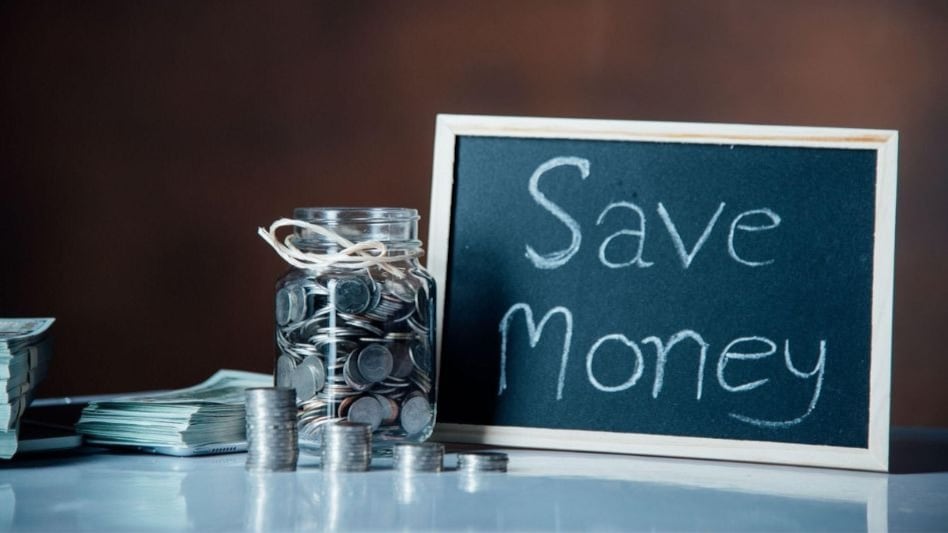
 Zero-balance savings accounts are popular because they relieve the minimum balance pressure Zero-balance savings accounts are popular because they relieve the minimum balance pressure
 As the term indicates, a zero-balance savings account is an ideal choice to save the costs of maintaining a minimum balance and managing the money.
Yet, this raises the question of whether such bank accounts allow one to earn interest like a regular savings account. This guide will help ease any doubts about this convenient financial product while also giving you a better understanding of how Zero-Balance Bank Accounts work.
Zero-Balance Saving Bank Account – What Is It?
A zero-balance account refers to a deposit account without any minimum balance. While there is the penalty or charge for maintaining above the minimum balance for savings bank account which is not the case in a zero-balance bank account wherein the individual can transact without any penalty.
How does a Zero-Balance Bank Account work?
Zero-Balance Bank Accounts offer the same services as traditional Savings Accounts, such as ATM withdrawals, fund transfers, and Debit Cards, making them readily accessible.
Do you get interest on a Zero-Balance Bank Account?
Yes, one can earn interest on a zero-balance bank account. Although there is no minimum balance requirement, banks generally offer zero-balance savings accounts where a holder pays interest on their daily balance held in the accounts. The rate of interest for zero-balance accounts varies widely by bank. While some banks offer higher rates to attract customers, others offer lower rates. Before you opt for an online saving account opening zero balance, it will help you compare the interest rates the banks offer. Generally, the interest for Zero-Balance Bank Accounts is computed on the daily balance and paid out quarterly.
Difference between a traditional Savings Account and a Zero-Balance Bank Account
| Features | Traditional savings bank account | Zero-balance savings bank account |
| Minimum balance requirement | Requires a minimal balance, depending on the bank. Balance ranges from ₹500 to ₹25,000 | Requires no minimum balance |
| Initial funding | The customer is required to deposit an initial amount to open an account | The customer may or may not have to deposit cash while opening a zero-balance account |
| Physical Debit card | The bank kit comes with a physical debit card | The bank kit may come with a physical or virtual debit card |
| Transaction limitations | No limit to the number of transactions | A zero-balance account may have a limit to the number of transactions, following which the customer may be charged for transactions |
| Foreign remittances | Allows foreign remittance | Does not allow foreign remittances |
Wrapping it up
Zero-balance savings accounts are popular because they relieve the minimum balance pressure and allow you to earn interest on the funds deposited. Despite some similarities to traditional Savings Accounts, including providing Debit Cards and interest accumulation, Zero-Balance Savings Accounts are unique in allowing constant access without worrying about penalties for maintaining a low balance. Comparing interest rates and account features of various banks when considering opening a Zero-balance account will help you make a better decision.
 RBI continues to bring more gold back to India. Here's why
 KPIT to acquire Israeli auto cybersecurity firm Cymotive for up to $120 million
 BT Exclusive: From JEE tutor to defence-tech founder - how olee.space delivered one of India's first start-up built laser weapons
 Suvendu Adhikari's close aide shot dead from close range in West Bengal's Madhyamgram
 FD investors, don’t miss this! These banks now offer over 8% returns
 Isha Ambani Brings India To Met Gala 2026 With Gold Saree & Rare Nizam Jewel
 Tamil Nadu Assembly Twist: Vijay in Focus As Alliance Talks With Congress & AIADMK Grow
 Smriti Irani’s Strong Response To Rahul Gandhi And Mamata Banerjee On Election Controversy
 Twin Blasts In Punjab: Terror Plot Or Political War Ahead Of Elections?
 Nothing’s Watch 3 Pro: Budget Smartwatch With AI Coach & Dual GPS
 Bajaj Auto Q4 profit jumps 34%; announces up to Rs 5,633 crore buyback, Rs 150 dividend
 Sensex, Nifty outlook for tomorrow: What's next after today's sharp upmove?
 Jupiter Wagons, Titagarh Rail Systems shares jump 15–32% in a month: Outlook, strategy | Daily Calls on BTTV
 3750% dividend stock alert! Bumper amount in Q4 results; record date fixed
 BT Closing Bell | Sensex, Nifty end higher amid US-Iran peace hopes; top gainers & losers